CM Rekha Gupta joins Delhi-NCR Air Pollution review meet
Synopsis
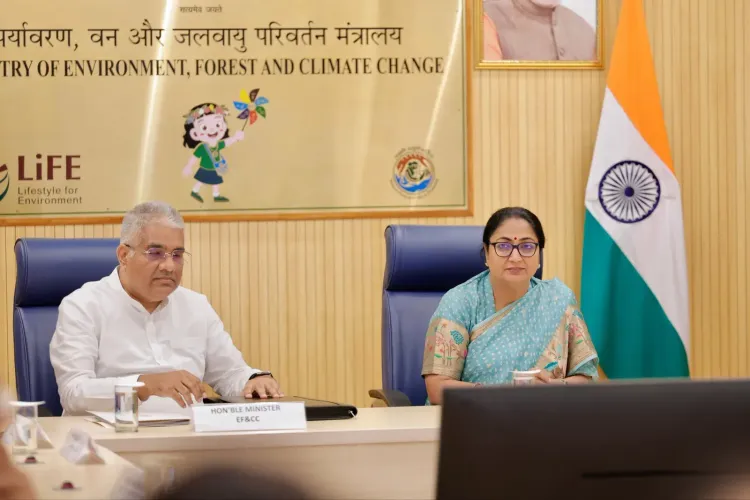
Delhi Chief Minister Rekha Gupta joined Union Environment Minister Bhupender Yadav's review of the Delhi-NCR Air Pollution Action Plan on 26 May 2026, reaffirming round-the-clock mission-mode action on EV adoption, dust control, smart traffic, and waste management.
Key Takeaways
Delhi CM Rekha Gupta attended the Delhi-NCR Air Pollution Action Plan review meeting on 26 May 2026 , chaired by Union Environment Minister Bhupender Yadav .
The Delhi government says it is working in mission mode 24×7, 365 days on pollution control in partnership with the Central Government.
Key focus areas include the Delhi EV Policy , electric vehicle promotion, dust control, smart traffic management, and waste management.
The Commission for Air Quality Management (CAQM) , established in 2021 , oversees NCR-wide coordination under a statutory framework.
The Graded Response Action Plan (GRAP) , revised in 2022 , and the National Clean Air Programme (2019) form the broader policy backbone for Delhi-NCR air quality action.
The revised action plan will be tested against winter 2026–27 pollution levels, the region's most critical period for air quality.
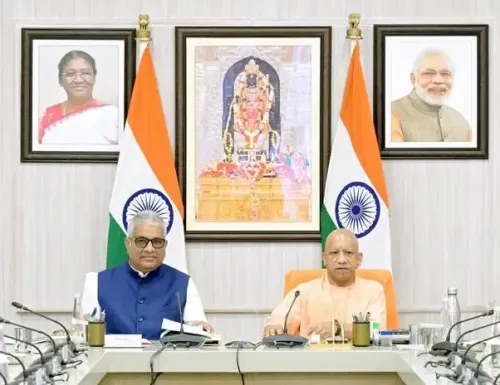
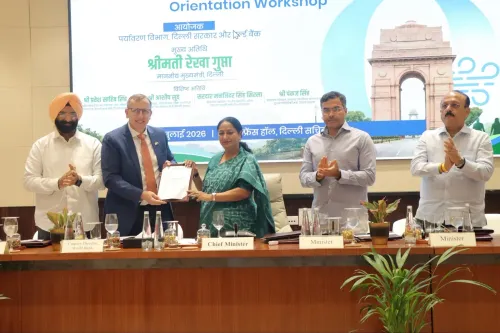
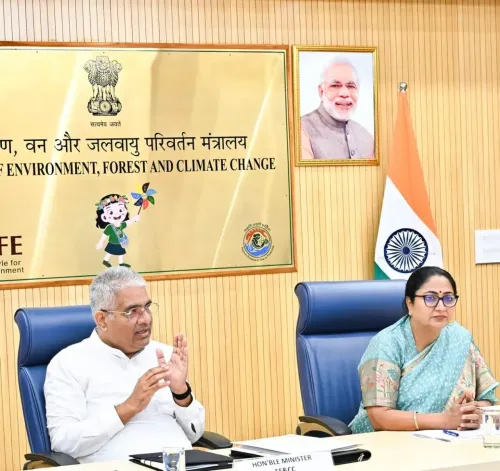
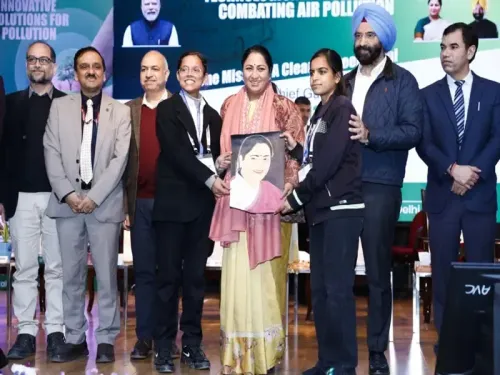
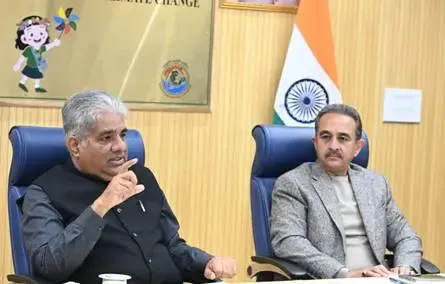
Delhi Chief Minister Rekha Gupta attended a high-level review meeting on the Delhi-NCR Air Pollution Action Plan on Tuesday, 26 May 2026, chaired by Union Environment Minister Bhupender Yadav. The Chief Minister participated alongside the Team Delhi delegation to assess ongoing anti-pollution measures and chart a forward roadmap for the capital.
Context
Posting on X, CM Rekha Gupta said the Delhi government is working '24×7, 365 दिन मिशन मोड में' — in mission mode around the clock, 365 days — in collaboration with the Central Government and the Ministry of Environment, Forest and Climate Change. She highlighted that concrete and innovation-based steps are being taken at scale across areas including EV Policy, promotion of electric vehicles, dust control, smart traffic management, and waste management.
The Chief Minister also stated that Delhi's action plan will be made more effective in line with the 'important suggestions given by Bhupender Yadav ji regarding the future strategy and roadmap.'
Policy Backdrop
Delhi-NCR's air quality governance rests on a layered framework built over several years. The Graded Response Action Plan (GRAP), first introduced in 2017 and revised in 2022, prescribes stage-wise emergency restrictions triggered by pollution thresholds. The Commission for Air Quality Management (CAQM), established under a 2021 Act of Parliament, serves as the permanent statutory body coordinating action across Delhi, Haryana, Uttar Pradesh and Rajasthan.
The National Clean Air Programme (NCAP), launched in 2019, set a target of 20–30 per cent reduction in particulate matter levels by 2024 across 131 cities, including Delhi. The Delhi EV Policy, introduced in 2020, provides incentives for electric vehicle adoption and charging infrastructure to reduce vehicular emissions — one of the primary contributors to the capital's poor air quality.
Stakeholders and Impact
Delhi's roughly 2 crore residents and millions of NCR commuters bear the direct health burden of the region's recurrent pollution episodes, particularly in winter months. The construction sector, a major source of dust emissions, is also subject to CAQM-directed restrictions during high-pollution periods.
The meeting's emphasis on smart traffic management and waste management signals an intent to move beyond seasonal emergency responses toward year-round structural interventions. Coordination between the BJP-led Delhi government and the Union Environment Ministry — both from the same party — is expected to ease implementation of jointly agreed measures.
What's Next
Attention will now turn to whether the revised action plan produces measurable improvements before winter 2026–27, when Delhi-NCR typically records its worst air quality. The next scheduled CAQM review of NCR compliance will be a key indicator of follow-through on the roadmap discussed in Tuesday's meeting.
With the #SmartDelhi tag anchoring the post, the Delhi government appears to be positioning its pollution-control approach as part of a broader technology-driven urban governance narrative heading into the next pollution season.
Point of View
Aided by the BJP holding both the state and central environment portfolio. The stress on year-round 'mission mode' work is a direct counter to the perception that anti-pollution efforts are reactive and seasonal. Anchoring the message around EV policy, smart traffic, and waste management signals an attempt to frame pollution control as a technology-governance story rather than a crisis-management one. How this translates into measurable air quality data before the next winter will determine whether the narrative holds.
NationPress
21 Sept 2026
Frequently Asked Questions
What was the Delhi-NCR Air Pollution Action Plan meeting about on 26 May 2026?
The meeting, chaired by Union Environment Minister Bhupender Yadav, reviewed the ongoing Delhi-NCR Air Pollution Action Plan and discussed future strategy and roadmap, with Delhi CM Rekha Gupta attending alongside the Team Delhi delegation.
What pollution control measures is the Delhi government focusing on?
The Delhi government is focusing on its EV Policy, promotion of electric vehicles, dust control, smart traffic management, and waste management as part of its round-the-clock mission-mode approach to pollution control.
What is the Commission for Air Quality Management (CAQM)?
The CAQM is a statutory body established under a 2021 Act of Parliament to coordinate air pollution control across the NCR, covering Delhi, Haryana, Uttar Pradesh, and Rajasthan, replacing earlier ad-hoc panels.
What is the Graded Response Action Plan (GRAP) for Delhi?
GRAP is a stage-wise pollution emergency framework first introduced in 2017 and revised in 2022 , which triggers progressively stricter restrictions on construction, vehicles, and industries based on Delhi-NCR's pollution levels.
What is the Delhi EV Policy?
The Delhi EV Policy, introduced in 2020 , offers incentives for electric vehicle adoption and supports charging infrastructure development to reduce vehicular emissions, one of the major contributors to Delhi's air pollution.