Will the Centre's New Directions Improve Delhi-NCR Air Quality?
Synopsis
In an urgent response to alarming air quality levels in Delhi-NCR, Union Environment Minister Bhupender Yadav has issued a series of directives designed to enhance air quality within a week. Key measures focus on traffic management, construction waste removal, and stricter regulations on polluting activities.
Key Takeaways
Immediate measures are being taken to address air quality issues.
The government has identified 62 congestion hotspots.
Monthly reviews of action plans will commence in January 2026.
Strict actions will be enforced against polluting industries.
Public transport will be enhanced on high-traffic routes.
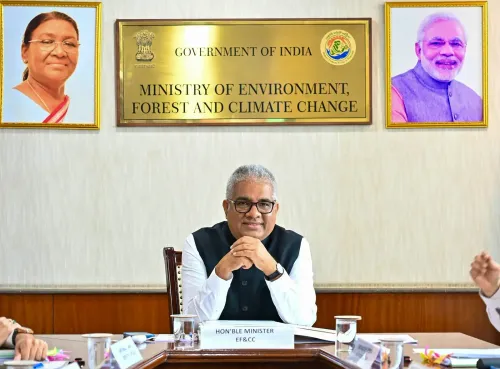
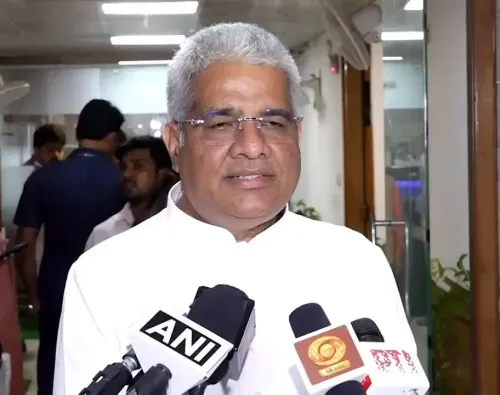
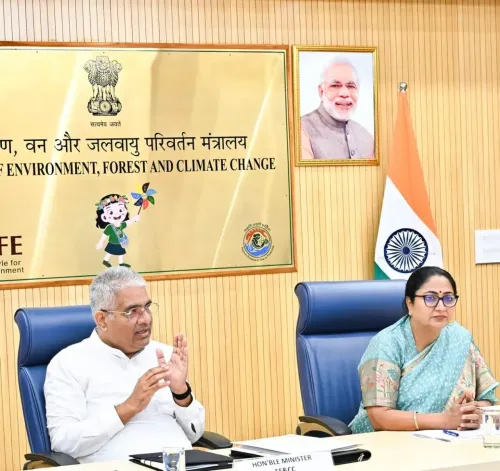
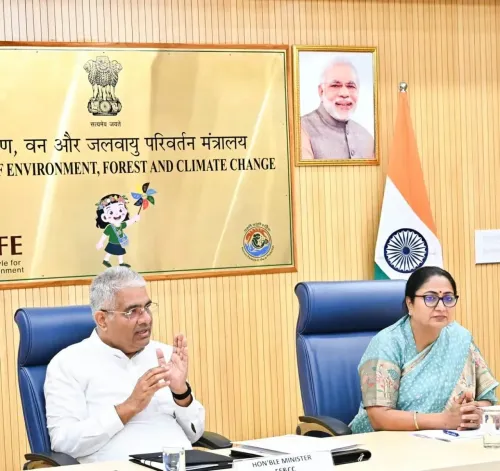
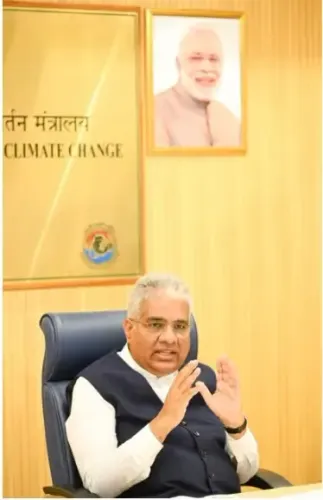
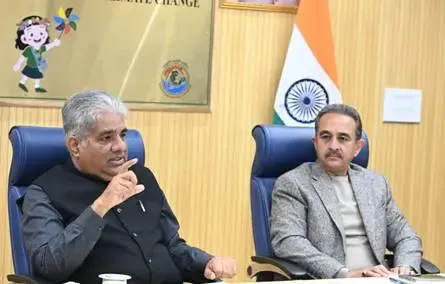
New Delhi, Dec 19 (NationPress) Concerned about the deteriorating air quality in the Delhi-NCR region, Union Environment Minister Bhupender Yadav on Friday provided directives aimed at improving air quality within a week's time. The Minister, overseeing the Ministry of Environment, Forest and Climate Change, led a meeting that included the chairman of the Commission for Air Quality Management (CAQM) and senior officials. He announced that, starting January 2026, the action plans currently being finalized will undergo monthly reviews at the Ministerial level.
Among the significant directives issued by Minister Yadav were measures to facilitate efficient traffic management at 62 identified congestion hotspots, the removal of dust and construction and demolition (C&D) waste from roadways, regulation of biomass burning, and staggered working hours for offices, shopping malls, and commercial complexes, as stated in an official announcement.
The Minister emphasized that strict actions against violators are essential, yet the public should not face inconveniences. Yadav mentioned that the identified issues would be tackled through corrective measures, with a review planned in 15 days.
The meeting highlighted the need for enhanced public transport along high-traffic routes, alongside firm instructions to escalate actions against illegal and polluting industries in the area.
Officials from Gurugram, Faridabad, Ghaziabad, and Noida were tasked with accelerating the rollout of the Integrated Smart Traffic Management System (ITMS), while traffic police were instructed to ensure that enforcement activities do not contribute to congestion.
The Minister stressed the importance of coordinated planning with the Delhi Metro and state authorities to improve last-mile metro connectivity across NCR cities. The meeting was also attended by Union Minister of State for EFCC, Kirti Vardhan Singh.
Directions were given to eliminate encroachments causing traffic delays within 10 days, ensure annual maintenance contracts for pothole-free roads, and implement proper drainage systems to avert monsoon-related road damage.
Public grievances regarding pollution were directed to be addressed under the supervision of the CAQM, alongside focused information, education, and communication activities for stakeholder engagement.
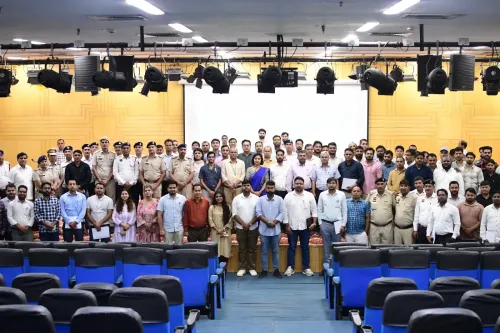
Attendees included the Secretary of MoEFCC, Chairman of CAQM, senior officials from Union Ministries of Environment, Forest, Climate Change, Road Transport, Highways, Heavy Industries, and state governments from NCT Delhi, Haryana, and Uttar Pradesh.
Additionally, the CAQM was urged to guide municipal bodies not to allow demolition activities unless C&D waste collection sub-centers are accessible within a 10 km radius. C&D activities are to be suspended from October to December, and the CAQM was encouraged to engage startups and the private sector for innovative solutions in C&D waste management through stakeholder consultations.
The state of Haryana was instructed to replace inoperative Crop Residue Management (CRM) machines, ensure the utilization of paddy straw in power generation, brick kilns, and crematoria, and promote the establishment of pelletization plants with central financial support.
Decentralized and in-situ solutions such as Compressed Bio-Gas (CBG) and ethanol plants were to be explored to generate revenue and discourage stubble burning.
Specific directives were issued to shut down illegal tyre-burning units and other non-permitted polluting establishments in the Delhi-NCR area.
Furthermore, the installation of Online Continuous Emission Monitoring Systems (OCEMS) in all polluting units—especially in Haryana—was mandated, with a December 31 compliance deadline enforced.
The Minister also called for organized solid waste collection on a societal basis and joint disposal of Bandhwari legacy waste by Faridabad and Gurugram at a shared facility.
Point of View
It is paramount that we remain committed to informing the public about vital environmental concerns. The recent directives from the government reflect a proactive approach in tackling pollution in the Delhi-NCR region, highlighting the necessity for coordinated efforts across various sectors. The situation calls for a balanced response that prioritizes both effective air quality management and the public's convenience.
NationPress
26 Sept 2026
Frequently Asked Questions
What measures are being implemented to combat pollution in Delhi-NCR?
The government has issued directives focusing on traffic management, removal of construction waste, and stricter regulations on polluting industries to enhance air quality within a week.
When will the action plans for air quality management be reviewed?
Starting January 2026, the action plans will undergo monthly reviews at the Ministerial level.
What role does the CAQM play in managing air quality?
The CAQM oversees the implementation of air quality management strategies and is responsible for guiding municipal bodies in pollution control efforts.
How will traffic congestion be addressed?
Key traffic management measures will be implemented at 62 identified congestion hotspots to ensure smoother traffic flow.
What is the deadline for compliance regarding emission monitoring systems?
A December 31 deadline has been set for the installation of Online Continuous Emission Monitoring Systems in all polluting units, particularly in Haryana.