How Did CM Fadnavis Attribute the BJP's Landslide Victory in Local Body Elections?
Synopsis
Maharashtra's CM Devendra Fadnavis celebrates the BJP's historic victory in local body elections, marking a significant shift in the state's political landscape. This achievement reflects the party's strong grassroots presence and a focus on development rather than criticism, setting the stage for future electoral success.
Key Takeaways
BJP's historic victory in local body elections.
Significant increase in seats from 2017.
Focus on development rather than criticism.
Collaboration with alliance partners played a key role.
Campaigning in rural areas strengthened grassroots connections.
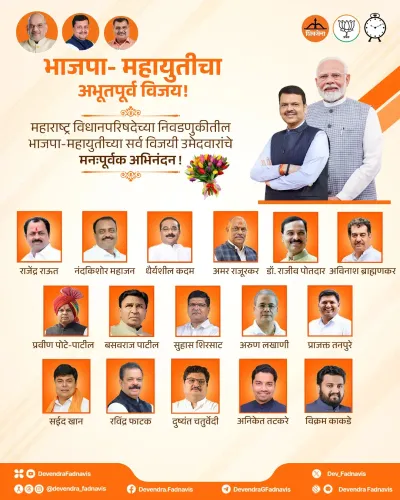
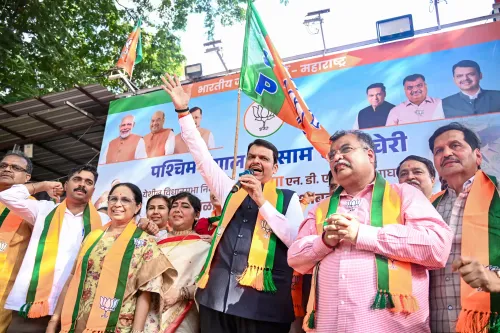
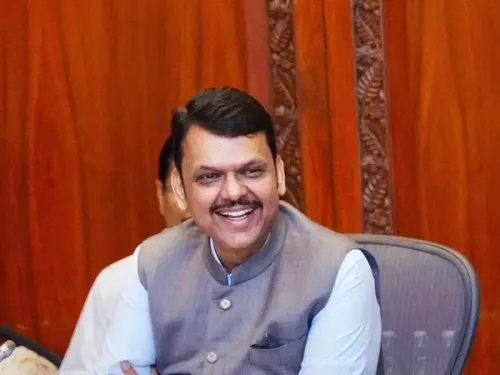
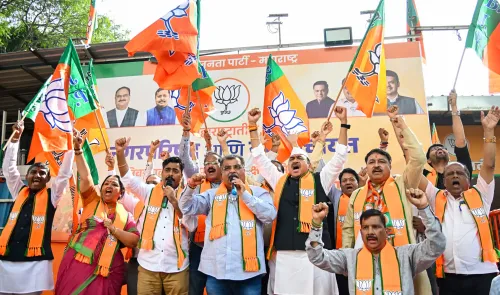
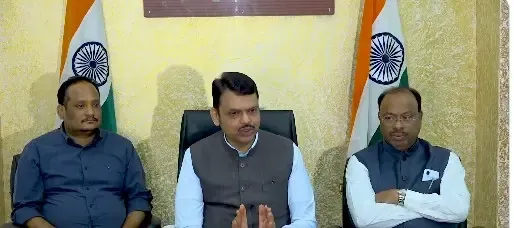
Mumbai, Dec 21 (NationPress) Maharashtra's Chief Minister Devendra Fadnavis celebrated the remarkable performance of the Bharatiya Janata Party (BJP) in the recent elections for 246 nagar parishads and 42 nagar panchayats, labeling it a historic mandate. He asserted that this achievement marks the party's most significant success in local body politics in over two decades.
During a press briefing, he emphasized that the BJP has emerged as the dominant party, securing a significant majority of Mayors and Corporators.
CM Fadnavis described this victory as a record in the history of Maharashtra's local body elections spanning 20 to 25 years.
He pointed out that approximately 75 percent of the nagar parishad Presidents are affiliated with the ruling Mahayuti alliance, with a large fraction from the BJP itself, which includes 129 Mayors and 48 percent of the total Corporators.
The BJP secured 3,325 seats, representing 48 percent of the total Corporators elected statewide, a substantial increase from the 1,602 seats held in 2017. The Mahayuti alliance triumphed in over 200 municipalities, with the BJP independently managing over 100 of these.
He mentioned his personal involvement in campaigning in villages with populations as small as 10,000, underlining the importance of senior BJP leadership in supporting grassroots workers who contribute to victories in the larger state Assembly and Lok Sabha elections.
CM Fadnavis remarked, "It would be ungrateful to neglect the local karyakartas (workers) who play a crucial role in our Lok Sabha and Assembly electoral successes."
He also extended his congratulations to alliance partners Eknath Shinde of the Shiv Sena and Ajit Pawar of the Nationalist Congress Party for their commendable performances, noting that collaboration between leaders like Ravindra Chavan and former Maharashtra BJP President Chandrashekhar Bawankule was key to surpassing the records set in 2017.
He observed that since 2014, the BJP has evolved from an urban-centric party to one with a significant presence in rural Maharashtra, bridging various social and geographical gaps.
"In this election, I refrained from criticizing any individual, leader, or party. We campaigned solely on the foundation of development. We shared a 'Blueprint' of our past successes and future objectives. The public has responded positively to this vision," CM Fadnavis asserted.
He noted that this might be a unique occurrence in Indian politics, where a Chief Minister led a campaign without engaging in any form of criticism yet still secured a sweeping victory.
CM Fadnavis criticized the opposition for their 'defeatist mindset', suggesting they avoided the campaign trail due to their expectations of the Mahayuti's overwhelming success.
He mentioned that this outcome serves as a significant endorsement of the current Maharashtra government's developmental plans leading into the forthcoming Municipal Corporation elections.
In a jab at the opposition, CM Fadnavis claimed that rival political figures recognized the Mahayuti wave and opted to withdraw from the campaigning process.
He speculated that opposition leaders feared they would have 'no place to show their faces' to their supporters if they experienced a direct defeat.
The elections were conducted in two phases for the 246 nagar parishads and 42 nagar panchayats, with the first phase occurring on December 2 and the second phase for 23 councils following on December 20 due to administrative delays and court interventions.
The Bombay High Court eventually mandated synchronized counting of votes for all seats on Sunday.
--ANS
sj/khz
Point of View
The recent local body election results in Maharashtra illuminate a significant shift in political dynamics, showcasing the BJP's ability to resonate with voters through a focus on development rather than divisive politics. This historic mandate could serve as a bellwether for future elections, emphasizing the importance of grassroots engagement.
NationPress
21 Oct 2026
Frequently Asked Questions
What was the outcome of the recent local body elections in Maharashtra?
The BJP achieved a historic victory, securing 3,325 seats, which accounts for 48% of the total Corporators elected across Maharashtra.
How did CM Fadnavis contribute to the campaign?
CM Fadnavis personally campaigned in villages, emphasizing the importance of supporting grassroots workers in securing victories for larger elections.
What was unique about the BJP's campaign strategy?
The BJP's campaign focused solely on development and did not involve criticizing opponents, which is a rarity in Indian politics.
What were the key figures in the BJP's victory?
The BJP emerged as the single largest party with 129 Mayors and 48% of the total Corporators, achieving significant victories across over 200 municipalities.
What was the significance of the election results for the Maharashtra government?
The results are seen as a strong endorsement of the current government's development agenda, paving the way for upcoming Municipal Corporation elections.