Khattar pays tribute to fallen police on Commemoration Day
Synopsis
Union Power Minister Manohar Lal Khattar marked Police Commemoration Day on 21 October 2026 with a tribute to police martyrs, invoking service, duty, and courage — values rooted in the 1959 Hot Springs sacrifice that gave birth to this national observance.
Key Takeaways
Police Commemoration Day is observed every 21 October to honour police and paramilitary personnel killed in the line of duty.
The observance was instituted in 1960 following the ambush of CRPF personnel by Chinese forces at Hot Springs, Ladakh on 21 October 1959 .
Union Minister Manohar Lal Khattar offered his tribute on X , emphasising service, duty, and indomitable courage as the defining values of fallen officers.
Khattar is a senior BJP leader, former Chief Minister of Haryana, and current Union Minister of Power and Housing & Urban Affairs.
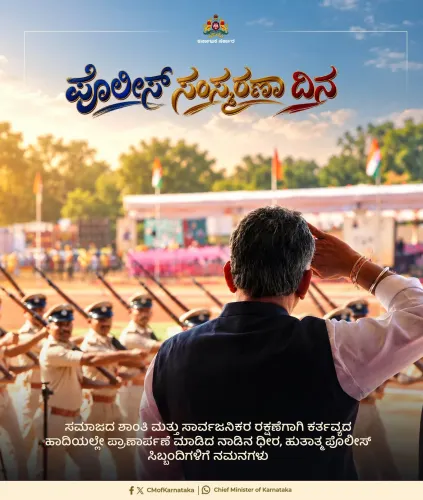
Tributes by political leaders across party lines are an established protocol of the day, with the families of martyrs at the centre of commemorations nationwide.
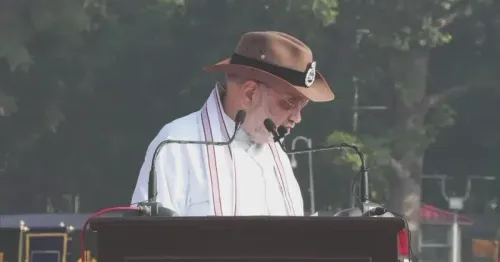
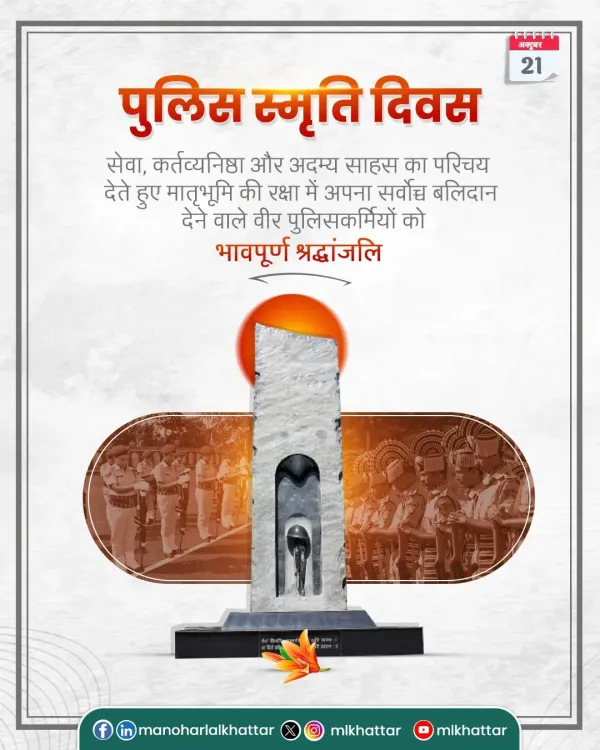
On a day set aside for the nation to remember those who gave everything, Union Power Minister Manohar Lal Khattar offered a heartfelt salute to police personnel who made the supreme sacrifice defending the motherland, marking Police Commemoration Day on 21 October 2026.
In a post on X, Minister Khattar wrote — 'सेवा, कर्तव्यनिष्ठा और अदम्य साहस' ['service, devotion to duty and indomitable courage'] — framing his tribute around the three pillars that define a police officer's calling. He pledged that the dedication of these martyrs to the security, peace, and integrity of the nation 'will always be remembered with honour.'
The Hot Springs sacrifice that started it all
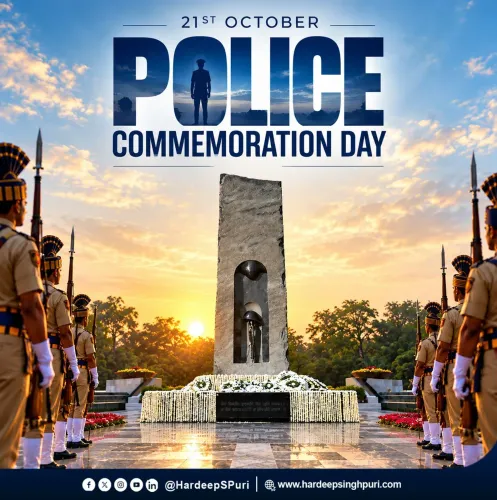
Police Commemoration Day is not a ceremonial invention — it is rooted in blood. On 21 October 1959, a patrol of Central Reserve Police Force personnel was ambushed and killed by Chinese forces at Hot Springs, Ladakh, in one of independent India's earliest border confrontations. The following year, 1960, the nation institutionalised the date as an annual remembrance, ensuring no administration could simply move on without pausing to account for those lost in uniform.
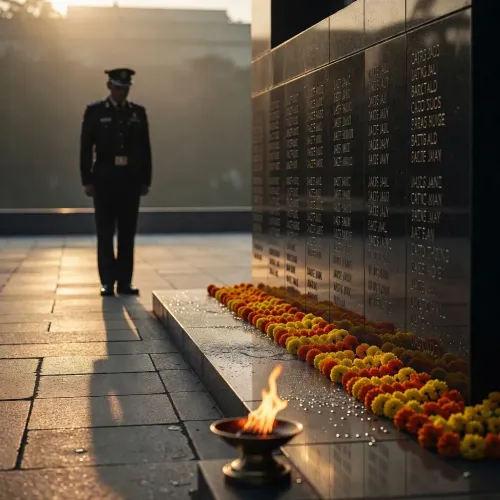
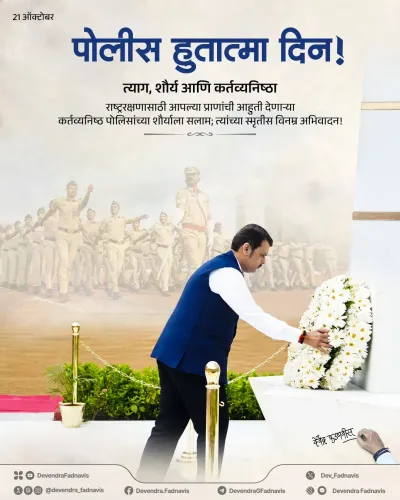
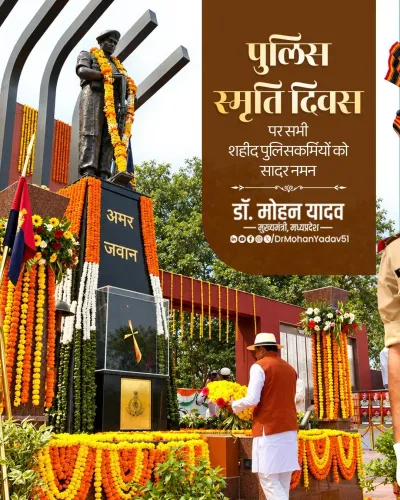
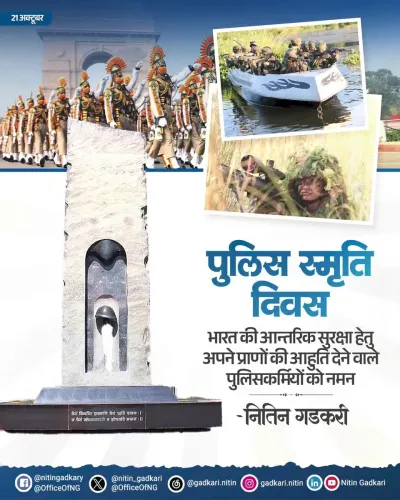
Every 21 October since, law-enforcement forces across the country — from the CRPF and BSF to state police — hold solemn parades, wreath-laying ceremonies, and roll-calls for the fallen. The families of martyrs stand at the centre of these observances, the living proof of the cost that internal security extracts.
A political voice in a protocol of remembrance
Senior BJP leader and former Chief Minister of Haryana, Khattar carries particular resonance on matters of internal security and policing — Haryana's own force has seen officers fall in counter-insurgency and law-and-order operations over the decades. His message fits a broader, cross-party tradition: Indian political leaders at every level mark 21 October as an occasion that transcends partisan lines, one where the uniform commands deference regardless of who holds office.
The commemoration also arrives as India continues to debate police welfare, modernisation, and compensation frameworks for martyrs' families — a conversation that this annual pause is meant to sharpen, not merely solemnise.
Sixty-seven years after Hot Springs, the roll of the fallen keeps growing. The question the day poses is whether the remembrance translates into reform — and whether the families left behind receive support worthy of the sacrifice being honoured.
Point of View
Analysts argue, is whether the annual solemnity translates into concrete policy improvements for police welfare and martyr-family support.
NationPress
21 Oct 2026
Frequently Asked Questions
What is Police Commemoration Day and when is it observed?
Police Commemoration Day is observed every 21 October in India to honour police and paramilitary personnel who died in the line of duty. It was instituted in 1960 to commemorate the CRPF personnel killed at Hot Springs, Ladakh on 21 October 1959.
Why was Police Commemoration Day started in India?
The day was started to mark the sacrifice of CRPF jawans ambushed and killed by Chinese forces at Hot Springs, Ladakh on 21 October 1959 — one of independent India's earliest and most painful border confrontations.
What did Manohar Lal Khattar say on Police Commemoration Day 2026?
Minister Khattar offered a heartfelt tribute to police martyrs, honouring their 'service, devotion to duty, and indomitable courage,' and stated that their dedication to national security, peace, and integrity 'will always be remembered with honour.'
Who is Manohar Lal Khattar?
Manohar Lal Khattar is a senior BJP leader, former Chief Minister of Haryana, and currently India's Union Minister of Power and Housing & Urban Affairs.
What happens on Police Commemoration Day in India?
Across the country, police and paramilitary forces hold solemn parades, wreath-laying ceremonies, and roll-calls for the fallen. Families of martyrs are honoured at these events, and political leaders issue tributes recognising the supreme sacrifices made by security personnel.