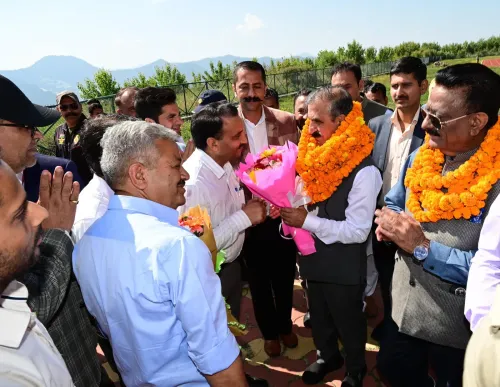
CM Sukhu launches Shimla-Rampur helicopter service
Synopsis
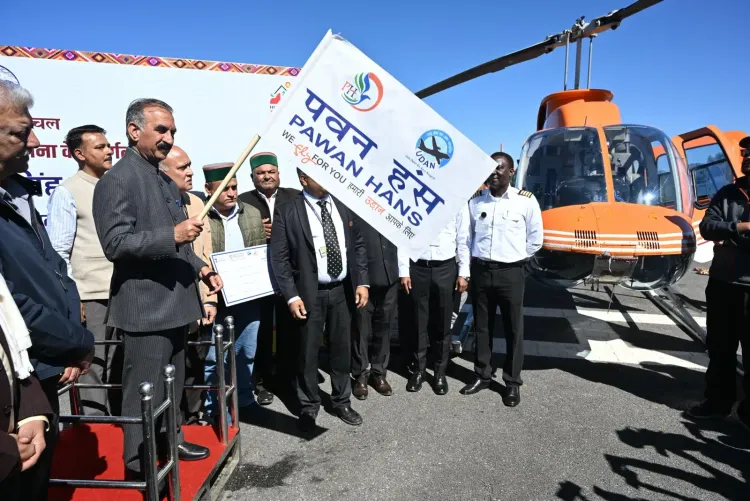
Himachal Pradesh CM Sukhvinder Singh Sukhu launched a helicopter service from Sanjauli Heliport in Shimla to Rampur on 21 October 2026, aiming to boost tourism, cut travel time, and expand the local economy across difficult mountain terrain.
Key Takeaways
CM Sukhvinder Singh Sukhu announced the launch of a helicopter service connecting Sanjauli Heliport, Shimla to Rampur .
The service aims to save travel time, promote tourism, and stimulate local economic growth in Himachal Pradesh .
Sanjauli Heliport in Shimla serves as the origin hub for the new route.
The Shimla-Rampur road corridor passes through challenging mountain terrain, making air connectivity a significant upgrade for commuters and tourists alike.
Sukhu framed the launch as part of a broader goal to expand development possibilities while preserving Himachal's natural character.
Operational performance through winter and potential expansion to other districts are the immediate factors to watch.
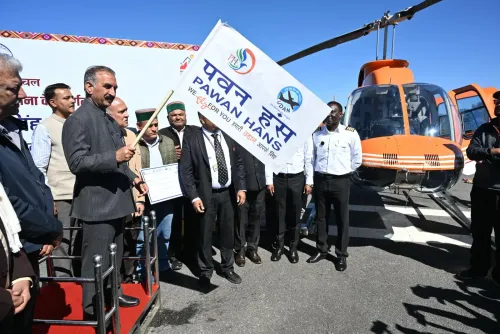
A new air corridor has opened up in the Himalayas. Himachal Pradesh Chief Minister Sukhvinder Singh Sukhu on Wednesday, 21 October 2026 announced the launch of a helicopter service connecting Sanjauli Heliport, Shimla to Rampur — a move he described as a step toward unlocking the state's development potential while preserving its natural identity.
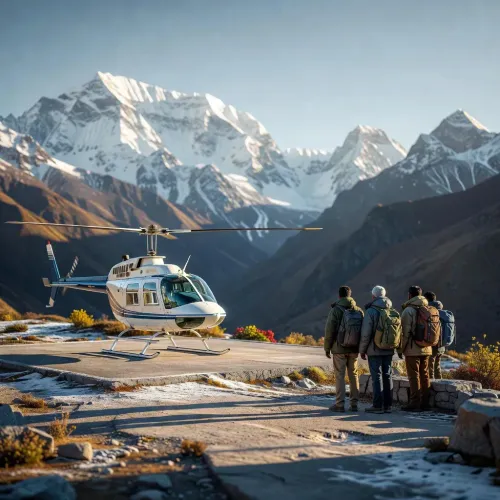
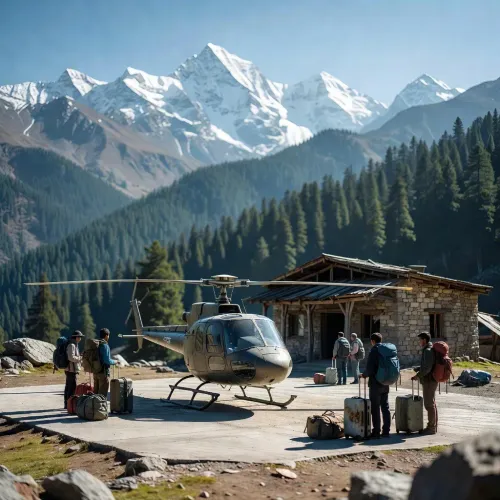
Posting on X alongside four images, CM Sukhu said the new service would give 'new momentum to expanding aerial connectivity and strengthening public conveniences across the state.' In his words: 'बेहतर हवाई कनेक्टिविटी से समय की बचत होगी, पर्यटन को बढ़ावा मिलेगा और स्थानीय अर्थव्यवस्था के विस्तार की संभावनाएं बढ़ेंगी' — 'Better air connectivity will save time, boost tourism, and expand the possibilities for growth of the local economy.'
Why Shimla to Rampur matters
The road distance between Shimla and Rampur winds through some of Himachal Pradesh's most challenging mountain terrain — a journey that can stretch to several hours depending on season and road conditions. A direct helicopter link slashes that time dramatically, and for a state where terrain has historically been the single biggest constraint on economic integration, that is not a small thing.
Rampur is a commercially active town in the Sutlej valley, and its faster connection to the state capital carries real implications for traders, patients seeking specialist care in Shimla, and — crucially — tourists looking to reach inner Himachal without the exhaustion of mountain roads. The CM's framing was explicit: time savings, tourism uplift, and local economic expansion as a three-pronged payoff.
Hilly India's slow air revolution
Himachal Pradesh is not alone in this strategy. Across India's mountainous north and northeast, state governments have steadily expanded heliport networks precisely because roads alone cannot solve last-mile connectivity in high-altitude terrain. The Sanjauli Heliport in Shimla has served as a key hub in this incremental build-out, and the Rampur route represents its latest extension.
The broader logic is well-established: each new helicopter corridor reduces dependence on single-road arteries that remain vulnerable to landslides, snowfall, and seasonal closures — events that are a recurring reality across Himachal. Tourism, in particular, benefits disproportionately: a visitor who can fly in, experience a destination, and fly out within a day represents a different — and economically more potent — kind of tourist than one deterred by difficult road access.
Sukhu's connectivity pitch
For CM Sukhu and the Indian National Congress government in Shimla, infrastructure announcements like this carry political as well as developmental weight. His stated goal — that 'प्रदेश अपनी प्राकृतिक विशिष्टता के साथ प्रगति के नए आयाम स्थापित करे' ('the state establishes new dimensions of progress while retaining its natural distinctiveness') — threads together the development agenda with a reassurance to constituents that modernisation will not come at the cost of the Himalayan environment that underpins the tourism economy in the first place.
The real test now is operational: how reliably the service runs through winter, what fares look like for ordinary travellers, and whether the Shimla-Rampur corridor becomes a template for further routes to underserved districts across the state.
Point of View
Each such announcement serves a dual purpose: tangible connectivity improvement and a visible development narrative ahead of future electoral cycles. The deliberate pairing of 'progress' with 'natural distinctiveness' in Sukhu's statement signals an awareness that Himachal's tourism economy — the very engine the service is meant to energise — is sensitive to perceptions of over-development. Whether this route becomes a replicable model depends almost entirely on operational reliability, particularly through the winter months when weather grounds helicopters across the Himalayas.
NationPress
21 Oct 2026
Frequently Asked Questions
What is the new helicopter service launched in Himachal Pradesh?
A helicopter service connecting Sanjauli Heliport in Shimla to Rampur has been launched by Himachal Pradesh Chief Minister Sukhvinder Singh Sukhu, aimed at improving air connectivity, boosting tourism, and supporting the local economy.
Where is Sanjauli Heliport located?
Sanjauli Heliport is located in Shimla, the capital of Himachal Pradesh, and serves as the origin point for the new Shimla-Rampur helicopter route.
How does the Shimla-Rampur helicopter service benefit locals and tourists?
The service significantly cuts travel time compared to road travel through difficult mountain terrain, making Rampur more accessible for tourists, traders, and residents who previously faced hours-long journeys.
What is CM Sukhu's goal for air connectivity in Himachal Pradesh?
CM Sukhu has stated his goal is to expand development possibilities across Himachal Pradesh while preserving the state's natural identity, with better air connectivity seen as a driver of tourism growth and local economic expansion.
Is this the only helicopter route in Himachal Pradesh?
No. Himachal Pradesh has been incrementally expanding its heliport network over the years. The Sanjauli Heliport in Shimla has served as a key hub, and the Rampur route is its latest addition in the state's broader air-connectivity push.