Shekhawat joins Brahma Kumaris' 90-year global summit at Shantivan
Synopsis
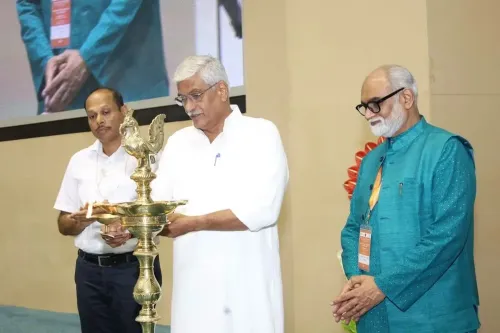
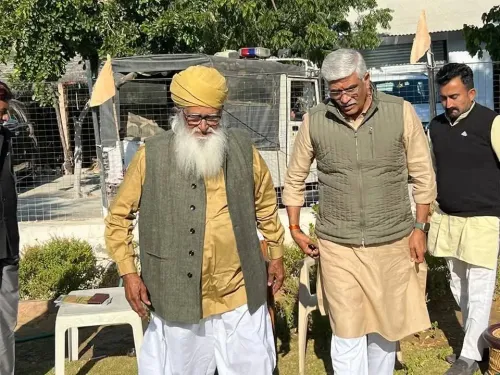
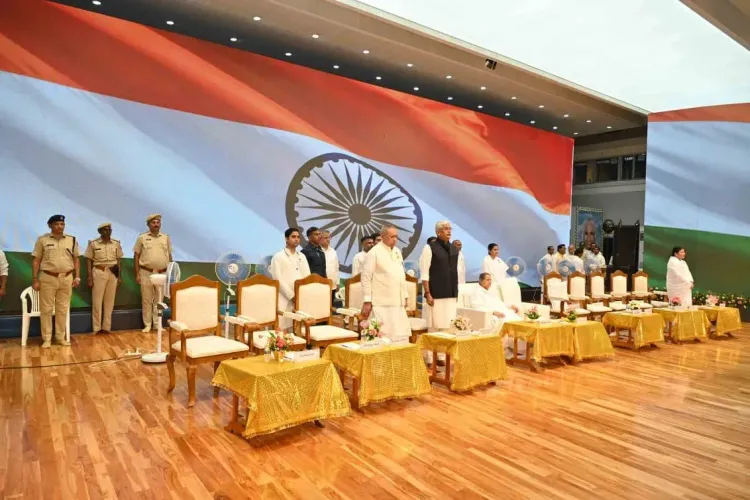
Union Culture and Tourism Minister Gajendra Singh Shekhawat attended the inaugural session of the Brahma Kumaris' global summit at Shantivan, Abu Road on 24 October 2026, marking the organisation's 90th anniversary under the theme 'Spiritual Awakening for World Reconstruction.'
Key Takeaways
Union Culture and Tourism Minister Gajendra Singh Shekhawat participated in the inaugural session of the Brahma Kumaris global summit at Shantivan, Abu Road on 24 October 2026 .
The summit marks 90 years of the Brahma Kumaris organisation, founded in 1936–37 and headquartered at Mount Abu, Rajasthan .
The event's theme is 'Spiritual Awakening for World Reconstruction,' focusing on peace, harmony, positive thinking and human values.
The session included felicitation of individuals who have made outstanding contributions to society.
The Brahma Kumaris operates across more than 110 countries , making it one of India's most globally active spiritual organisations.
Shekhawat's attendance reflects the Culture Ministry's broader pattern of engaging large-scale, internationally active spiritual institutions.
At Shantivan, Abu Road, a spiritual institution that has quietly shaped the inner lives of millions across 110-plus countries marked a landmark Saturday — and Union Culture and Tourism Minister Gajendra Singh Shekhawat was there for the opening moment. The Brahma Kumaris global summit, convened on 24 October 2026 to celebrate nine decades of the organisation's founding, opened its inaugural session with the minister as a participant.
A theme built for the moment: 'Spiritual Awakening for World Reconstruction'
The summit's chosen theme — 'Vishwa Navnirman ke liye Aadhyatmik Jagrati' ('Spiritual Awakening for World Reconstruction') — sets a deliberately expansive frame for the proceedings. Shekhawat described the gathering as one 'illuminating the promotion of peace, harmony, positive thinking and human values.' The event also featured a felicitation of individuals who have made outstanding contributions to society, which the minister called 'a meaningful effort to carry these values forward.'
Nine decades of Raja Yoga — and a footprint that spans the globe
Founded in 1936–37, the Brahma Kumaris organisation began in what is now Sindh and eventually rooted its global headquarters at Mount Abu, Rajasthan. Its central campus, Shantivan at Abu Road, has grown into one of India's largest spiritual conference venues, regularly hosting tens of thousands of practitioners and delegates. The institution's twin pillars — Raja Yoga meditation and a values-based social service ethic — have carried its reach across more than 110 countries, making it one of India's most globally recognised spiritual exports.
Culture Ministry's long pattern of engaging established spiritual bodies
Shekhawat's presence at the inaugural session is consistent with a well-established practice: senior ministers, particularly from the Culture portfolio, attend milestone events of large-scale spiritual movements to signal the state's alignment with peace and value-education initiatives. The Brahma Kumaris, with their non-partisan, non-political character and significant international presence, have long attracted cross-party engagement from Indian governments. The Ministry of Culture and Tourism has shown interest in weaving spiritual destinations into India's broader tourism and soft-power narrative — and a 90-year institution headquartered in Rajasthan, the minister's home state, sits squarely at that intersection.
For an organisation that has spent nine decades teaching stillness in an increasingly restless world, the summit's ambition is anything but small. The question now is whether the ministry's participation translates into tangible support — for spiritual tourism circuits, value-education collaborations, or something else entirely.
Point of View
The government's visible alignment with its 90th-anniversary milestone carries diplomatic as well as domestic resonance. The Rajasthan connection — the minister's home state, the organisation's headquarters — adds a layer of regional political significance. Analysts watching the ministry will note whether this engagement produces concrete policy follow-through, such as inclusion of Mount Abu and Abu Road in dedicated spiritual tourism circuits.
NationPress
24 Oct 2026
Frequently Asked Questions
What is the Brahma Kumaris global summit 2026 about?
The summit, held at Shantivan in Abu Road, Rajasthan, marks the Brahma Kumaris organisation's 90th anniversary. It is themed 'Spiritual Awakening for World Reconstruction' and focuses on promoting peace, harmony, positive thinking and human values.
Why did Culture Minister Shekhawat attend the Brahma Kumaris event?
Shekhawat participated in the inaugural session as part of the government's engagement with large-scale spiritual institutions, consistent with the Culture Ministry's interest in peace-oriented and value-based initiatives, as well as spiritual tourism.
Where is Shantivan and what is its significance?
Shantivan is the main campus of the Brahma Kumaris at Abu Road, Rajasthan. It serves as the organisation's primary venue for large-scale spiritual conferences, training programmes and international gatherings.
When was the Brahma Kumaris organisation founded?
The Brahma Kumaris was founded in 1936–37. Its global headquarters is at Mount Abu, Rajasthan, and it operates across more than 110 countries.
What is Raja Yoga and how does it relate to Brahma Kumaris?
Raja Yoga is a form of meditation that forms the spiritual core of the Brahma Kumaris movement. The organisation teaches it as a practical tool for inner peace, positive thinking and value-based living, both in India and internationally.