Is the Delhi Government Ready to Evaluate Innovative Air Pollution Solutions at IIT-Delhi?
Synopsis
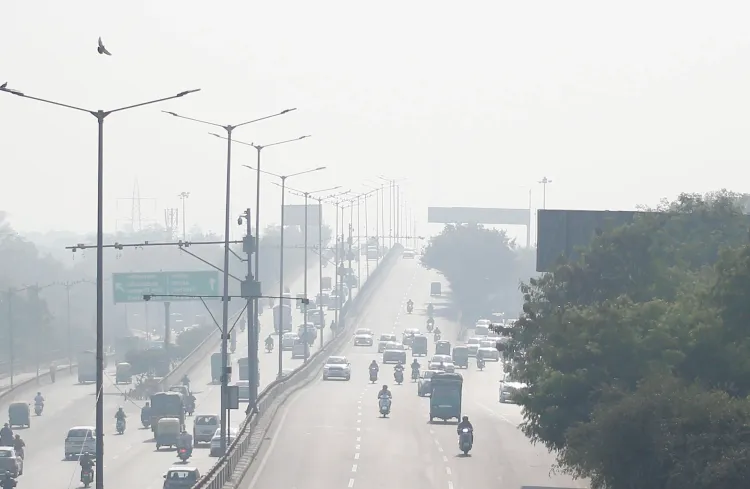
In an urgent move to tackle air pollution, the Delhi government is launching an Innovation Challenge at IIT Delhi. This initiative will showcase innovative solutions with a clear focus on practicality and impact, aiming to significantly improve the city’s air quality. Discover how these groundbreaking ideas could transform Delhi's environmental landscape!
Key Takeaways
Delhi government launches an Innovation Challenge to tackle air pollution.
Shortlisted entries will be evaluated live at IIT Delhi .
The focus is on scalable technologies to reduce PM2.5 and PM10 emissions.
Success will be measured by real-world impact and adaptability.
Public transparency and engagement are key components of the initiative.
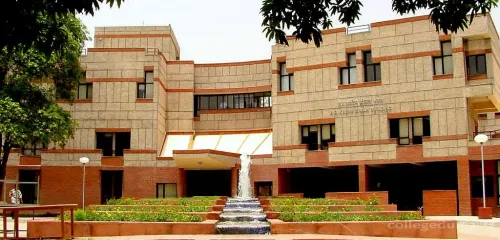
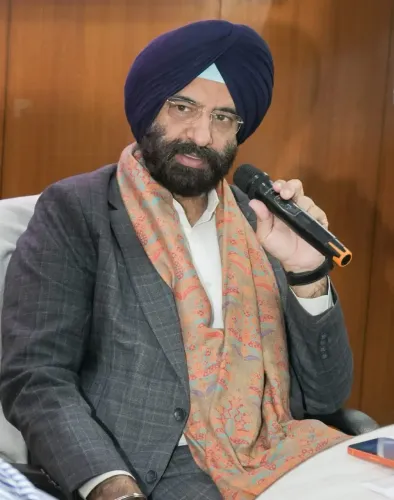
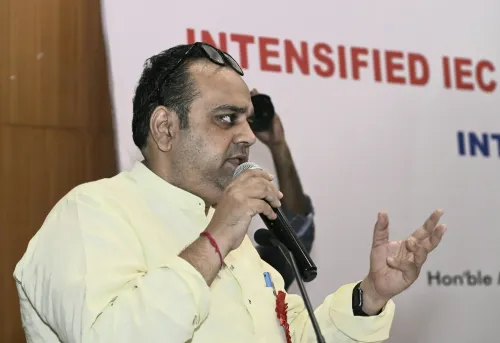
New Delhi, Dec 11 (NationPress) As part of an Innovation Challenge, the Delhi government is set to host a live, multi-day evaluation and exhibition of selected entries at IIT Delhi in the final week of December, announced Environment Minister Manjinder Singh Sirsa on Thursday.
The event will be organized by the Internal Technical Evaluation Committee (ITEC), which includes notable scientists, professors, and experts who will identify the most effective, scalable, and impactful methods for improving Delhi’s air quality.
In the initial screening phase, nearly 300 submissions were reviewed against rigorous eligibility and technical standards, and the most promising solutions have been invited to present before the ITEC in a transparent public forum, according to Sirsa.
This phase is referred to as “where ideas meet reality,” where innovators must prove that their models can effectively reduce Particulate Matter pollutants.
The Innovation Challenge is aimed at low-cost, maintainable, and scalable technologies across two key categories: (A) strategies for reducing, absorbing, or capturing PM2.5 and PM10 emissions from vehicles classified as BS-IV or lower; and (B) methods for reducing, absorbing, or capturing PM2.5 and PM10 from the surrounding air.
Each participant will give a structured presentation and physically demonstrate their prototype, model, device, or equipment to the ITEC panel.
Sirsa highlighted that the success of this initiative will be assessed not by paperwork but by measurable emission reductions, adaptability to Delhi’s unique conditions, and readiness for real-world application.
The government seeks solutions that can rapidly transition from the trial phase to deployment on the streets, in depots, or in hotspots, transforming pilot projects into city-wide initiatives wherever they prove effective.
He expressed that this event is meant to be a showcase where innovators present their ideas before a panel of experts, answer technical queries, and receive immediate feedback in a public setting.
The sessions will occur over several days, with a total of 3-4 rounds planned, one for each batch of entries screened and shortlisted by the Internal Screening Committee (ISC) and ITEC.
The audience will comprise government officials, DPCC representatives, as well as students and alumni from IIT Delhi, and will be accessible to the general public through extensive outreach.
“Citizens have the right to understand how decisions are made regarding clean air technologies, which ideas are selected, and the allocation of public funds towards innovation,” Sirsa stated, describing the format as a movement towards enhanced transparency and public involvement in environmental governance.
During the IIT Delhi showcase, the ITEC will assess entries not only based on innovation and scientific merit but also on feasibility for deployment, adaptability to local conditions, cost-efficiency, and adherence to environmental and legal standards; solutions that meet the required scores will progress to field trials and laboratory testing, with DPCC covering expenses up to established limits. Those with comprehensive test or field trial reports deemed deployable by ITEC may bypass directly to the final review by DPCC-ITEC for potential city-wide implementation.
Sirsa stated that successful projects from the Innovation Challenge will receive tiered rewards from DPCC: ₹5 lakh per project upon passing ITEC evaluation and testing, plus an additional ₹50 lakh for solutions verified by labs equivalent to NPL and recommended for government adoption, thus ensuring that funds back proven, deployable technologies that mitigate PM2.5 and PM10 in Delhi.
The Minister reiterated that this Innovation Challenge is a crucial part of a larger, long-term strategy aimed at enhancing Delhi’s air quality through science-driven solutions and systemic reforms that function throughout the year, not just during peak pollution days.
Point of View
It is vital to recognize the significance of Delhi's Innovation Challenge in the context of air quality improvement. This initiative not only showcases the potential of innovative solutions but also reinforces the need for public accountability and engagement in environmental governance. The focus on practical, scalable technologies reflects a proactive approach to tackling air pollution, ensuring that the voices of innovators and citizens are heard.
NationPress
1 Oct 2026
Frequently Asked Questions
What is the Innovation Challenge?
The Innovation Challenge is an initiative by the Delhi government, aimed at gathering and evaluating innovative solutions to combat air pollution, specifically targeting PM2.5 and PM10 emissions.
When and where will the evaluation take place?
The evaluation will occur in the last week of December at IIT Delhi.
Who will be evaluating the entries?
The entries will be evaluated by the Internal Technical Evaluation Committee (ITEC), comprised of esteemed scientists and experts.
What are the eligibility criteria for submissions?
Submissions are evaluated based on strict eligibility and technical criteria to identify practical, scalable, and impactful solutions.
What incentives are offered for winning projects?
Winning projects will receive tiered incentives, including ₹5 lakh upon successful evaluation and an additional ₹50 lakh for solutions verified and recommended for adoption.