Delhi-NCR air quality turns 'poor' as AQI hits 289 ahead of winter
Synopsis
Delhi's air just crossed into 'poor' territory for the first time in roughly 100 days, with Pusa hitting 289 and dozens of stations above 260. GRAP Stage I is live, stubble burning in Punjab, Haryana and UP is already underway, and winter hasn't even arrived yet — which means the city's worst pollution weeks are likely still ahead.
Key Takeaways
Delhi-NCR AQI entered the 'poor' category on 23 October 2026 , with Pusa recording the highest reading of 289 .
The season's first 'poor' air day was 21 October , when the AQI hit 245 — the highest in approximately 100 days .
Authorities invoked GRAP Stage I , applicable when AQI falls between 201 and 300 .
Stubble burning in Punjab , Haryana , and Uttar Pradesh coincided with the deterioration; no direct causal link to Dussehra celebrations has been officially confirmed.
Delhi Environment Minister Manjinder Singh Sirsa announced an 11-point action plan covering dust control, electric vehicle promotion, and an AI-based traffic management system.
Minimum temperature expected around 19°C , with cooler air likely to further trap pollutants as winter sets in.
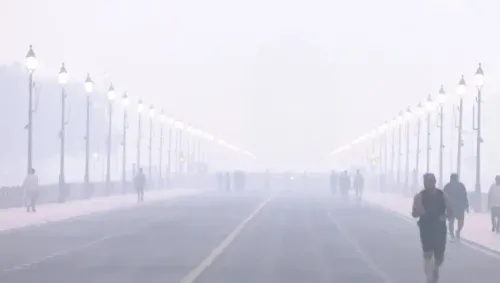
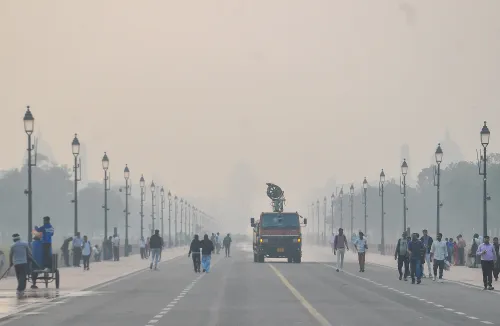
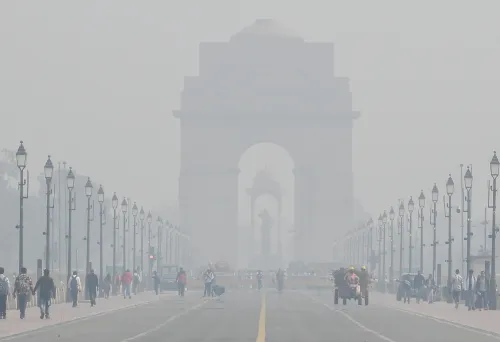
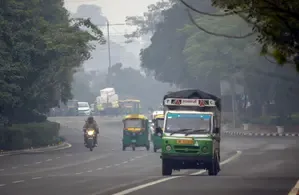
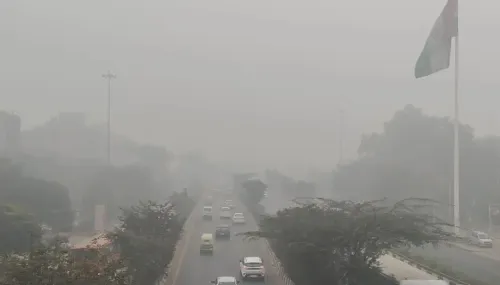
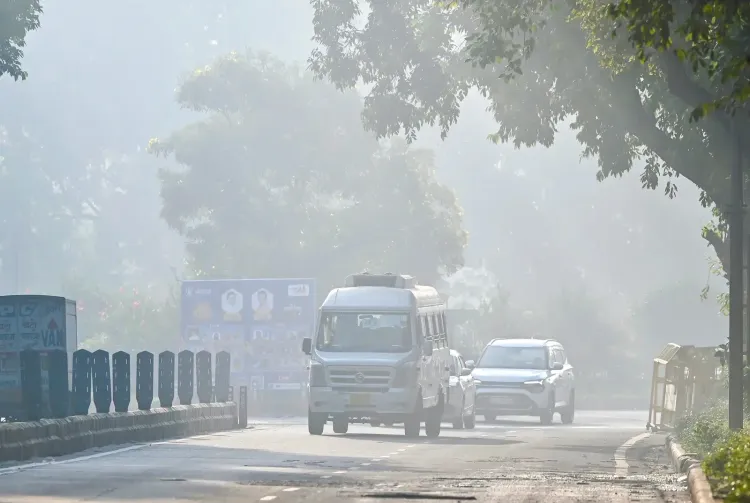
Air pollution levels across Delhi-NCR climbed into the 'poor' category on Friday, 23 October 2026, with multiple monitoring stations recording Air Quality Index (AQI) readings well above 200, according to data released by the Central Pollution Control Board (CPCB). The deteriorating air quality has renewed concerns about health risks for vulnerable groups, particularly children and senior citizens, as temperatures begin to ease ahead of winter.
Station-Wise AQI Readings Across Delhi
CPCB data shows wide variation in pollution intensity across the capital. Among the higher readings, Pusa recorded 289, Punjabi Bagh registered 275, and Sirifort logged 274. Other significantly affected stations include R.K. Puram at 281, Jahangirpuri at 284, DTU at 276, and CRRI Mathura Road at 269.
Further readings included Dwarka Sector 8 (268), NSUT Jaffarpur (267), Mundka (266), Narela (273), Bawana (269), NIH Narela (263), Patparganj (264), Jawaharlal Nehru Stadium (261), Alipur (260), Najafgarh (255), Commonwealth Sports Complex (249), JNU (246), Burari Crossing (246), Aya Nagar (232), NSIT Dwarka (206), Anand Vihar (218), and Burari (215). Lower readings were observed at Vasundhara Enclave (182), Jharoda Kalan (183), Uttam Nagar (170), and Ghummanhera (161).
What Triggered the Season's First 'Poor' Air Day
Delhi recorded its first 'poor' air quality day of the season on 21 October, when the AQI climbed to 245 — its highest level in approximately 100 days. The deterioration followed Dussehra celebrations across the capital and coincided with reports of stubble burning in neighbouring states, including Punjab, Haryana, and Uttar Pradesh. Firecrackers were reportedly burst in several parts of Delhi during the festivities, alongside the traditional burning of Ravana effigies. However, according to official statements, no direct link has been established between the celebrations and the subsequent decline in air quality.
Temperatures in Delhi-NCR are expected to remain around a minimum of 19 degrees Celsius and a maximum of approximately 32 degrees Celsius. The gradual drop in temperature is a key seasonal factor — cooler, stagnant air traps ground-level pollutants, amplifying the impact of emission sources that would otherwise disperse more easily.
GRAP Stage I Invoked; Government's 11-Point Plan
Authorities have invoked Stage I of the Graded Response Action Plan (GRAP), which applies when the AQI falls between 201 and 300 — the 'poor' band. The measures focus on intensifying dust control and addressing local emission sources. Stage II kicks in at 301–400 ('very poor'), Stage III at 401–450 ('severe'), and Stage IV when the AQI exceeds 450 ('severe plus').
Delhi Environment Minister Manjinder Singh Sirsa said the implementation of GRAP this late in the season was unprecedented in recent years, and that the government was pursuing both short-term and long-term pollution control strategies, with public participation and Centre-state coordination as key components.
Sirsa outlined an 11-point action plan covering dust suppression, promotion of electric vehicles, curbs on vehicular emissions, and identification of local pollution hotspots. An Integrated Command and Control Centre (ICCC) has been set up to track pollution from construction activity. The government is also deploying an artificial intelligence-based traffic management system aimed at improving traffic flow and reducing vehicular emissions.
Health Risks and What Comes Next
Prolonged exposure to air in the 'poor' AQI band poses measurable health risks, particularly for children, the elderly, and those with pre-existing respiratory conditions. Doctors and public health groups typically advise limiting outdoor activity during such periods and using air purifiers indoors. This comes amid a pattern seen each October-November in Delhi, when a combination of post-monsoon meteorology, crop residue burning, and increased firecracker use accelerates the seasonal pollution spike. With winter still deepening, AQI levels could worsen further before any sustained improvement is recorded.
Point of View
Stubble season, and falling temperatures arrive together every October and produce the same headlines. What is notable this year is the minister's own admission that invoking GRAP this late in the season is 'unprecedented', which raises the question of whether the AI traffic systems and 11-point plans are genuinely new interventions or repackaged responses to a structural failure. The city's air quality emergency is not a weather event; it is a governance one, rooted in unresolved stubble-burning incentives across neighbouring states and a decades-old dependence on diesel transport. Until those upstream drivers are addressed, GRAP will remain a reactive tool managing optics more than outcomes.
NationPress
23 Oct 2026
Frequently Asked Questions
What is Delhi's AQI today and which areas are worst affected?
On 23 October 2026, Delhi's AQI is in the 'poor' category, with Pusa recording the highest reading of 289, followed by Jahangirpuri at 284 and R.K. Puram and Rohini at 281 each. Dozens of monitoring stations across the capital have crossed 250.
What is GRAP Stage I and what restrictions does it impose?
GRAP Stage I is the first level of Delhi's Graded Response Action Plan, triggered when the AQI falls between 201 and 300 (the 'poor' band). It mandates intensified dust control measures and curbs on local emission sources such as construction activity and open burning.
Why has Delhi's air quality deteriorated in October 2026?
The deterioration follows Dussehra celebrations — including firecracker bursting and Ravana effigy burning — and coincides with stubble burning in Punjab, Haryana, and Uttar Pradesh. Falling temperatures also trap ground-level pollutants. Authorities have not officially linked the celebrations directly to the AQI spike.
What steps is the Delhi government taking to tackle pollution?
Delhi Environment Minister Manjinder Singh Sirsa has outlined an 11-point action plan covering dust suppression, electric vehicle promotion, and vehicular emission curbs. An Integrated Command and Control Centre (ICCC) monitors construction-related pollution, and an AI-based traffic management system has been deployed to reduce vehicular congestion.
Who is most at risk from Delhi's current air quality levels?
Children, senior citizens, and people with pre-existing respiratory or cardiovascular conditions are most vulnerable to 'poor' AQI exposure. Public health advisories typically recommend limiting outdoor activity and using air purifiers indoors during such periods.