Delhi Air Quality Deteriorates to 'Poor' Status; Rohini's AQI Hits 372
Synopsis
Delhi's air quality has dramatically declined, falling into the 'poor' category, with Rohini reporting an alarming AQI of 372. This trend raises significant health concerns as residents contend with rising pollution levels.
Key Takeaways
Delhi's AQI has reached a concerning level of 372.
February 2026 is the most polluted February in three years.
The average temperature has exceeded historical norms.
Only 0.5 mm of rainfall has been recorded this month.
Experts warn of potential health impacts from the current pollution levels.
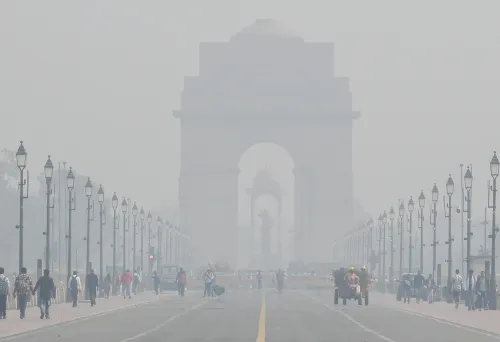
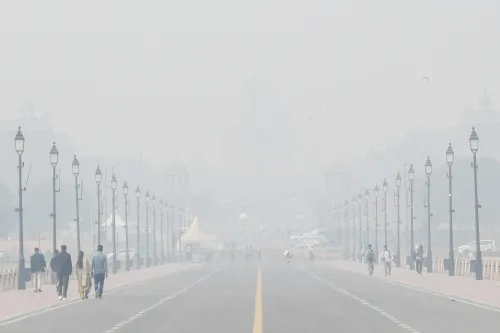
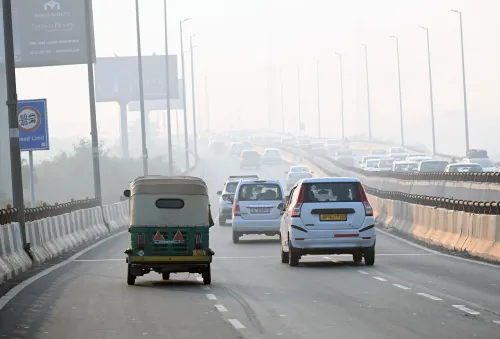
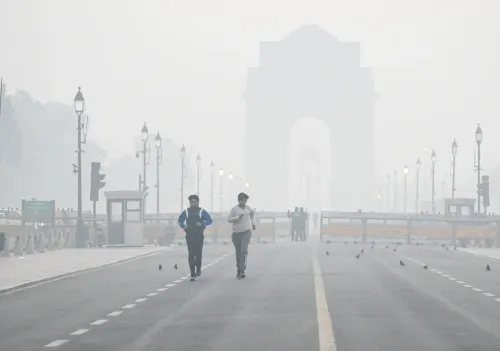
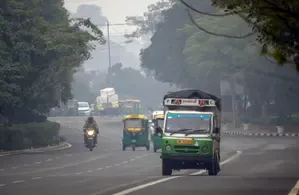
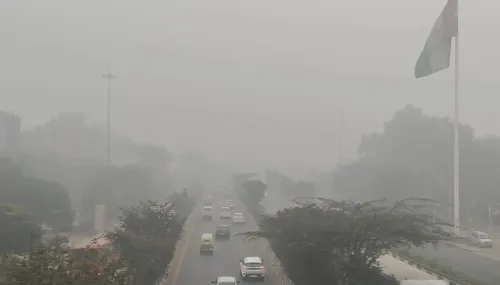
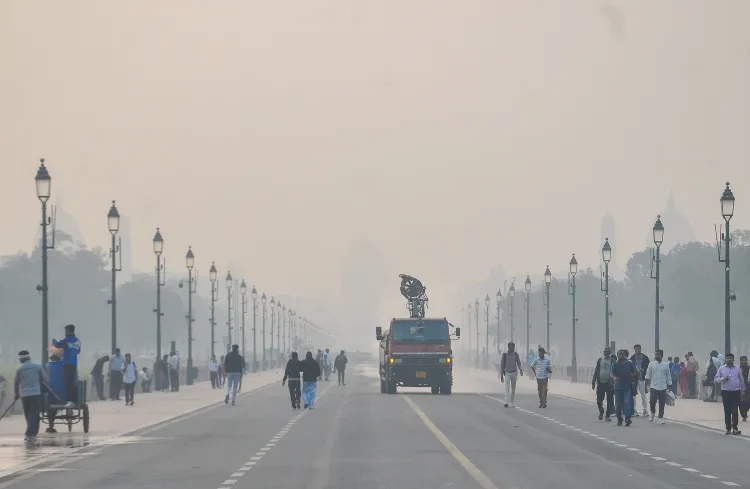
New Delhi, February 28 (NationPress) The air quality in Delhi has slipped into the ‘poor’ category as of Saturday, with the Rohini area registering the highest Air Quality Index (AQI) at 372, based on the recent data from the Central Pollution Control Board (CPCB). Residents awoke to a misty and unseasonably warm morning, raising concerns about pollution levels throughout the national capital.
According to the CPCB's findings, multiple monitoring stations have reported concerning AQI figures. Anand Vihar noted an AQI of 332, Ashok Vihar 237, Bawana 244, Chandni Chowk 276, DTU 193, Dwarka Sector-8 303, IGI Airport 229, IIT Delhi 190, ITO 126, Narela 229, Nehru Nagar 246, Patparganj 230, Pusa 209, Shadipur 311, Vivek Vihar 232, and Wazirpur 297.
This decline follows a day of relatively improved air quality; on Friday, the overall AQI was 186 at 9 a.m., categorizing the city as ‘moderate’. Out of 39 monitoring locations citywide, 24 indicated moderate air quality while 14 fell into the poor range. Notably, data from the ITO monitoring station was not available at that time.
February has remained predominantly polluted despite occasional improvements, with the capital experiencing 20 days of poor air quality and two days classified as very poor this month. The Centre for Research on Energy and Clean Air (CREA) reported that Delhi is facing its worst February air quality in three years, with an average AQI of 234 recorded up to February 26.
The statistics indicate that February 2026 has been the most polluted since 2023, which had an average monthly AQI of 237. For comparison, the average AQI in February was 218 in 2024, 214 in 2025, and 225 in 2022.
This February has also been marked as the warmest in the last three years, with an average maximum temperature of 27 degrees Celsius, exceeding the long-term average of 24.2 degrees Celsius by 2.8 degrees Celsius. On Friday, temperatures peaked at 31.9 degrees Celsius, six degrees above normal, registering as the warmest day of the season.
Experts have linked the higher temperatures to a lack of active western disturbances, resulting in clearer skies and elevated daytime temperatures. The month has seen only 0.5 mm of light rainfall compared to the usual 21.3 mm, leaving pollutants to linger in the air.
The India Meteorological Department predicts predominantly clear skies, shifting to partly cloudy in the afternoon, with mist expected overnight. Although mornings and evenings remain relatively comfortable, rising daytime temperatures suggest an early shift towards pre-summer conditions across the National Capital Region.
Point of View
The ongoing deterioration of Delhi's air quality underscores the urgent need for effective pollution control measures. The significant rise in AQI levels, particularly in areas like Rohini, calls for immediate attention from authorities to safeguard public health.
NationPress
17 Sept 2026
Frequently Asked Questions
What is the current AQI level in Delhi?
As of February 28, the highest reported AQI in Delhi is 372, classified as 'poor.'
How does the current air quality compare to previous months?
February 2026 has recorded the worst air quality since 2023, with an average AQI of 234.
What causes poor air quality in Delhi?
Factors include high pollution levels, lack of rainfall, and rising temperatures due to climatic changes.
What health effects can poor air quality have?
Poor air quality can lead to respiratory issues, cardiovascular diseases, and other health problems.
What measures can be taken to improve air quality?
Reducing vehicle emissions, increasing green spaces, and implementing stricter pollution control policies are crucial.