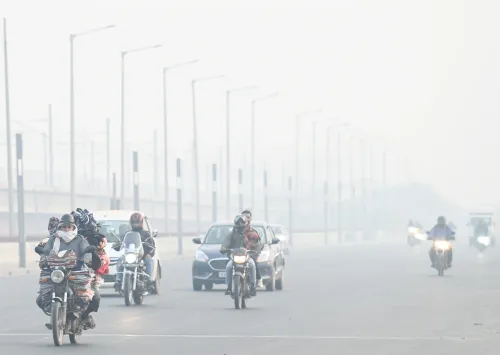
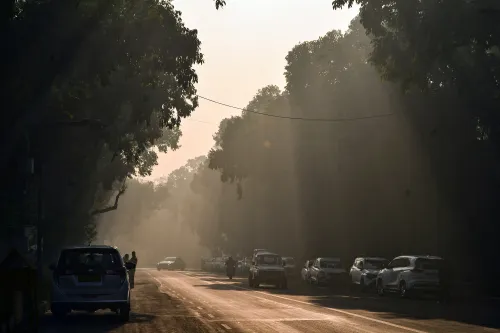
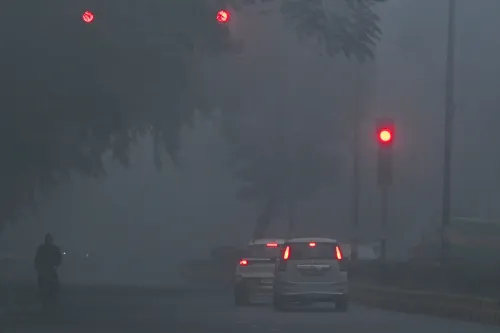
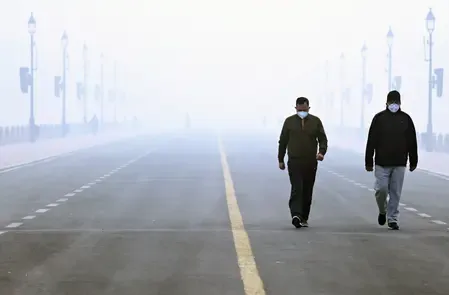
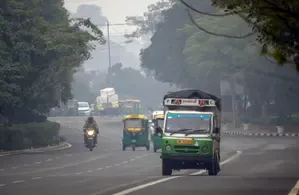
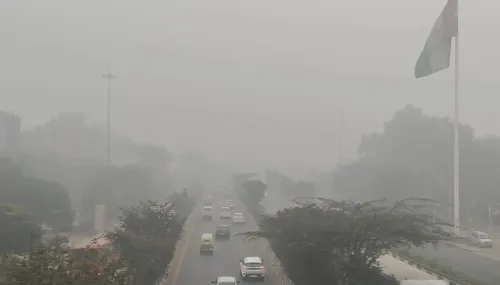
Why has Delhi's air quality spiked to 294?
Synopsis
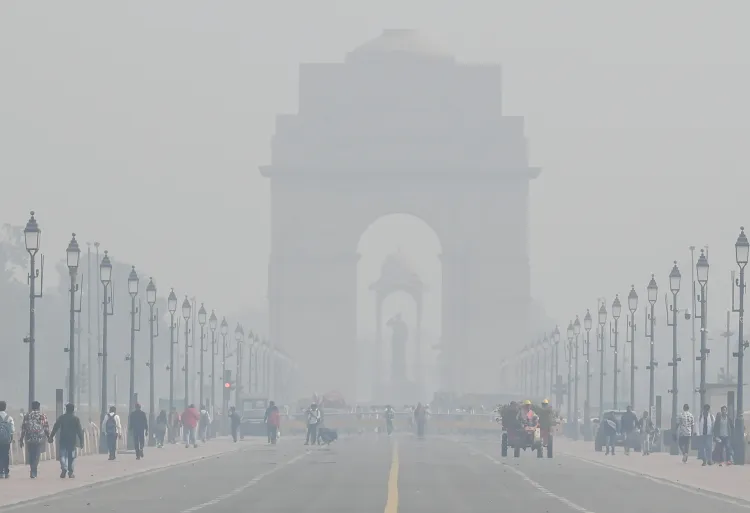
On February 11, Delhi's air quality index spiked to 294, marking it as ‘poor’. This alarming rise raises significant concerns about the health impacts on residents. The current weather conditions include clear skies and mist, but the air quality remains a pressing issue. Read on to learn more about the current pollution levels and government efforts to combat this crisis.
Key Takeaways
Delhi's AQI reached 294 , indicating poor air quality.
Weather forecast predicts clear skies and mist.
New monitoring stations enhance real-time air quality tracking.
Government initiatives include 'Vayu Rakshak' vehicles for pollution control.
Health risks are heightened due to current pollution levels.
New Delhi, Feb 11 (NationPress) The air quality in Delhi took a downturn on Wednesday morning, with the Air Quality Index (AQI) climbing to 294, categorizing it as ‘poor’, as reported by the Central Pollution Control Board (CPCB). The Delhi-National Capital Region (NCR) is expected to experience predominantly clear skies along with mist during the morning hours, while the temperature is anticipated to hover around seasonal averages, according to the India Meteorological Department (IMD).
On Tuesday, the air quality in Delhi-NCR was also recorded in the ‘poor’ category, with an AQI of 267.
According to data from the CPCB, multiple monitoring stations in Delhi reported elevated AQI levels. For instance, Anand Vihar recorded 342, Bawana 312, Burari Crossing 321, Chandni Chowk 365, and DTU 290. Dwarka Sector-8 reported 280, while IIT Delhi had an AQI of 209. Jawaharlal Nehru Stadium recorded 321, Mandir Marg 214, and Mundka 374.
Other regions, such as Narela (331), North Campus (320), Patparganj (313), Pusa (262), R.K. Puram (280), and Rohini (345) continued to show ‘poor’ air quality. Sonia Vihar reported 357, while Wazirpur had the highest AQI at 375.
In the NCR, Noida also reported substandard air quality, where Noida Sector-125 had an AQI of 328, Sector-62 268, Sector-1 275, and Sector-116 284.
On February 10, Delhi Chief Minister Rekha Gupta emphasized that effective pollution control necessitates ongoing, year-round efforts. This statement was made during the launch of six new Continuous Ambient Air Quality Monitoring System (CAAQMS) stations aimed at enhancing real-time air quality tracking throughout the city. She also introduced 100 ‘Vayu Rakshak’ vehicles to bolster monitoring and enforcement of pollution regulations.
The addition of these new stations raises the total number of CAAQMS in Delhi to 46, establishing the largest air quality monitoring network in any city within the country. Among these, 30 are managed by the Delhi Pollution Control Committee (DPCC), 10 by the India Meteorological Department/IITM, and six by the CPCB. Moreover, plans are in place to install an additional 14 monitoring stations shortly.
As part of this initiative, 100 ‘Vayu Rakshaks’ have been assigned to collaborate with the DPCC for on-ground pollution mitigation. Additionally, 600 Vayu Rakshaks, in conjunction with the Delhi Police, are overseeing violations related to traffic and emissions.
The IMD forecasts that on February 11, maximum temperatures in Delhi will likely range from 24 to 26 degrees Celsius, while minimum temperatures may settle between 10 and 12 degrees Celsius. Similar weather patterns are expected on February 12 and 13, with clear skies and light morning mist. Maximum temperatures are projected between 23 and 25 degrees Celsius, and minimum temperatures between 9 and 11 degrees Celsius on both days. Winds are forecasted to predominantly blow from the northwest, strengthening in the afternoon and calming by evening.
Point of View
I observe that the alarming rise in Delhi's air quality index to 294 underlines the persistent struggle against air pollution in urban areas. This situation demands an immediate and sustained response from authorities and civil society alike to safeguard public health and enhance environmental quality. We must remain vigilant and proactive in addressing these pressing concerns.
NationPress
19 Sept 2026
Frequently Asked Questions
What is the current AQI in Delhi?
As of February 11, the Air Quality Index (AQI) in Delhi is 294, categorized as ‘poor’.
What areas in Delhi have the highest AQI?
Areas like Wazirpur (375), Mundka (374), and Anand Vihar (342) have reported the highest AQI levels.
What measures is the government taking to improve air quality?
The Delhi government has inaugurated six new Continuous Ambient Air Quality Monitoring System (CAAQMS) stations and deployed 100 ‘Vayu Rakshak’ vehicles for enhanced monitoring and enforcement.
What are the expected weather conditions in Delhi?
Clear skies with mist are forecasted, with temperatures ranging from 24 to 26 degrees Celsius.
Is the air quality improving or worsening?
Currently, the air quality is worsening, with the AQI rising to 294, indicating a significant health risk.