Dr. Jitendra Singh: India joins elite club on fog-free flights
Synopsis
Union Minister Dr. Jitendra Singh announced on 29 May 2026 that India has joined an elite group of nations with aviation systems capable of operating unaffected by fog or turbulence, crediting IMD and MoES for the milestone.
Key Takeaways
Jitendra Singh announced India's entry into an elite group of nations with fog- and turbulence-resilient aviation systems.
The achievement is attributed to the India Meteorological Department (IMD) and the Ministry of Earth Sciences (MoES) .
IMD has been modernising its meteorological infrastructure — including Doppler Weather Radars — since the late 1990s to improve aviation weather forecasting.
Fog-prone airports in North India , including Delhi , Lucknow , and Amritsar , stand to benefit most directly.
The development is part of a broader government push to align Indian science institutions with global standards in aviation safety.
Operational details, specific technologies, and international benchmarking criteria are expected to be disclosed in subsequent MoES communications.
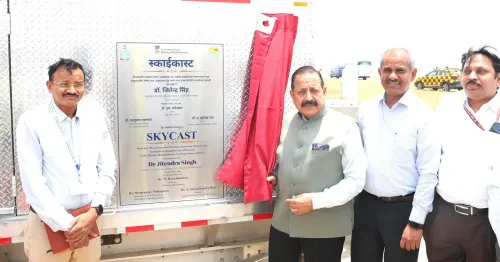
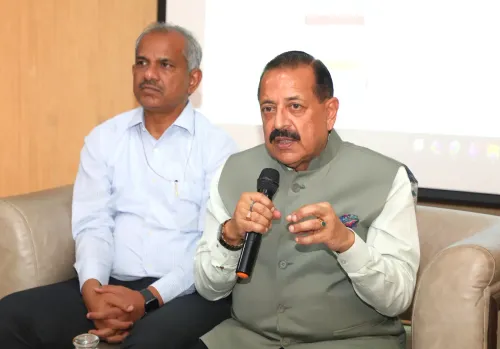
Union Science and Technology Minister Dr. Jitendra Singh announced on Friday, 29 May 2026 that India has joined a select group of nations capable of enabling air flights unaffected by fog or turbulence, crediting the achievement to the India Meteorological Department (IMD) and the Ministry of Earth Sciences (MoES).
Context
The minister's post declared: 'India joins elite club of nations seeking Air Flights, unaffected by fog or turbulence!' The announcement positions India alongside a handful of advanced nations that have operationalised high-precision meteorological systems capable of real-time fog nowcasting and turbulence alerts for aviation. Both IMD and MoES were specifically credited in the post.
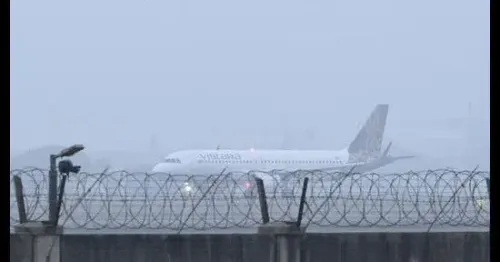
Fog-related disruptions have historically caused significant delays and diversions at major Indian airports, particularly during the winter months at hubs such as Delhi's Indira Gandhi International Airport. The ability to forecast and navigate around these hazards in real time represents a meaningful step forward for Indian civil aviation.
Policy Backdrop
IMD has been on a phased modernisation trajectory spanning several decades, beginning with the installation of Doppler Weather Radars from the late 1990s onward to improve detection of severe weather events, including aviation hazards. These upgrades have been progressively integrated with satellite data and numerical weather prediction models to sharpen forecast accuracy.
MoES, which administers IMD, has driven this infrastructure push as part of a broader science-and-technology mandate to support economic priorities, including the aviation sector. The ministry's investments in observational networks and modelling capabilities form the backbone of the capability now being highlighted.
Stakeholders and Impact
The aviation sector and air passengers stand to benefit most directly. Reduced weather-induced delays translate into lower operational costs for airlines, improved on-time performance, and enhanced passenger safety. India's rapidly expanding air travel market — with passenger numbers growing year-on-year — makes the stakes of weather disruption particularly high.
Airports in fog-prone regions of North India, including those serving Delhi, Lucknow, Amritsar, and Varanasi, are among the primary beneficiaries. The capability also supports cargo aviation, which is sensitive to schedule reliability.
What's Next
Attention will now turn to the operational deployment of the underlying systems across major airports and any formal MoES communication detailing the specific technologies involved, international benchmarking standards met, and the scale of rollout. Statements on technology transfer or collaboration with global meteorological bodies would further clarify India's standing in this 'elite club.'
The development aligns with the government's wider push to position Indian science institutions as globally competitive, and further announcements from Dr. Jitendra Singh or MoES are likely as the system matures into full operational status.
Point of View
Placing India in the company of advanced aviation nations. It reflects the Modi government's consistent strategy of showcasing science-institution achievements as markers of developmental progress. The specific crediting of IMD and MoES signals institutional ownership of the milestone ahead of potential budget or policy discussions around these bodies. The absence of granular technical detail leaves room for scrutiny, but the political messaging — India as a peer of the world's most capable aviation nations — is clear and targeted.
NationPress
26 Sept 2026
Frequently Asked Questions
What did Jitendra Singh announce about India and aviation?
Dr. Jitendra Singh announced that India has joined an elite group of nations with the capability to operate air flights unaffected by fog or turbulence, crediting IMD and MoES for the achievement.
How does IMD help prevent fog-related flight delays in India?
IMD provides real-time fog nowcasting and turbulence alerts using Doppler Weather Radars, satellite data, and numerical weather prediction models, helping airlines and airports manage weather-related disruptions.
Which airports in India are most affected by fog-related flight delays?
Airports in North India — particularly those serving Delhi, Lucknow, Amritsar, and Varanasi — are historically the most affected by winter fog, making them the primary beneficiaries of improved forecasting systems.
What is the Ministry of Earth Sciences' role in aviation weather?
MoES administers IMD and drives the modernisation of India's meteorological observational networks and forecasting capabilities, directly supporting aviation safety and operational efficiency.
What does 'elite club of nations' in aviation meteorology mean?
It refers to a small group of advanced countries that have operational high-precision meteorological systems enabling real-time fog and turbulence forecasting sufficient to minimise weather-induced aviation disruptions.