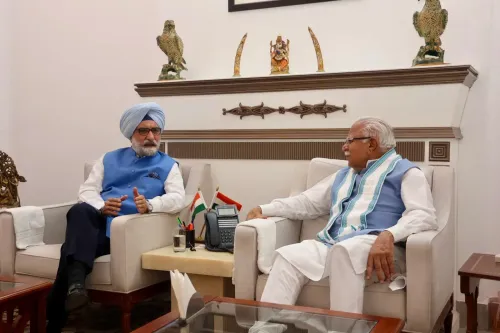
Delhi LG Sandhu meets Bhupender Yadav over air and water pollution
Synopsis
On a single day, Delhi's Lieutenant Governor met the Union Environment Minister, the Chief Minister launched an airport ride-sharing service, and the government signed a five-year AI-powered air quality partnership with IIT Kanpur. The convergence signals a rare multi-pronged push on Delhi's chronic pollution problem — but whether coordination translates into measurable outcomes remains to be seen.
Key Takeaways
Sandhu met Union Minister Bhupender Yadav on 26 May to discuss the capital's air and water pollution.
Chief Minister Rekha Gupta launched an airport ride-sharing service to cut vehicular emissions and ease traffic congestion.
Delhi's Environment Department signed a 5-year MoU with the AIRAWAT Research Foundation, IIT Kanpur for AI-driven air quality management.
The partnership will use artificial intelligence , hyperlocal monitoring, and advanced data analytics to identify pollution sources and hotspots.
The initiatives mark a shift toward data-driven, year-round pollution governance rather than reactive emergency measures.
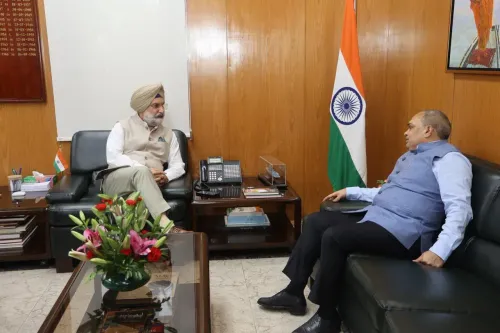
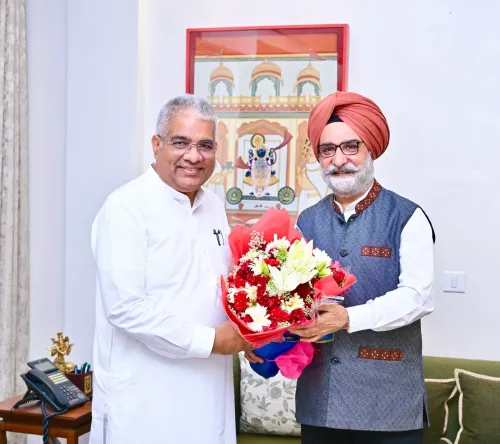
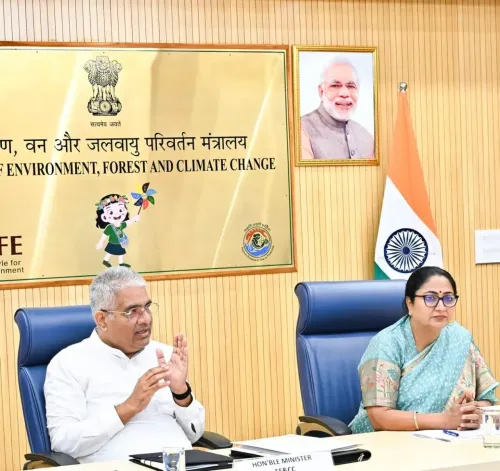
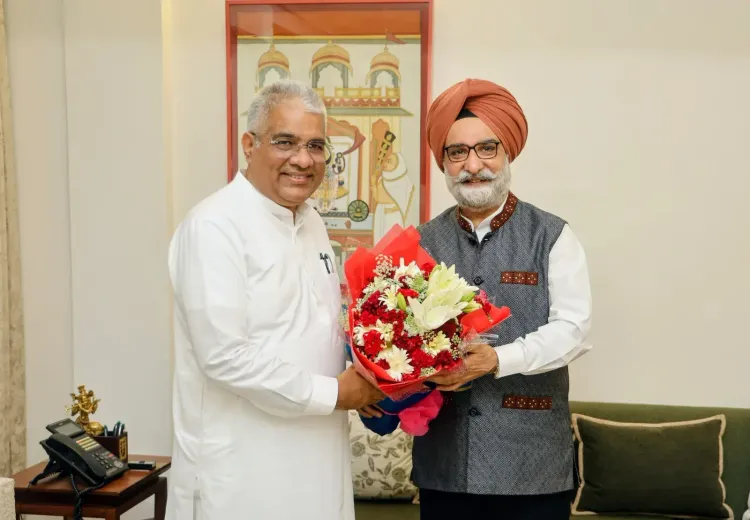
Delhi Lieutenant Governor T.S. Sandhu on Tuesday, 26 May called on Union Minister for Environment, Forest and Climate Change Bhupender Yadav to discuss the national capital's persistent air and water pollution challenges. Sandhu shared details of the meeting on X, signalling a fresh push for Centre-state coordination on Delhi's environmental crisis.
LG-Centre Coordination on Pollution
In his post on X, Sandhu confirmed the meeting, writing: 'Called on Hon'ble Union Minister for Environment, Forest and Climate Change, Shri Bhupender Yadav.' The meeting comes as Delhi continues to grapple with some of the worst air quality indices among major global cities, with both vehicular emissions and industrial discharge into water bodies cited as primary contributors.
Airport Ride-Sharing Service to Cut Emissions
In a parallel development, Chief Minister Rekha Gupta launched an airport ride-sharing service aimed at reducing vehicular emissions across the capital. 'The Delhi government is committed to building a cleaner, greener, and smarter capital through innovative and sustainable mobility solutions,' Gupta said at the launch.
She added that the initiative was 'a major step towards reducing traffic congestion, lowering vehicular emissions, and encouraging citizens to adopt shared and environmentally responsible modes of transport,' describing it as part of a broader vision for a 'modern, technology-driven, and commuter-friendly transport ecosystem for Delhi.'
IIT Kanpur AI Partnership for Air Quality
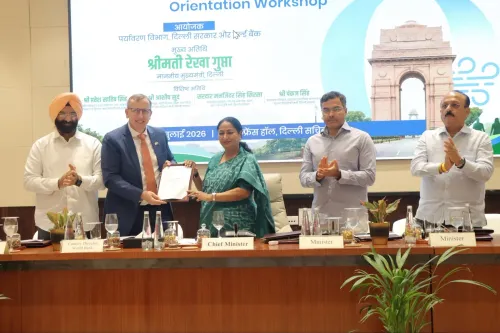
In another significant move, Delhi's Environment Department signed a Memorandum of Understanding (MoU) with the AIRAWAT Research Foundation of the Indian Institute of Technology (IIT) Kanpur, in the presence of Chief Minister Gupta. The agreement is valid for five years and focuses on deploying artificial intelligence (AI), advanced data analytics, hyperlocal monitoring, and scientific decision-support systems to strengthen air quality management in the city.
Gupta said the partnership would enable 'more accurate identification of pollution sources, monitoring of pollution hotspots, improved forecasting systems, and timely interventions.' This is notably the first such AI-driven environmental partnership between the Delhi government and an IIT.
Why These Steps Matter
Delhi has ranked among the world's most polluted capitals for several consecutive years. The convergence of a high-level Centre meeting, a new mobility initiative, and a technology partnership on the same day reflects a concerted effort by both the Lieutenant Governor's office and the Aam Aadmi Party (AAP)-successor administration to demonstrate action ahead of the summer pollution season. Notably, the MoU with IIT Kanpur marks a shift from reactive emergency measures — such as odd-even schemes and construction bans — toward data-driven, year-round pollution governance.
What Comes Next
The five-year MoU with AIRAWAT is expected to produce hyperlocal pollution maps and AI-generated forecasts that could inform real-time policy decisions. The ride-sharing service, if scaled, could reduce the number of private vehicles on Delhi's roads during peak airport travel hours. The outcomes of LG Sandhu's discussions with Minister Yadav are yet to be detailed in an official statement.
Point of View
And Tuesday's flurry of announcements — a Centre meeting, a ride-share launch, an IIT Kanpur MoU — risks looking more like optics than operations. The AIRAWAT partnership is genuinely promising: AI-driven hyperlocal monitoring could finally give policymakers the granular data they have lacked. But the LG-Centre meeting produced no joint statement, no targets, and no timeline — which is the pattern that has defined Delhi's environmental governance for years. The test will be whether the IIT Kanpur data actually triggers enforceable action, or simply generates better-quality reports of a worsening crisis.
NationPress
19 Sept 2026
Frequently Asked Questions
Why did Delhi LG T.S. Sandhu meet Union Minister Bhupender Yadav?
LG T.S. Sandhu called on Union Minister Bhupender Yadav on 26 May to discuss Delhi's air and water pollution challenges. The meeting was aimed at improving Centre-state coordination on the capital's environmental issues.
What is the MoU signed between Delhi's Environment Department and IIT Kanpur?
Delhi's Environment Department signed a five-year MoU with the AIRAWAT Research Foundation of IIT Kanpur to deploy artificial intelligence, advanced data analytics, and hyperlocal monitoring for air quality management. The agreement is intended to improve pollution source identification, hotspot monitoring, and forecasting systems.
What is Delhi's new airport ride-sharing service?
Chief Minister Rekha Gupta launched an airport ride-sharing service designed to reduce the number of private vehicles on Delhi's roads and lower vehicular emissions. It is part of the government's broader push for sustainable and technology-driven urban mobility.
How does the IIT Kanpur partnership differ from past pollution measures?
Unlike reactive steps such as odd-even vehicle schemes or construction bans, the IIT Kanpur MoU focuses on year-round, data-driven governance using AI and hyperlocal sensors. It aims to enable timely, evidence-based interventions rather than emergency responses.
Who is affected by Delhi's air and water pollution initiatives?
All residents of Delhi are directly affected, particularly those in high-density areas near pollution hotspots. Commuters stand to benefit from the ride-sharing service, while citizens across the city could see improved air quality forecasting and faster government response under the IIT Kanpur framework.