Bhupender Yadav Meets Delhi L-G Taranjit Singh Sandhu
Synopsis
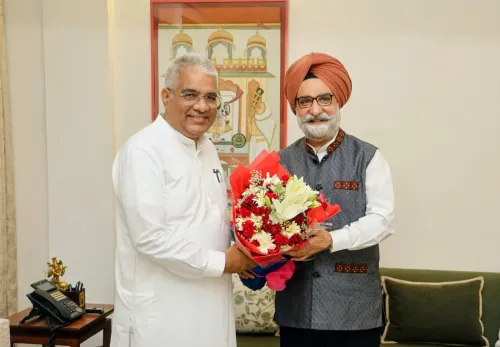
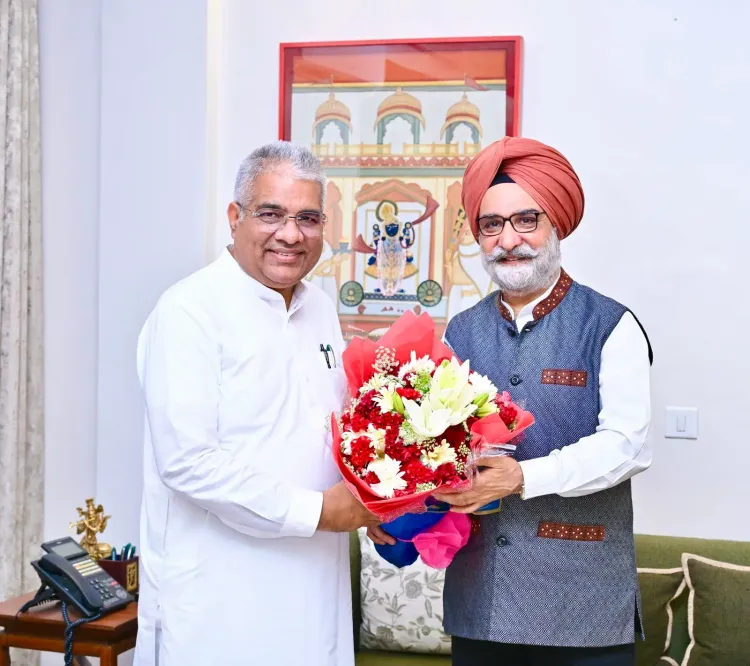
Union Environment Minister Bhupender Yadav met Delhi Lieutenant Governor Taranjit Singh Sandhu in New Delhi on 27 May 2026. The meeting reflects the Centre's coordination with the LG's office on shared governance and environmental matters, including air quality management in the national capital.
Key Takeaways
Bhupender Yadav , Union Environment Minister, met Delhi L-G Taranjit Singh Sandhu in New Delhi on 27 May 2026 .
No agenda or outcome was disclosed in the public post; the meeting was confirmed via Yadav's official X account.
The GNCTD Act amendments of 2021 and 2023 expanded the LG's authority, making his office central to environmental policy implementation in Delhi.
The Commission for Air Quality Management (CAQM) , set up in 2021 , coordinates pollution control across Delhi-NCR and links both offices institutionally.
Such meetings typically precede seasonal pollution preparedness reviews and potential updates to the Graded Response Action Plan (GRAP) .
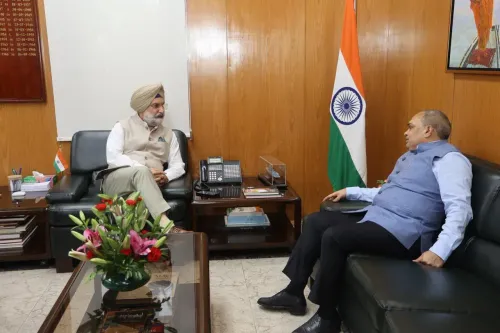
Union Environment Minister Bhupender Yadav met Delhi Lieutenant Governor Taranjit Singh Sandhu in New Delhi on Tuesday, 27 May 2026, in a meeting that underscores the Centre's ongoing coordination with the national capital's constitutional authority on shared governance matters.
Context
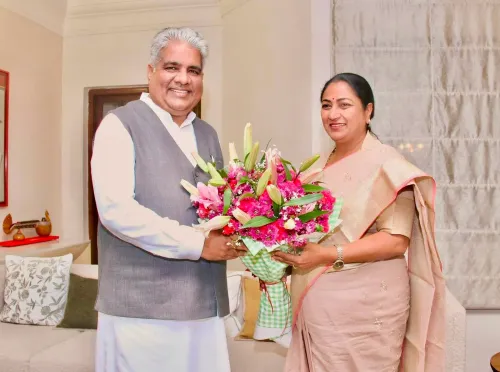
Yadav posted on X confirming the meeting, writing: 'Met with Hon'ble L-G of Delhi Shri Taranjit Singh Sandhu ji today in Delhi.' The post was accompanied by an image but no agenda or outcome was disclosed publicly. As Union Environment Minister, Yadav oversees national air quality policy, pollution control frameworks, and climate commitments — all of which intersect directly with Delhi's chronic environmental challenges.
Taranjit Singh Sandhu, who serves as the Lieutenant Governor of the National Capital Territory, exercises significant administrative authority over services, law and order, and land under the Government of National Capital Territory of Delhi (GNCTD) Act. His office is a key interlocutor for central ministries operating in the capital.
Policy Backdrop
The constitutional framework governing Delhi places the LG at the centre of coordination between the Union government and the elected state administration. Amendments to the GNCTD Act in 2021 and 2023 expanded the LG's authority over services and environmental compliance in the national capital, making his office a critical node for any central policy implementation in Delhi.
On the environment front, the Commission for Air Quality Management (CAQM), constituted in 2021, holds enhanced statutory powers to coordinate pollution control across the Delhi-NCR region. The Ministry of Environment, Forest and Climate Change works closely with the CAQM, and by extension with the LG's office, to enforce directives under the Graded Response Action Plan (GRAP) — a tiered emergency response system activated during periods of severe air pollution.
Stakeholders and Impact
Meetings between the Union Environment Ministry and the Delhi LG office are part of a recurring coordination mechanism on trans-boundary issues such as air pollution, solid waste management, and industrial emissions — areas where the elected Delhi government and the LG share overlapping jurisdictions. Delhi's residents, who face some of the worst air quality indices in the world during winter months, are the most directly affected stakeholders.
Pollution control bodies including the Central Pollution Control Board (CPCB) and the Delhi Pollution Control Committee (DPCC) also operate within this inter-institutional framework, making high-level political and administrative alignment essential for coordinated action ahead of seasonal pollution spikes.
What's Next
While no specific outcomes from the meeting have been made public, such interactions between the Union Environment Ministry and the Delhi LG's office typically precede or accompany seasonal preparedness reviews, updates to GRAP thresholds, or joint directives on stubble burning and vehicular emission controls. With the monsoon season approaching and the post-monsoon pollution cycle historically beginning in October, early-season coordination at the ministerial level signals institutional readiness. The meeting may also reflect broader administrative alignment on pending environmental compliance matters in the capital.
Point of View
Maintaining a direct channel with the LG's office — rather than routing all Delhi-related environmental action through the elected state government — is both a constitutional convenience and a political one. The timing, ahead of the post-monsoon pollution season, suggests this is not merely ceremonial. It reflects the Centre's intent to stay ahead of Delhi's air quality crisis, which has become a perennial governance and public health flashpoint.
NationPress
19 Sept 2026
Frequently Asked Questions
Why did Bhupender Yadav meet the Delhi Lieutenant Governor?
Bhupender Yadav, Union Environment Minister, met Delhi L-G Taranjit Singh Sandhu on 27 May 2026 in New Delhi. No official agenda was disclosed, but such meetings typically involve coordination on air quality management, pollution control, and environmental compliance in the national capital.
Who is Taranjit Singh Sandhu?
Taranjit Singh Sandhu is the Lieutenant Governor of Delhi, the constitutional head of the National Capital Territory. He holds authority over services, law and order, and land under the GNCTD Act, making him a key figure in Centre-Delhi administrative coordination.
What is the CAQM and why does it matter for Delhi?
The Commission for Air Quality Management (CAQM) was constituted in 2021 with statutory powers to coordinate pollution control across Delhi-NCR. It links the Union Environment Ministry and the Delhi LG's office in enforcing anti-pollution measures including the Graded Response Action Plan.
What is the Graded Response Action Plan (GRAP) for Delhi?
GRAP is a tiered emergency response framework activated when Delhi's air quality deteriorates beyond set thresholds. It mandates progressively stricter restrictions on construction, vehicles, and industries, and is enforced jointly by central and Delhi bodies under CAQM oversight.
Does the Delhi LG have power over environmental policy in Delhi?
Yes. Amendments to the GNCTD Act in 2021 and 2023 expanded the LG's authority over services and environmental compliance, giving the Union government a stronger institutional role in implementing central environmental directives in the national capital.