Giriraj Singh hails Northeast silk at St. Petersburg show
Synopsis
Union Textiles Minister Giriraj Singh lauded the showcase of Meghalaya's Ryndia Eri silk and Manipur's handloom at St. Petersburg, Russia, organised by the Delhi Fashion Club, calling it a proud moment for India's textile heritage and a step toward global recognition for Northeast artisans.
Key Takeaways
Union Textiles Minister Giriraj Singh praised the international showcase of Northeast Indian textiles on 2 November 2026 .
Meghalaya's Ryndia (Eri) silk and Manipur's handloom were featured at a platform in St.
Petersburg, Russia .
The event was organised by the Delhi Fashion Club .
Singh called the recognition a matter of pride for India's rich textile and craft tradition.
The showcase aligns with the Ministry of Textiles' broader strategy of promoting Northeast handlooms in non-traditional international markets.
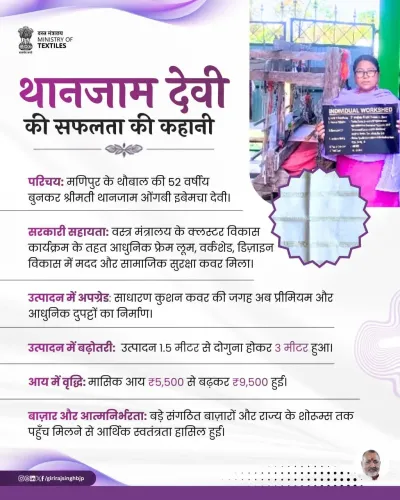
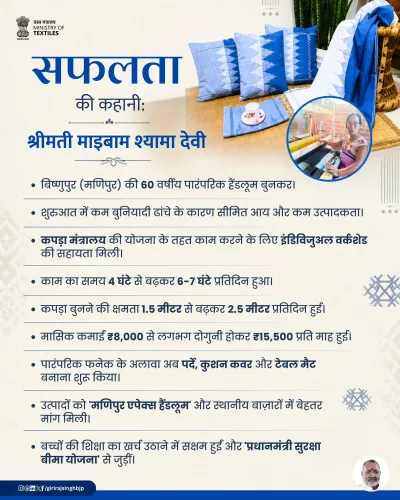
The Northeast's handloom sector is dominated by artisans whose livelihoods depend heavily on expanded market access.
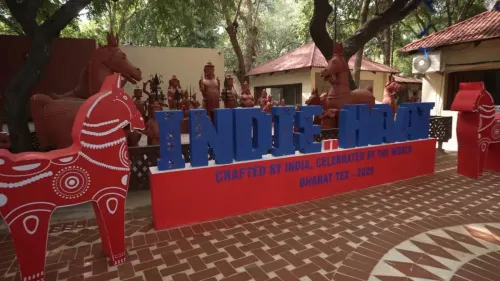
On the streets of St. Petersburg, Russia, the quiet craft of Northeast India found an unlikely spotlight — and Union Textiles Minister Giriraj Singh made sure the moment did not pass unnoticed. On Monday, 2 November 2026, Singh took to X to celebrate the international showcase of Meghalaya's traditional Ryndia (Eri) silk and Manipur's handloom textiles at a global platform in the Russian city, calling it a matter of pride for India's rich weaving heritage.
Posting in Hindi, Singh wrote that recognition for these crafts on an international stage is 'भारत की समृद्ध वस्त्र एवं शिल्प परंपरा का गौरव है' — 'a matter of pride for India's rich textile and craft tradition.' He praised the Delhi Fashion Club, which organised the event, calling the effort 'praiseworthy' and emphasising its role in bringing weavers and artisans of the Northeast a global identity.
Ryndia silk and Manipuri handloom on a Russian stage
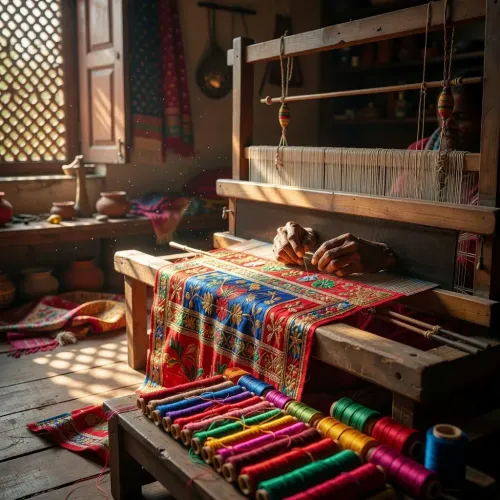
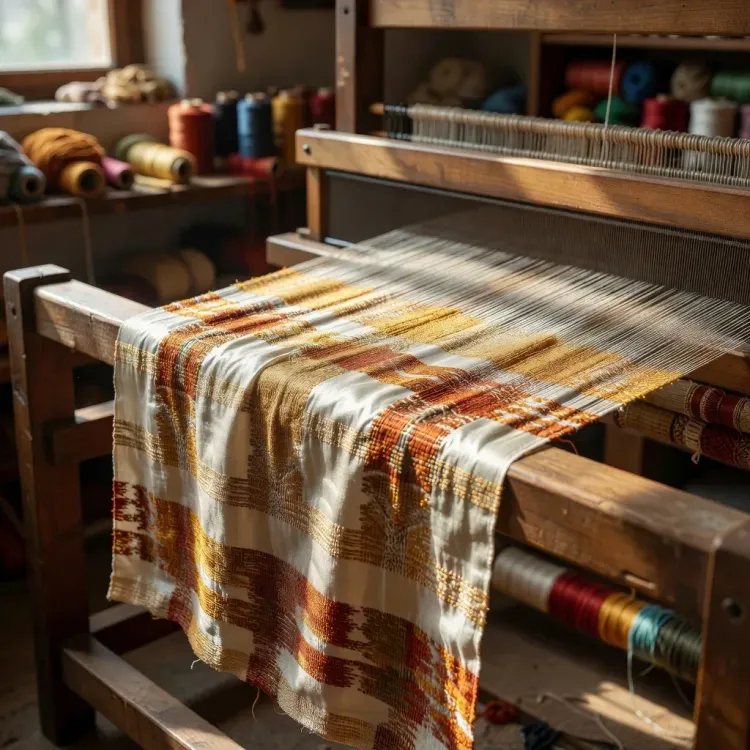
Eri silk, also known locally as Ryndia, is indigenous to Meghalaya and prized for its soft, warm texture and the entirely non-violent process of its production — the silkworm completes its life cycle before the cocoon is harvested. Manipur's handloom tradition is equally distinct, with intricately woven fabrics that carry centuries of cultural memory. Their appearance together at a venue in St. Petersburg signals a deliberate push to take Northeast India's craft economy into non-traditional export markets.
The Delhi Fashion Club served as the bridge for this cross-continental showcase. While the specific details of the St. Petersburg event are drawn from the minister's post, the broader effort sits squarely within a pattern the Ministry of Textiles has cultivated over recent years — GI tagging, export promotion, and high-visibility international exhibitions for Northeast handlooms.
Why the Northeast's weavers need these windows
The Northeast's handloom sector employs thousands of weavers — predominantly women — whose incomes depend almost entirely on domestic demand and limited tourist footfall. International showcases like the one in St. Petersburg open a different kind of door: direct visibility with foreign buyers, designers, and cultural institutions in markets where Indian craft is still a novelty rather than a commodity.
Russia, and specifically St. Petersburg with its strong arts and design culture, represents precisely the kind of non-traditional market that Indian textile diplomacy has been quietly targeting. A single successful showcase can seed long-term buyer relationships and licensing arrangements that domestic exhibitions rarely produce.
For the weavers back in Meghalaya's hills and Manipur's valleys, the political signal from a Union Minister's public endorsement carries weight too — it keeps the policy spotlight on their livelihoods at a time when machine-made alternatives continue to undercut handmade textiles on price.
The craft has crossed continents. The real test is whether the orders follow.
Point of View
Particularly into the Russian market where Western competitors are less present post-2022. For Northeast India's weaving communities, sustained ministerial visibility is critical to keeping GI-protection and export-promotion budgets flowing. The pattern of using internationally staged craft showcases to build buyer pipelines for heritage products reflects a quiet but consistent strand of India's soft-power trade strategy that has grown steadily under the current government.
NationPress
2 Nov 2026
Frequently Asked Questions
What is Ryndia or Eri silk from Meghalaya?
Ryndia, also known as Eri silk, is a traditional silk produced in Meghalaya that is prized for its soft texture and non-violent production method — the silkworm completes its life cycle before the cocoon is used, making it distinct from conventional silk.
What did Giriraj Singh say about the St. Petersburg textile event?
Union Textiles Minister Giriraj Singh praised the showcase of Meghalaya's Eri silk and Manipur's handloom at St. Petersburg, Russia, calling it a matter of pride for India's textile heritage and lauding the Delhi Fashion Club for organising it.
Who organised the Indian textile showcase in St. Petersburg Russia?
The Delhi Fashion Club organised the event that brought Meghalaya's Ryndia Eri silk and Manipur's handloom textiles to an international platform in St. Petersburg, Russia.
Why is promoting Northeast Indian handlooms internationally important?
The Northeast's handloom sector employs thousands of artisans, many of them women, whose incomes depend on expanding beyond limited domestic markets. International showcases open access to foreign buyers and design communities, helping sustain traditional crafts economically.
What schemes does India's Ministry of Textiles run for Northeast handlooms?
The Ministry of Textiles has run schemes for Geographical Indication (GI) tagging and export promotion of Northeast handlooms and Eri silk, supporting artisans in gaining market recognition and protection for their traditional craft products.