Jaishankar meets Jordan, Egypt FMs at UNGA amid West Asia crisis
Synopsis
On the sidelines of UNGA, EAM Jaishankar held high-stakes meetings with the foreign ministers of Jordan and Egypt — both central to the West Asia crisis — while India separately reaffirmed its support for a Two-State solution at a Saudi-chaired ministerial. The diplomatic blitz signals New Delhi's intent to remain an active voice in shaping the region's post-conflict order.
Key Takeaways
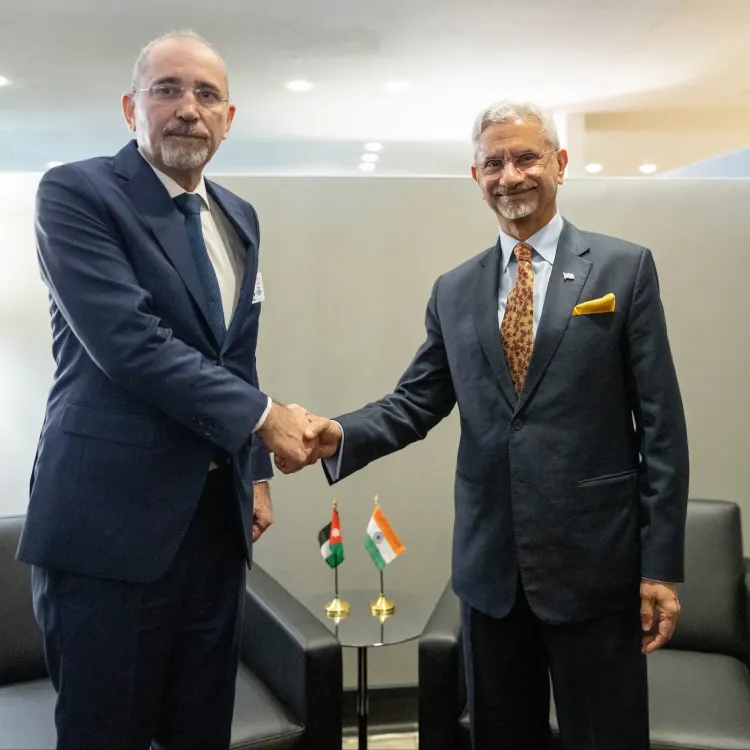
Jaishankar met Jordan's FM Ayman Safadi and Egypt's FM Badr Abdelatty on 24 September at the UNGA in New York to review West Asia developments.
Jordan has come under attack from Iran during the Gulf conflict, underscoring its strategic centrality in regional diplomacy.
India reaffirmed 'clear and consistent support' for the Two-State Solution at a Saudi-chaired ministerial meeting; MEA Secretary Sibi George represented New Delhi.
Jaishankar confirmed India's commitment to the success of CHOGM in November , hosted by Antigua and Barbuda , and noted India's $1 million aid contribution through the India-UN Development Partnership Fund.
Jaishankar also met UNOPS chief Jorge Moreira da Silva and, on Wednesday, the foreign ministers of Fiji and Papua New Guinea .
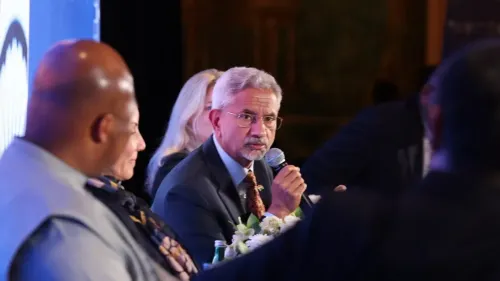
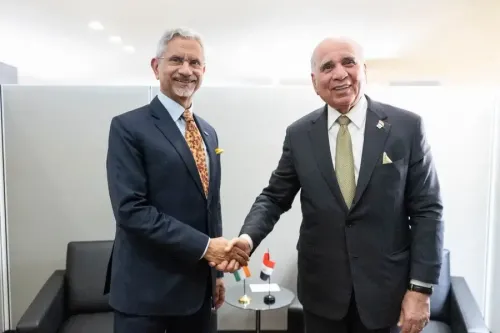
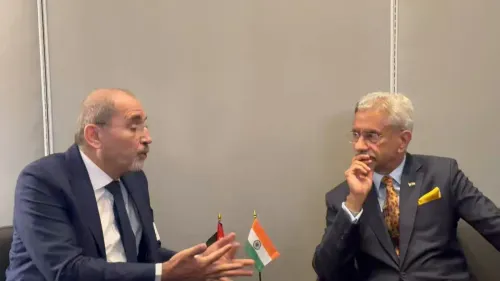
External Affairs Minister S. Jaishankar on Thursday, 24 September held back-to-back meetings on the sidelines of the United Nations General Assembly (UNGA) in New York with the foreign ministers of Jordan and Egypt, two pivotal players in a region gripped by escalating conflict, to review the latest developments in West Asia.
Talks with Jordan and Egypt
Following his meeting with Jordan's Foreign Minister Ayman Safadi, Jaishankar described the exchange as 'truly valuable,' noting the depth of their discussion on West Asia and the Middle East. Jordan, which shares a border with the conflict zone, has itself come under attack from Iran during the ongoing Gulf crisis, elevating its strategic significance in any regional diplomatic calculus.
Jaishankar subsequently met Egypt's Foreign Minister Badr Abdelatty, characterising the conversation as 'a useful review of regional developments.' India has historically maintained close ties with Cairo, which is regarded as a cornerstone of Arab diplomatic influence in West Asia.
India at the Two-State Solution Ministerial
Sibi George, the Ministry of External Affairs (MEA) Secretary (West), represented India at a high-level ministerial meeting of the Global Alliance for the Implementation of the Two-State Solution — a forum chaired by Saudi Arabia and aimed at reviving the framework for an independent Palestinian state coexisting peacefully alongside Israel. MEA Spokesperson Randhir Jaiswal, in an official post on X, confirmed that 'India reaffirmed its clear and consistent support for the Two-State solution,' adding that 'India's approach combines political commitment with practical support.' The United Nations General Assembly has repeatedly endorsed the two-state concept, though implementation has remained elusive amid the current conflict.
Meeting with Antigua and Barbuda PM on CHOGM
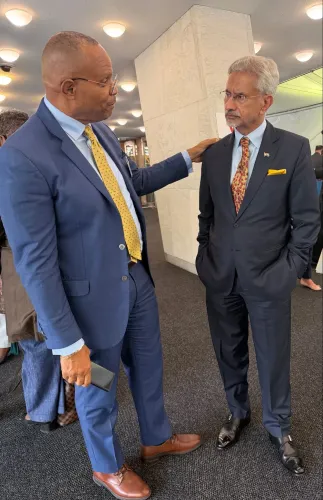
On the Commonwealth front, Jaishankar met Prime Minister Gaston Browne of Antigua and Barbuda, reiterating that 'India is strongly committed to the success of CHOGM' — the Commonwealth Heads of Government Meeting that the Caribbean nation is scheduled to host in November. Jaishankar noted continued momentum on development partnership, capacity building, and climate change cooperation. India has contributed $1 million in aid to Antigua through the India-UN Development Partnership Fund, in addition to direct assistance that includes rebuilding a hospital devastated by a hurricane.
UNOPS and Pacific Nation Meetings
Jaishankar also held talks with UN Under-Secretary-General Jorge Moreira da Silva, who heads the UN Office for Project Services (UNOPS), acknowledging the agency's logistical contributions in 'delicate and challenging situations.' On Wednesday, he had met the foreign ministers of Fiji — Sakiasi Ditoka — and Papua New Guinea — Justin Tkatchenko — underscoring India's broadening diplomatic outreach across the Pacific. This flurry of engagements reflects New Delhi's active multilateral posture at a moment when global fault lines — from West Asia to the Indo-Pacific — are sharpening rapidly.
Point of View
Egypt, Pacific island states, and UNOPS in quick succession — is less a routine courtesy round and more a deliberate signal that New Delhi wants a seat at every table shaping the post-crisis order in West Asia. The Two-State Solution reaffirmation is consistent with India's long-held position, but the Saudi-chaired format gives it fresh geopolitical weight. What is worth watching is whether India's 'practical support' rhetoric at the two-state ministerial translates into any tangible mediating role, or whether it remains the calibrated neutrality New Delhi has long preferred. With Jordan under direct Iranian pressure and Egypt managing its own Gaza border crisis, Jaishankar's interlocutors were not merely symbolic — they represent the Arab-world pressure points where India's influence, if exercised, could genuinely matter.
NationPress
25 Sept 2026
Frequently Asked Questions
Why did Jaishankar meet Jordan and Egypt's foreign ministers at UNGA?
Jaishankar met Jordan's FM Ayman Safadi and Egypt's FM Badr Abdelatty on 24 September on the sidelines of the UN General Assembly to review the latest developments in the West Asia crisis. Both countries are key regional players — Jordan has faced direct Iranian attacks during the Gulf conflict, while Egypt holds significant diplomatic influence across the Arab world.
What is India's position on the Two-State Solution?
India reaffirmed its 'clear and consistent support' for the Two-State Solution at a high-level ministerial meeting chaired by Saudi Arabia. MEA Secretary Sibi George represented India and stated that the country's approach 'combines political commitment with practical support' for a framework in which Palestine and Israel would coexist as independent sovereign states.
What did Jaishankar discuss with Antigua and Barbuda's Prime Minister?
Jaishankar met PM Gaston Browne and reiterated India's strong commitment to the success of the Commonwealth Heads of Government Meeting (CHOGM), which Antigua and Barbuda is hosting in November. He also highlighted India's $1 million contribution through the India-UN Development Partnership Fund and direct aid including hospital reconstruction after a hurricane.
Which other countries did Jaishankar meet at UNGA this week?
On Wednesday, Jaishankar met the foreign ministers of Fiji (Sakiasi Ditoka) and Papua New Guinea (Justin Tkatchenko), reflecting India's broader Pacific diplomatic outreach. He also held talks with UN Under-Secretary-General Jorge Moreira da Silva of UNOPS, recognising the agency's role in relief and development logistics.
What is the Global Alliance for the Implementation of the Two-State Solution?
It is a multilateral forum aimed at advancing the two-state framework under which both Palestine and Israel would exist as independent, sovereign nations. The ministerial meeting at UNGA was chaired by Saudi Arabia, and the concept has been repeatedly endorsed by the United Nations General Assembly, though practical implementation has remained elusive.