CM Majhi: Odisha hires 26,615 school staff in two years
Synopsis
Odisha Chief Minister Mohan Charan Majhi announced that 26,615 teaching and non-teaching staff were recruited in two years, and that model primary schools named after educationist Godabarish Mishra will be set up in every panchayat to improve rural education quality.
Key Takeaways
26,615 teaching and non-teaching staff recruited by the Odisha government over the past two years to address school teacher shortages.
Model schools called 'Godabarish Mishra Adarsha Primary Vidyalaya' are being established in every panchayat across Odisha.
The initiative targets rural children, providing access to modern and quality primary education at the panchayat level.
The scheme is named after Godabarish Mishra (1886–1956) , a noted Odia freedom fighter, writer, and educationist.
The push aligns with the National Education Policy 2020 and the BJP's 2024 Odisha election manifesto commitments on education.
CM Majhi framed the reforms as foundational to building a 'strong and prosperous Odisha' .
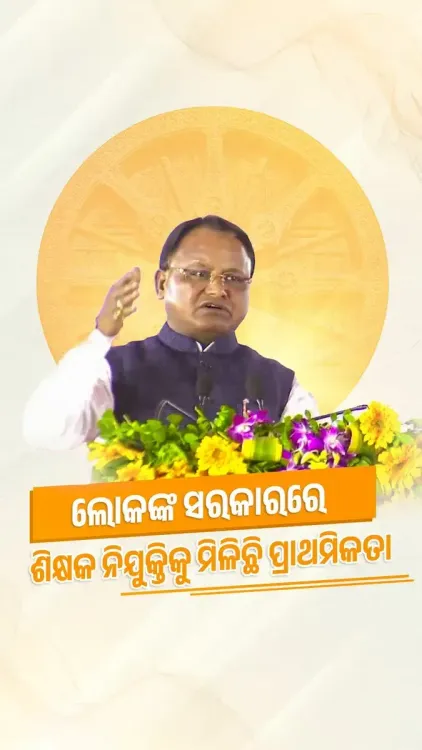
Odisha Chief Minister Mohan Charan Majhi on Monday, 8 June 2026, highlighted his government's push to prioritise primary education, announcing that 26,615 teaching and non-teaching staff have been recruited over the past two years to strengthen the state's school system.
Context
Posting in Odia on X, Chief Minister Majhi wrote: 'ଲୋକଙ୍କ ସରକାରରେ ପ୍ରାଥମିକ ଶିକ୍ଷାକୁ ମିଳୁଛି ସର୍ବାଧିକ ପ୍ରାଥମିକତା' ('In the people's government, primary education is receiving the highest priority'). He acknowledged that many schools had previously been running without adequate teachers, and said the current administration has given special emphasis to teacher recruitment to address that gap.
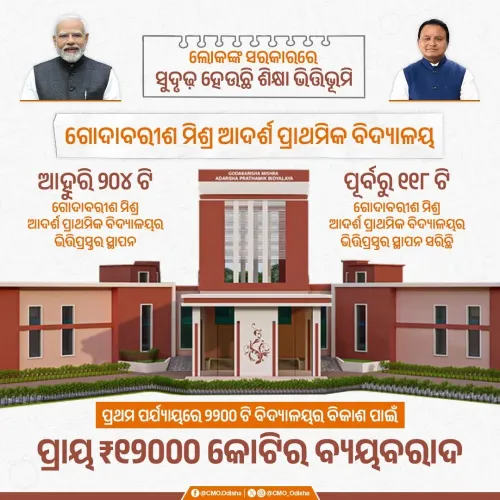
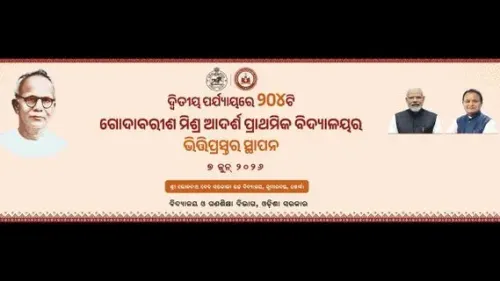
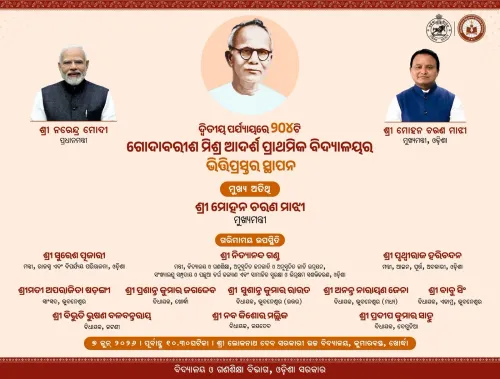
The post also announced the establishment of 'Godabarish Mishra Adarsha Primary Vidyalaya' — model primary schools to be set up in every panchayat across Odisha. These upgraded institutions are intended to provide modern and quality education to children in rural areas.
Policy Backdrop
The drive aligns with the National Education Policy 2020, which placed foundational literacy, numeracy, and teacher rationalisation at the centre of India's school reform agenda. Odisha's BJP election manifesto ahead of the 2024 assembly elections had specifically committed to filling vacant teaching posts and upgrading rural school infrastructure.
The Godabarish Mishra Adarsha Primary Vidyalaya scheme is named after Godabarish Mishra (1886–1956), a revered Odia freedom fighter, writer, and educationist. By invoking his legacy, the state government signals a cultural continuity alongside the administrative overhaul. The initiative marks a visible shift from the previous BJD administration's school improvement programmes.
Stakeholders and Impact
The primary beneficiaries are rural school children in Odisha's approximately 6,000-plus gram panchayats, who stand to gain access to better-staffed, upgraded schools. Primary teachers and non-teaching staff who were recruited are the direct employment beneficiaries, while panchayat bodies are expected to play a role in hosting and supporting the new model schools.
Teacher shortages in rural Odisha had long been cited as a key driver of poor learning outcomes, particularly in tribal and remote districts. Filling those vacancies at scale is seen as a foundational step before infrastructure upgrades can have lasting impact.
What's Next
Attention will now turn to the rollout pace of the panchayat-level Adarsha Vidyalayas and whether learning-outcome data improves in step with the staffing additions. The 2026–27 Odisha state budget is expected to be a key indicator of whether further recruitment targets or capital expenditure for school upgrades are on the agenda. CM Majhi concluded his post with a forward-looking note: the changes in education will 'build a strong and prosperous Odisha' — ଗଢ଼ିବ ସଶକ୍ତ ଓ ସମୃଦ୍ଧ ଓଡ଼ିଶା.
Point of View
Which ruled Odisha for 24 years and faced persistent criticism over rural school vacancies. The naming of the model schools after Godabarish Mishra is a calculated cultural move, anchoring a BJP policy initiative in a widely respected Odia identity figure. The announcement fits a broader BJP pattern post-2024 of using education metrics — recruitment numbers, school upgrades — as visible proof of delivery in states where the party is new to power. The real test, however, will be learning outcomes and the operational status of the Adarsha Vidyalayas, neither of which can be assessed from a single social media post.
NationPress
21 Sept 2026
Frequently Asked Questions
How many teachers has the Odisha government recruited in the last two years?
Chief Minister Mohan Charan Majhi stated that 26,615 teaching and non-teaching staff have been recruited over the past two years to strengthen Odisha's primary education system.
What is the Godabarish Mishra Adarsha Primary Vidyalaya scheme?
It is a state initiative to establish upgraded model primary schools in every gram panchayat in Odisha, aimed at providing modern and quality education to rural children. The schools are named after Odia freedom fighter and educationist Godabarish Mishra (1886–1956) .
Who is Godabarish Mishra and why are schools named after him?
Godabarish Mishra was an Odia freedom fighter, writer, and educationist who lived from 1886 to 1956 . The Odisha government named the model school scheme after him to honour his legacy in education and Odia cultural identity.
What was the teacher shortage situation in Odisha before the current government?
CM Majhi's post acknowledged that many schools had previously been running without adequate teachers. Rural teacher vacancies were a long-standing issue in Odisha, particularly in tribal and remote districts.
How does Odisha's school recruitment drive relate to the National Education Policy 2020?
The National Education Policy 2020 prioritised foundational literacy, numeracy, and teacher rationalisation across Indian states. Odisha's recruitment and model school initiative aligns with these central guidelines while also fulfilling the BJP's 2024 state election manifesto commitments.