White House Backs 'Trump Accounts' to Broaden American Wealth
Synopsis
The White House on 8 July 2026 promoted Senator Dave McCormick's argument for 'Trump Accounts,' a proposed financial vehicle designed to expand every American's direct stake in national prosperity, fitting a broader Republican push for ownership-based economic policy.
Key Takeaways
The White House amplified Senator Dave McCormick's opinion piece on 8 July 2026 backing 'Trump Accounts.' Senator McCormick is a Republican from Pennsylvania with a professional background in finance and hedge fund management.
The proposal frames 'Trump Accounts' as a vehicle to give all Americans a direct stake in economic prosperity.
The concept aligns with longstanding Republican preference for ownership-based, market-participation approaches over government transfer programmes.
Key next steps include potential Congressional hearings , draft legislation, and Treasury Department guidance on implementation.
Retail investors and lower- to middle-income households are the stated primary beneficiaries of the proposal.
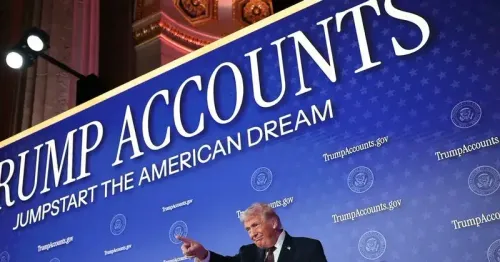
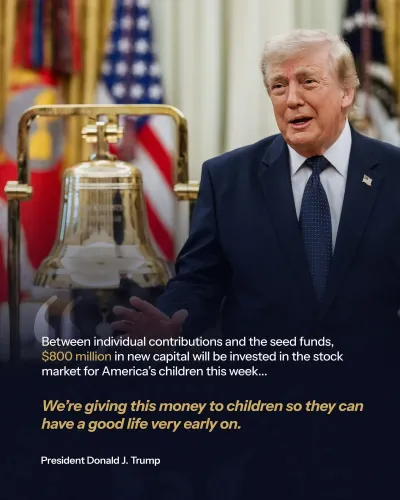
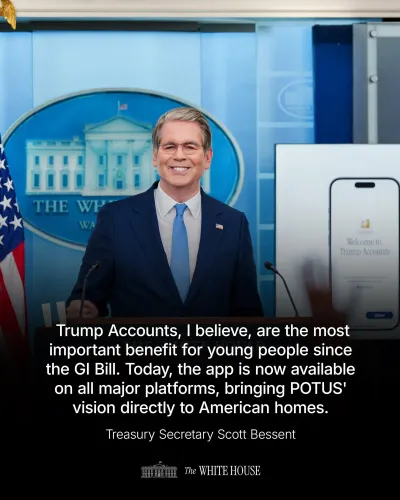
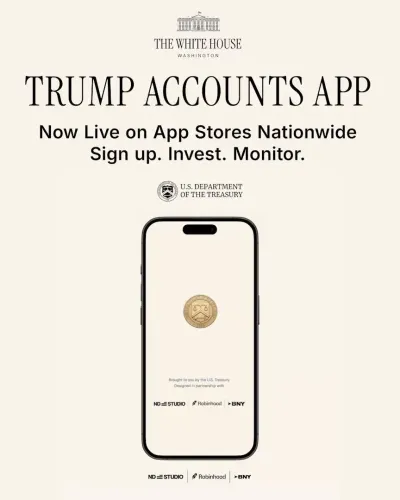
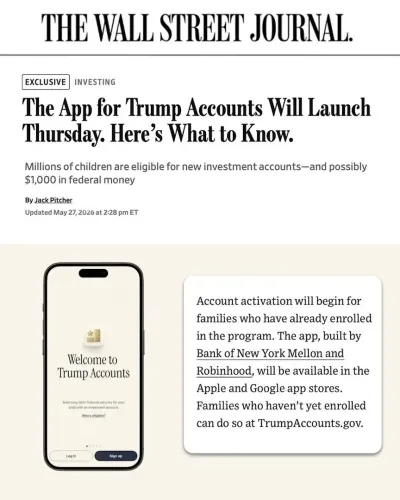
The White House on Wednesday, 8 July 2026 amplified a call by Senator Dave McCormick of Pennsylvania for a new financial vehicle dubbed 'Trump Accounts,' framing it as a mechanism to give every American a direct stake in the country's economic prosperity.
Context
The White House shared Senator McCormick's opinion piece in which he argues that 'Trump Accounts give all Americans a stake in prosperity.' Senator Dave McCormick, a Republican from Pennsylvania with an extensive background in finance and hedge fund management, is among the more prominent voices in the Senate on market-based economic policy. His endorsement of the proposal carries weight given his professional history in investment management.
Policy Backdrop
The concept of 'Trump Accounts' fits within a broader Republican policy tradition of expanding ownership-based approaches to wealth-building — favouring individual market participation over expanded government transfer programmes. Similar themes surfaced during the first Trump administration, which pursued tax-advantaged savings vehicles, deregulation of financial markets, and incentives for retail investment. The framing of accounts tied to a president's name also echoes earlier proposals such as 'Baby Bonds' and expanded individual retirement account structures debated across party lines in recent years.
The Trump administration's economic messaging has consistently centred on the idea that prosperity should be participatory — that ordinary Americans, not just institutional investors, should benefit directly from market growth. A named account structure would represent a concrete legislative or executive vehicle for that philosophy.
Stakeholders and Impact
The primary beneficiaries envisioned in the proposal are ordinary American citizens and retail investors who currently have limited exposure to equity markets or tax-advantaged savings instruments. Proponents argue that broadening market participation reduces wealth inequality by giving lower- and middle-income households a direct share in economic growth. Critics of such approaches have historically raised questions about market risk exposure for households without financial cushions, and about the fiscal cost of any associated tax benefits.
Congressional committees overseeing finance and taxation, along with the Treasury Department, would be key institutional actors in translating any such proposal into binding law or regulatory guidance.
What's Next
The White House's amplification of Senator McCormick's argument signals that 'Trump Accounts' may be moving from opinion-page advocacy toward active legislative or executive consideration. Observers will watch for Congressional hearings, draft legislation, or Treasury Department guidance that would give the proposal a concrete regulatory shape. The pace at which the administration follows promotional posts with policy documents will indicate how seriously the idea is being pursued as part of the broader 2026 economic agenda.
Point of View
Pushing an 'ownership economy' narrative ahead of any midterm cycle serves a dual purpose: it energises the base with a tangible economic promise while drawing a sharp contrast with Democratic approaches centred on direct transfers. Whether the proposal advances legislatively or remains aspirational rhetoric will depend on how quickly Treasury and Congressional allies can produce workable draft text.
NationPress
8 Jul 2026
Frequently Asked Questions
What are Trump Accounts?
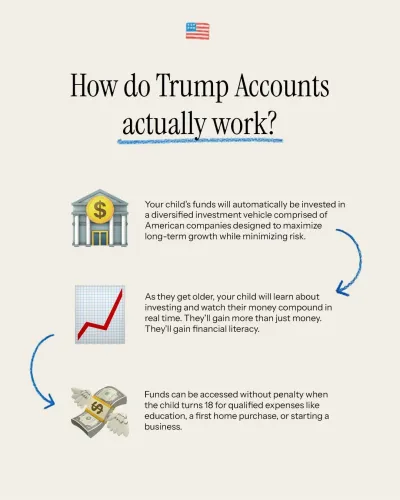
'Trump Accounts' is the name used by Senator Dave McCormick and the White House for a proposed financial vehicle intended to give all Americans a direct stake in economic prosperity, though specific legislative details had not been publicly released as of 8 July 2026 .
Who is Senator Dave McCormick?
Dave McCormick is a Republican U.S. Senator from Pennsylvania with a background in finance and hedge fund management, making him one of the Senate's more prominent voices on market-based economic policy.
Why is the White House promoting Trump Accounts?
The White House shared Senator McCormick's opinion piece as part of broader administration messaging that favours ownership-based approaches to prosperity, encouraging individual American participation in markets rather than relying on government transfer programmes.
How would Trump Accounts benefit ordinary Americans?
Proponents argue the accounts would give lower- and middle-income households direct exposure to market growth and wealth-building, similar in concept to tax-advantaged savings or investment vehicles, though specific eligibility and benefit structures had not been confirmed.
What happens next with the Trump Accounts proposal?
Observers are watching for Congressional hearings , draft legislation, or Treasury Department guidance that would translate the proposal into concrete policy; the White House's promotional activity suggests the idea may be moving beyond opinion-page advocacy.