White House Promotes 'Trump Accounts' for Children's Future
Synopsis
The White House on May 29, 2026 announced 'Trump Accounts,' a child-focused savings initiative framed as transforming America's children's futures. The programme aligns with the Republican tradition of individualised, parent-controlled education funding vehicles, though specific eligibility and contribution details are yet to be disclosed.
Key Takeaways
The White House on May 29, 2026 publicly promoted a new child savings initiative branded as 'Trump Accounts.' The programme is framed as transforming the future of America's children through individualised, named savings vehicles.
The initiative aligns with the Republican policy tradition of parental control over education funding, advanced during the first Trump term from 2017 to 2021 .
Specific details — including eligibility rules, contribution limits, and tax treatment — have not yet been publicly disclosed.
Congressional action or agency guidance will be required to formalise the programme's structure.
The branding strategy mirrors earlier Republican efforts to create politically visible, family-focused savings mechanisms as an alternative to centralised federal education programmes.
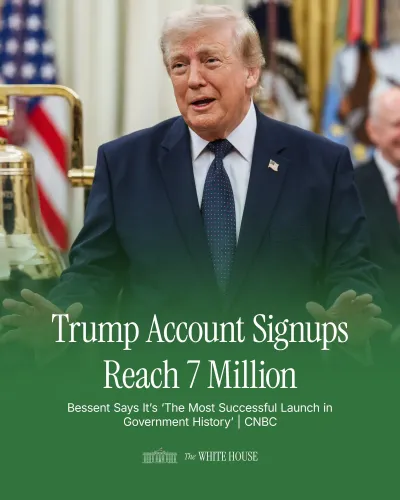
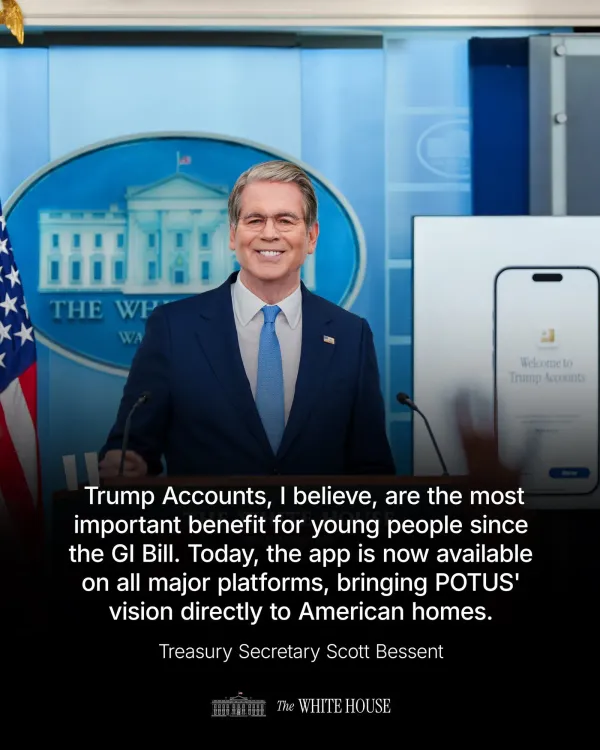
The White House on Friday, May 29, 2026, promoted a new initiative called 'Trump Accounts', describing it as a vehicle for transforming the financial and educational future of America's children. The post, shared on the official White House X account, framed the program as a child-centric savings mechanism being rolled out one account at a time.
Context
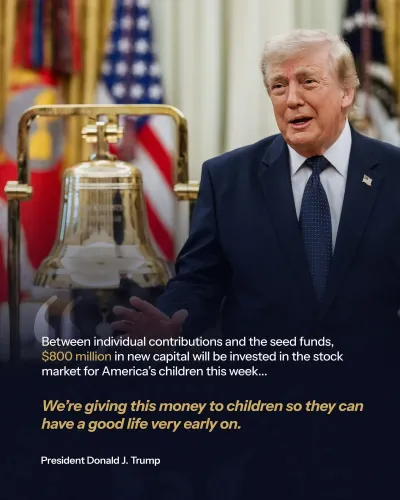
The White House post stated: 'Transforming the future of America's children, one Trump Account at a time.' While the post did not elaborate on the specific mechanics of the program, the framing aligns with a broader Republican policy tradition of creating individualised savings vehicles tied to education and child welfare. The use of the presidential name signals a high-profile political branding effort aimed at American families.
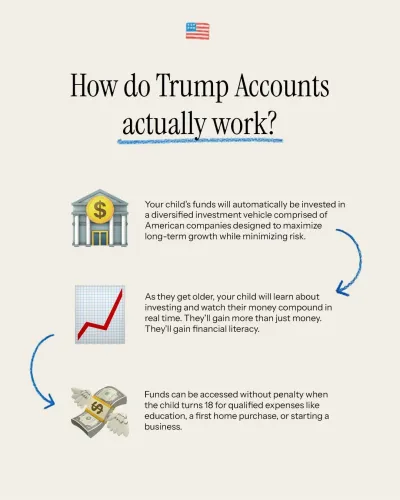
Named savings accounts have historically been used in the United States as tools to empower parents with direct control over funds — bypassing centralised federal disbursement — for purposes ranging from education to healthcare.
Policy Backdrop
During President Donald Trump's first term (2017–2021), the Department of Education advanced multiple proposals to expand school choice, education savings accounts, and parental empowerment in funding decisions. These efforts sought to redirect federal education dollars away from institutional pipelines and toward family-controlled mechanisms.
The current initiative appears to extend that policy lineage, with the 'Trump Account' branding suggesting a named, personalised savings vehicle for children. The Republican emphasis on parental control over education funding — as opposed to centralised federal programmes — has been a consistent plank of the party's domestic agenda for over two decades.
Stakeholders and Impact
American families with school-age children are the primary target audience for this initiative. If structured as an education savings account, such a programme could affect decisions around schooling, tutoring, and skill development for millions of households across the country.
Advocates of school choice argue that named, portable savings accounts give low- and middle-income families the same flexibility that wealthier households already enjoy through private school fees and tutoring expenditure. Critics of such models, however, contend that they can divert resources from public school systems, potentially widening educational inequality.
What's Next
Key details — including eligibility rules, contribution limits, tax treatment, and the administering agency — are yet to be publicly detailed. Congressional action or agency guidance will be required to formalise the programme's structure and funding framework.
Observers will watch whether the Trump Account proposal moves through legislative channels or is advanced through executive agency rulemaking. The political salience of child-focused savings programmes ahead of any electoral cycle means the White House is likely to keep this initiative prominent in its communications strategy.
Point of View
Where school choice was a flagship domestic theme. The absence of programme specifics at launch suggests this is as much a messaging exercise as a policy rollout, with details likely to follow through agency guidance or Congressional action. For Indian observers, the initiative echoes debates around education vouchers and savings-linked learning accounts that have surfaced in Indian policy circles as well.
NationPress
20 Sept 2026
Frequently Asked Questions
What is a Trump Account for children?
A 'Trump Account' is a child-focused savings initiative promoted by the White House in May 2026, described as a vehicle for transforming the future of American children, though specific details on eligibility and contribution limits have not yet been publicly released.
How does the Trump Account relate to school choice?
The initiative aligns with the Republican policy tradition of education savings accounts that give parents direct control over education funding, rather than routing money through centralised federal programmes — a model the Trump administration also championed during its first term from 2017 to 2021.
Who is eligible for a Trump Account?
Eligibility criteria have not been officially detailed as of the White House announcement on May 29, 2026. Congressional action or agency guidance is expected to define who qualifies and under what conditions.
What is the White House's education policy for children in 2026?
The White House in 2026 has promoted 'Trump Accounts' as a key child-welfare initiative, continuing a broader Republican emphasis on parental empowerment and individualised savings vehicles over centralised federal education spending.
How does the Trump Account affect American families?
If structured like previous education savings account proposals, the Trump Account could give American families — particularly low- and middle-income households — greater flexibility in how they spend funds on their children's education and development.