Bhagwant Mann launches AAP door-to-door campaign in Dhuri, pitches 'Mann Da Munafa'
Synopsis
Punjab Chief Minister Bhagwant Mann kicked off AAP's door-to-door election blitz from Dhuri on Sunday with a bold monetary claim: every family in the state is saving ₹1.82 lakh a year under his government. The 'Mann Da Munafa' framing is a deliberate attempt to translate welfare schemes into an electoral currency — and to force voters to measure the ballot against their own household budgets.
Key Takeaways
Bhagwant Mann launched AAP's door-to-door election campaign from Dhuri, Punjab on 20 September 2026 .
The campaign is anchored in the 'Mann Da Munafa' slogan, claiming every family saves ₹1.82 lakh annually via government schemes.
Key schemes cited: free electricity, public healthcare, government school upgrades , and Mawan Dheeyan Satkar Yojna .
Mann said funds are now flowing to every panchayat across Punjab regardless of political affiliation — a first, he claimed, in the state's history.
The campaign will be extended to all 117 Assembly constituencies by party workers and candidates.
AAP plans to simultaneously question the Opposition on its record and the drugs issue while keeping its own messaging positive and performance-focused.
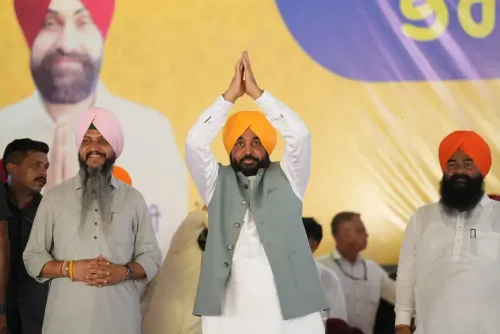
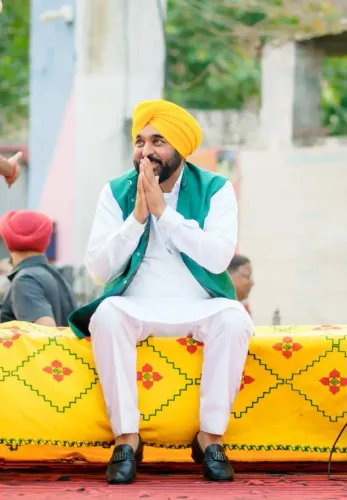
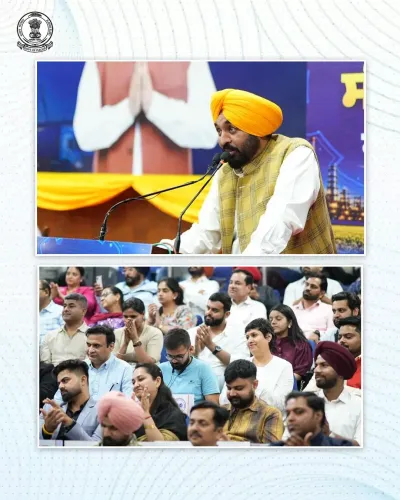
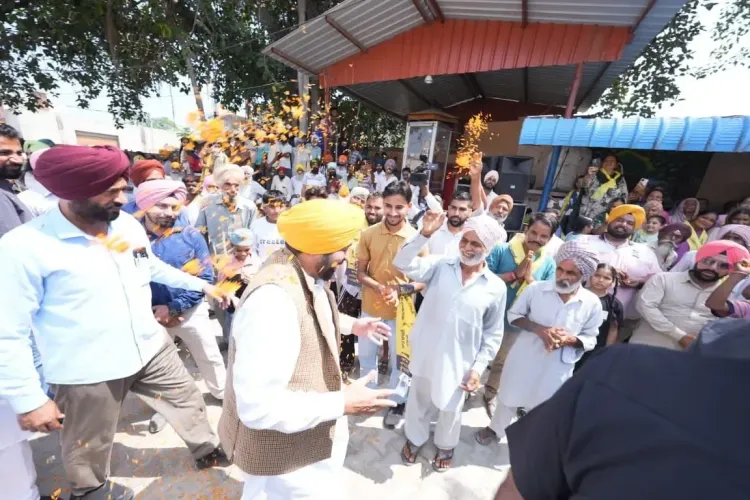
Punjab Chief Minister Bhagwant Mann on Sunday, 20 September 2026, launched the Aam Aadmi Party's (AAP) door-to-door election campaign from Dhuri, carrying the government's four-and-a-half-year report card directly to voters' homes and placing the 'Mann Da Munafa' slogan at the heart of its electoral pitch. The outreach marks the formal start of AAP's ground-level campaigning ahead of the next Punjab Assembly cycle.
The 'Mann Da Munafa' Pitch
At the centre of the campaign is a financial argument: Mann claimed every family in Punjab is today saving ₹1.82 lakh annually through government schemes, including free electricity, public healthcare, education improvements, and the Mawan Dheeyan Satkar Yojna. He urged residents to calculate their monthly household savings as proof of the government's impact.
'Every family in Punjab is today benefiting by ₹1.82 lakh annually from the initiatives rolled out by our government,' Mann said during the outreach. 'This is not an abstract figure. It represents the money that a household no longer has to take out of its own pocket for electricity, healthcare, education and other essential services.'
Key Welfare Schemes Highlighted
Mann pointed to zero electricity bills for lakhs of households, expanded primary healthcare coverage reducing out-of-pocket costs, and upgrades to government schools as the three pillars of the savings narrative. He argued that free electricity, in particular, frees up household income for children's needs, home maintenance, and farm inputs.
'Improvements in government schools have given parents greater confidence to educate their children without the burden of private fees,' he said. 'The philosophy behind these decisions is simple: the common man's money must be spent on the common man.'
Rural Development at the Forefront
Mann also spotlighted village-level development, asserting that his government had, for the first time in Punjab's history, directed crores of rupees to every panchayat — irrespective of political affiliation — for streets, drainage, water supply, sports grounds, street lighting, and community buildings. He framed this as a structural departure from past governments that, he alleged, concentrated resources on select constituencies.
'Every village, regardless of which party it supported, is now being treated as an equal claimant on the state's resources,' he said, adding that rural Punjab had been neglected by successive governments before AAP came to power in 2022.
Campaign Strategy and Opposition Challenge
The Chief Minister said AAP's campaign would remain positive and record-focused, while simultaneously questioning the Opposition over its own track record and the unresolved issue of drugs in Punjab. Party workers and candidates are now expected to replicate the door-to-door format across every constituency in the state.
'We have done the work, and that is why today we are coming before the people with our heads held high,' Mann said. This comes amid growing electoral competition in Punjab, where the Indian National Congress (INC) and the Shiromani Akali Dal (SAD) are also expected to mount aggressive campaigns.
What Comes Next
With the Dhuri launch setting the template, AAP's door-to-door campaign is now set to fan out across Punjab's 117 Assembly constituencies. The party's emphasis on household savings and village-level fund flows signals a strategy of making governance performance — rather than identity or ideology — the primary ballot question. Whether the ₹1.82 lakh per-family figure withstands independent scrutiny will be a key test of the campaign's credibility.
Point of View
But it is a composite estimate that bundles free electricity, healthcare, education, and social welfare — benefits that accrue unevenly across households and are difficult to independently verify. The door-to-door format is tactically smart: it forces a localised, personalised conversation that mass rallies cannot replicate, and it pre-empts Opposition narratives by putting voters in the role of auditors. Yet the drugs crisis, farm distress, and employment remain live fault lines that a household-savings frame alone cannot fully close. Whether 'Mann Da Munafa' converts to votes will depend on whether voters in non-AAP-leaning constituencies feel the promised village funds have reached them — the one claim Mann himself made universal.
NationPress
20 Sept 2026
Frequently Asked Questions
What is the 'Mann Da Munafa' campaign launched by Bhagwant Mann?
'Mann Da Munafa' is AAP's election campaign narrative in Punjab, launched on 20 September 2026, built around the claim that every family in the state saves ₹1.82 lakh annually through government schemes such as free electricity, healthcare, education, and the Mawan Dheeyan Satkar Yojna. The door-to-door campaign begun in Dhuri is designed to take this savings message directly to voters across all 117 Assembly constituencies.
Where did Bhagwant Mann launch the door-to-door campaign?
Chief Minister Bhagwant Mann launched the campaign from Dhuri, a town in Punjab, on Sunday, 20 September 2026. Dhuri served as the starting point from which the campaign template will now be replicated across the rest of the state.
How much does the AAP government claim each Punjab family saves annually?
The AAP government claims each family in Punjab saves ₹1.82 lakh annually as a result of government initiatives. This figure is a composite of savings from free electricity, public healthcare access, government school upgrades, and social welfare schemes, according to Chief Minister Mann.
What is AAP's strategy against the Opposition in this campaign?
AAP says it will keep its own messaging positive and centred on governance delivery, while simultaneously questioning Opposition parties on their track record and the drugs issue in Punjab. The party believes its four-and-a-half years in power provide a credible record to run on.
What did Bhagwant Mann say about village-level development in Punjab?
Mann claimed that, for the first time in Punjab's history, his government has directed crores of rupees to every panchayat regardless of which party won that village, for works including streets, drainage, water supply, sports grounds, and street lighting. He described this as a structural break from past governments that concentrated resources on select constituencies.