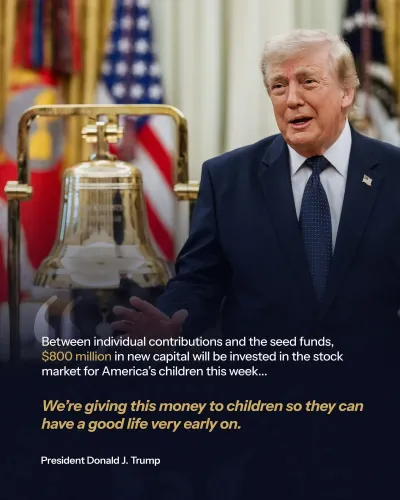
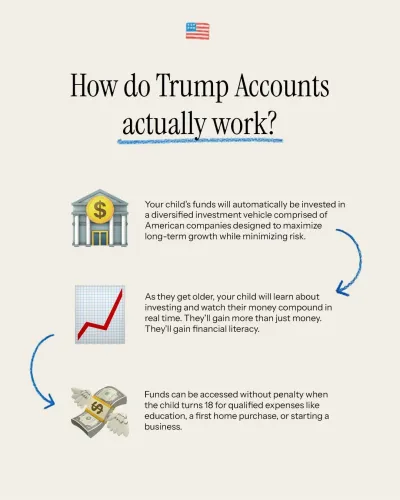
White House: 7 Million Families Join Trump Accounts
Synopsis
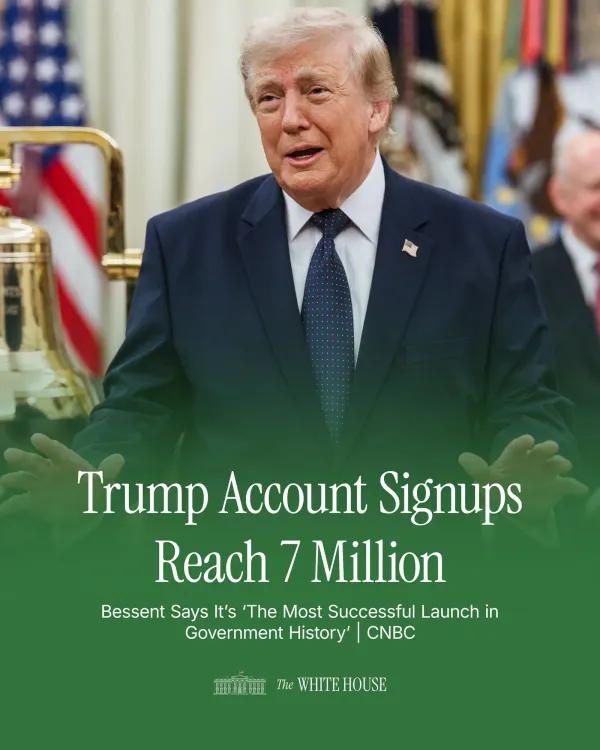
The White House announced on July 28, 2026, that 7 million American families have signed up for Trump Accounts, a federal child savings initiative the administration says gives children a head start on financial security and the American Dream.
Key Takeaways
7 million American families have enrolled in Trump Accounts as of July 28, 2026 , according to the White House.
The program is described by the administration as giving children a 'jumpstart on the American Dream' through long-term savings.
The White House directed the public to TRUMPACCOUNTS.GOV for enrollment information.
The initiative is part of President Donald Trump's broader domestic economic agenda focused on family financial security.
Future updates are expected to track enrollment growth and any legislative actions affecting the program's structure.
The White House announced on Tuesday, July 28, 2026, that 7 million American families have enrolled in Trump Accounts, a federal savings initiative framed by the administration as giving children a head start on long-term financial security.
Context
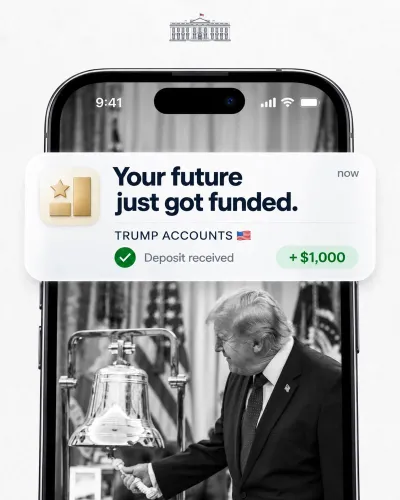
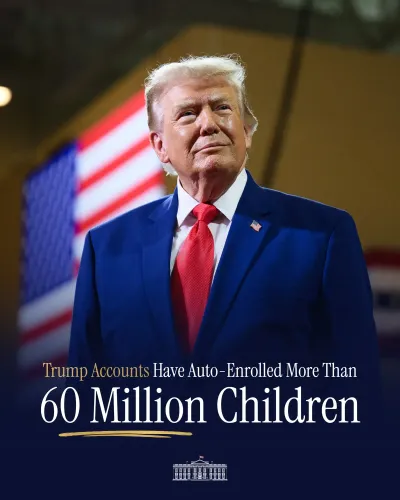
The official White House post declared that '7 million American families have already signed up for Trump Accounts, giving their children a jumpstart on the American Dream,' directing the public to TRUMPACCOUNTS.GOV for enrollment. The message was accompanied by an image and carried an unmistakably promotional tone, urging families who had not yet signed up to act.
The program is positioned as a vehicle for building generational wealth, targeting families with children and framing participation as an entry point into broader economic opportunity. The administration has linked the initiative directly to President Donald Trump's domestic policy agenda.
Policy Backdrop
Federal savings and investment programs aimed at children and families have a long legislative history in the United States. Past administrations have proposed or launched child savings accounts, education investment vehicles, and matched-savings schemes designed to reduce wealth inequality across generations.
The Trump administration's iteration — branded as Trump Accounts — continues this tradition while placing the initiative within the president's broader economic messaging. White House communications under recent administrations have routinely promoted enrollment milestones for such programs, using participation numbers as indicators of public confidence and policy success.
Reaching 7 million enrolled families would represent a significant early uptake figure, suggesting either aggressive outreach by federal agencies or strong organic demand from households seeking structured savings tools for their children.
Stakeholders and Impact
The primary beneficiaries are American children whose families have enrolled, with the accounts designed to accumulate value over time and provide a financial foundation as those children enter adulthood. For lower- and middle-income households in particular, such programs can meaningfully alter long-term economic trajectories.
The announcement also carries political weight: enrollment numbers of this scale, if sustained, would give the administration a tangible data point to cite when defending its family-economy record. Critics of branded federal programs have in the past raised questions about the use of a sitting president's name on government financial products, though the White House communication made no reference to any such debate.
What's Next
The White House is expected to continue promoting Trump Accounts enrollment as the program matures, with future updates likely to track cumulative participation totals and any regulatory or legislative changes affecting how the accounts function. Observers will watch whether Congress moves to codify the program's structure into statute, which would affect its longevity beyond the current administration.
For Indian-Americans and the broader Indian diaspora in the United States — a demographic with significant family savings rates — the program may draw interest as a supplementary long-term savings vehicle for US-born or US-resident children.
Point of View
Not merely a policy instrument — large participation numbers convert a program into a proof-of-concept for the president's economic brand. Framing a federal savings scheme around generational wealth and the 'American Dream' is a well-worn political strategy that has historically drawn bipartisan appeal, making it difficult for opponents to attack the program on its face. The branding of government accounts with a sitting president's name remains a contested norm, and the long-term durability of the program will likely depend on whether Congress gives it statutory standing independent of the executive. For global observers, the episode reflects a wider trend of governments using branded, high-visibility savings products to signal economic optimism and drive household participation in state-backed financial infrastructure.
NationPress
26 Oct 2026
Frequently Asked Questions
What are Trump Accounts?
Trump Accounts are a federal savings initiative launched by the Trump administration aimed at American families with children, designed to help build long-term financial security and generational wealth. Families can sign up at TRUMPACCOUNTS.GOV .
How many families have signed up for Trump Accounts?
According to the White House , 7 million American families had enrolled in Trump Accounts as of July 28, 2026 .
Who is eligible for Trump Accounts?
The White House has described Trump Accounts as being for American families looking to give their children a financial head start, though specific eligibility criteria are detailed at the official government portal TRUMPACCOUNTS.GOV .
What is the purpose of Trump Accounts for children?
The administration frames Trump Accounts as a tool to give children a 'jumpstart on the American Dream' by helping families accumulate savings or investments on their children's behalf from an early age.
Will Trump Accounts continue after the current administration?
The long-term future of Trump Accounts depends on whether Congress enshrines the program in legislation, which would make it independent of the current administration's tenure. No formal legislative status has been publicly confirmed as of this report.