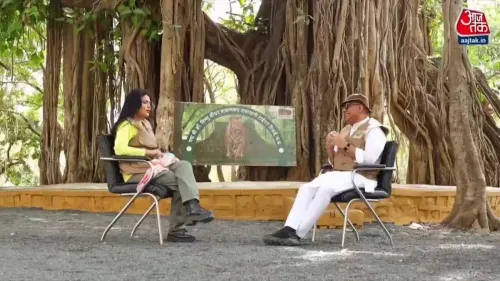
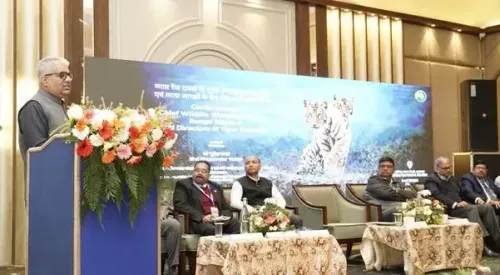
Bhupender Yadav leads tiger re-introduction workshop in Alwar, Sariska at 56 tigers
Synopsis
Sariska Tiger Reserve went from zero tigers in 2005 to 56 today — and India is now codifying those lessons. At an Alwar workshop marking 18 years of that turnaround, Environment Minister Bhupender Yadav flagged community participation as the make-or-break factor, contrasting Sariska's success with Satkosia's failure, and signalling a shift from recovery to long-term habitat management across 58 reserves.
Key Takeaways
Bhupender Yadav inaugurated the National Workshop on Tiger Re-introduction in Alwar, Rajasthan on 28 June 2025 , marking 18 years of tiger reintroduction at Sariska .
Sariska Tiger Reserve recovered from local extinction in 2005 to supporting 56 tigers today — recognised as the world's first successful scientific tiger reintroduction .
India's tiger reserves have grown from 46 to 58 over the past decade; the country met the St.
Petersburg Declaration target of doubling wild tiger numbers by 2022 .
Community participation was cited as decisive — credited for success at Panna and Sariska , and its absence blamed for the setback at Satkosia Tiger Reserve, Odisha .
The minister called for equal focus on landscape connectivity in areas where tiger and elephant ranges overlap.
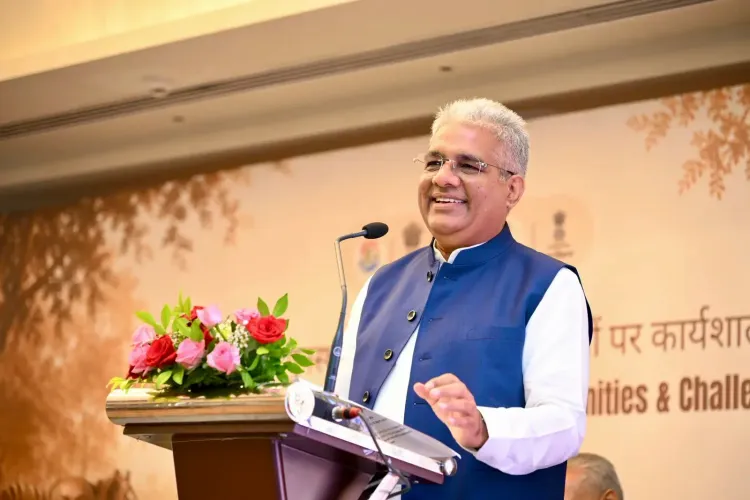
Union Minister for Environment, Forest and Climate Change Bhupender Yadav on Sunday, 28 June inaugurated a National Workshop on 'Tiger Re-introduction: Opportunities and Challenges' in Alwar, Rajasthan, marking 18 years of tiger reintroduction at Sariska Tiger Reserve. The minister underscored that tiger conservation extends beyond protecting a single species — it encompasses forests, watersheds, biodiversity, and the welfare of local communities.
What the Workshop Covers
The workshop brought together field directors, wildlife experts, and chief wildlife wardens from tiger landscapes across India and their respective states. Its focus is on the key management aspects of tiger reintroduction and augmentation programmes, drawing from ongoing conservation efforts to foster knowledge exchange for future initiatives.
Sariska: A Global Conservation Milestone
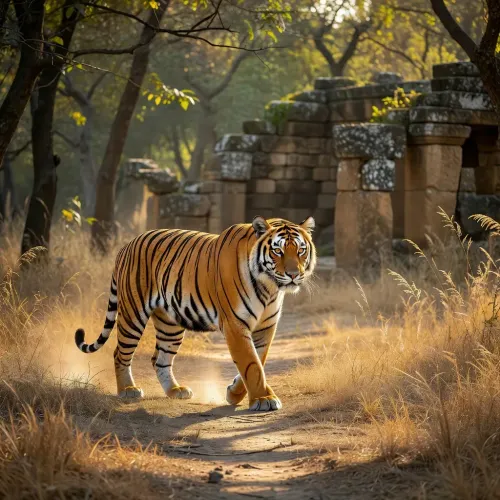
Yadav described the Sariska Tiger Reintroduction Programme as a historic milestone — widely recognised as the world's first successful scientific reintroduction of tigers into a landscape where the species had become locally extinct. Sariska recorded a complete local extinction in 2005 and now supports 56 tigers, a recovery the minister called a global model for species restoration through scientific management and community participation.
India's Broader Tiger Conservation Record
The minister highlighted that the number of tiger reserves in India has grown from 46 to 58 over the past decade. India has also met the St. Petersburg Declaration target of doubling its wild tiger population by 2022, ahead of the global deadline. Successful reintroductions at Panna and Sariska were, according to Yadav, made possible by active community support — a factor he contrasted with the Satkosia Tiger Reserve in Odisha, where a similar programme could not be sustained due to the absence of local backing.
Community Participation and Landscape Connectivity
Yadav stressed that tourist promotion and community welfare must receive equal priority in conservation planning. He also noted that in landscapes where tigers and elephants share overlapping ranges, maintaining and strengthening landscape connectivity is critical. The minister cited Project Cheetah as another example where community participation has been a key driver of progress.
What's Next
The workshop is expected to produce actionable frameworks for tiger reintroduction and augmentation, with learnings from Sariska and Panna likely to inform future reserve-level decisions. With 58 tiger reserves now operational, the focus is shifting from population recovery to long-term habitat management and human-wildlife coexistence.
Point of View
But the minister's framing glosses over an important asymmetry: the programme succeeded where communities were already on board, and failed at Satkosia where they were not. That is less a vindication of the model and more a reminder that reintroduction without prior community consent is ecologically fragile. With 58 reserves now in play and overlap with human settlements growing, the Centre's next challenge is not counting tigers but building durable coexistence frameworks — something no workshop resolution can substitute for.
NationPress
27 Sept 2026
Frequently Asked Questions
What is the National Workshop on Tiger Re-introduction held in Alwar?
It is a government-convened workshop inaugurated by Environment Minister Bhupender Yadav on 28 June 2025 in Alwar, Rajasthan, bringing together field directors, wildlife experts, and chief wildlife wardens from tiger landscapes across India. The workshop focuses on management strategies for tiger reintroduction and augmentation programmes, drawing on 18 years of experience from Sariska and other reserves.
Why is Sariska Tiger Reserve considered a global conservation milestone?
Sariska is recognised as the site of the world's first successful scientific reintroduction of tigers into a landscape where the species had become locally extinct. The reserve recorded zero tigers in 2005 and now supports 56 tigers, making it a benchmark for species restoration through scientific management and community involvement.
How many tiger reserves does India have now?
India currently has 58 tiger reserves, up from 46 a decade ago. The country also met the St. Petersburg Declaration target of doubling its wild tiger population by 2022.
Why did the tiger reintroduction fail at Satkosia Tiger Reserve in Odisha?
According to Minister Bhupender Yadav, the Satkosia Tiger Reserve programme could not be sustained due to a lack of community support — in direct contrast to the successful reintroductions at Sariska and Panna, where local participation was active and sustained.
What role does community participation play in tiger conservation?
Yadav emphasised that community participation has been the decisive factor in every successful reintroduction programme, including Sariska, Panna, and Project Cheetah. He stressed that tourist promotion must be balanced with equal attention to the welfare and interests of local communities living in and around tiger habitats.