How Have Tiger Reserves Contributed to Forest Preservation in Rajasthan?

Synopsis
Discover how Rajasthan’s tiger reserves are vital for forest preservation and ecological balance. Governor Haribhau Bagde highlights the importance of collective conservation efforts at the Jaipur Tiger Festival.
Key Takeaways
Tiger reserves are crucial for forest conservation.
Rajasthan houses some of India's best tiger reserves.
Collective action is essential for wildlife preservation.
Tigers play a vital role in maintaining ecological balance.
Rajasthan ranks second in India for milk production.
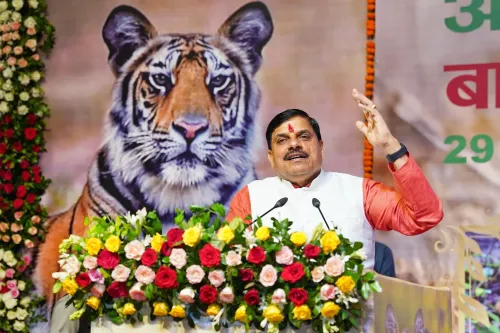
Jaipur, Dec 11 (NationPress) Governor Haribhau Bagde ceremoniously opened the Jaipur Tiger Festival at Jawahar Kala Kendra on Thursday, urging a united approach to safeguard water, forests, land, and wildlife.
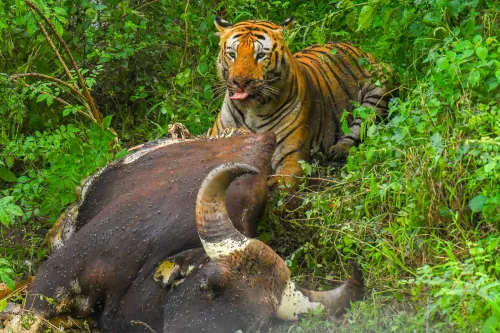
Highlighting Rajasthan’s rich history as a land of valor and ecological heritage, he stated that the creation of tiger reserves has been instrumental in the conservation of forests.
The Governor also mentioned that Rawalpindi is named after Bappa Rawal, a brave warrior from Mewar who defeated Mir Qasim from Arabia to Iran. He pointed out that Rajasthan, with its heroic past, also houses some of India’s most remarkable tiger reserves and has a strong tradition of environmental stewardship.
During the festival, Bagde explored a photo exhibition and recognized individuals who have significantly contributed to forest and wildlife preservation.
He stated that ecological equilibrium is heavily reliant on the survival of tigers.
As human populations grow and habitats shrink, the importance of tiger conservation escalates.
Labeling the tiger as an “umbrella species,” he explained that their survival ensures the protection of forests and other wildlife, thus maintaining environmental stability.
He noted that numerous forests have thrived largely due to their designation as tiger reserves.
In emphasizing Rajasthan’s unique identity, the Governor remarked that the state is not only celebrated for its devotion and bravery but also as a prime hub for cow rearing.
Rajasthan stands second in the nation in milk production and has a long-standing tradition of cow worship and establishing shelters for cows.
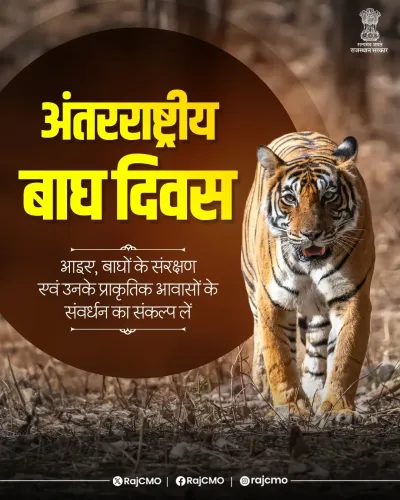
Calling the tiger a magnificent creature, he mentioned that 75% of the world’s tigers reside in India.
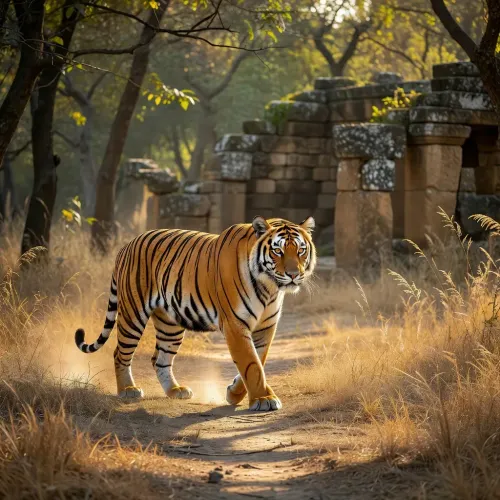
Rajasthan’s Ranthambore National Park, Mukundra Tiger Reserve, and Sariska Tiger Reserve are among the finest in the country.
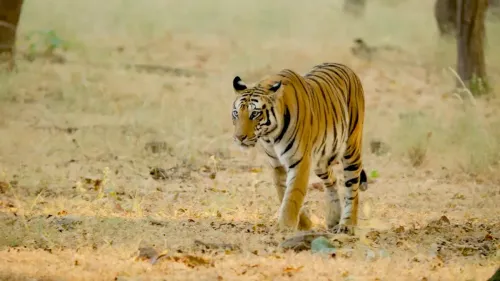
Currently, Rajasthan is home to 160 tigers - 144 in the wild and 16 in captivity - with Ranthambore alone hosting 71 tigers. Bagde reiterated that biodiversity conservation, clean water, and soil fertility are intricately connected to tiger populations.
He emphasized that tourism should develop sustainably, minimizing harm to wildlife, and encouraged the public to advocate for nature and environmental conservation.
Point of View
The conservation of tigers in Rajasthan reflects a broader commitment to biodiversity. This initiative is crucial not only for wildlife preservation but also for maintaining ecological balance, which ultimately benefits local communities and the environment. The emphasis on collective action underscores the importance of community engagement in conservation efforts.
NationPress
3 Oct 2026
Frequently Asked Questions
What role do tiger reserves play in forest preservation?
Tiger reserves are essential for maintaining biodiversity and ecological balance. They protect forests and other wildlife, ensuring the survival of various species.
Why are tigers considered an umbrella species?
Tigers are called umbrella species because their conservation helps protect a wide range of other species within their habitat, promoting overall ecosystem health.
How many tigers are currently in Rajasthan?
Rajasthan is home to 160 tigers, with 144 in the wild and 16 in captivity, showcasing a significant effort in tiger conservation.
What is the importance of the Jaipur Tiger Festival?
The Jaipur Tiger Festival aims to raise awareness about tiger conservation and the importance of collective efforts to protect wildlife and natural resources.
How does tourism impact tiger conservation?
Sustainable tourism can provide funding for conservation efforts while promoting awareness. However, it must be managed carefully to avoid harming wildlife and habitats.