What Were the Outcomes of the Second Round of MHA-Kuki-Zo-Manipur Government Talks in Delhi?
Synopsis
The recent MHA-Kuki-Zo talks in Delhi shed light on the urgent need for a Union Territory with legislative powers for the Kuki-Zo community, highlighting issues of governance, land rights, and the pressing need for a political solution amidst ongoing tensions.
Key Takeaways
The second round of talks focused on governance and land rights for the Kuki-Zo community.
There is a strong demand for a Union Territory with a Legislature.
The KNO and UPF argue that their traditional land rights are being undermined.
The breakdown of the social contract between the Kuki-Zo people and the Manipur government is evident.
Article 371C has failed to protect the interests of the hill areas effectively.
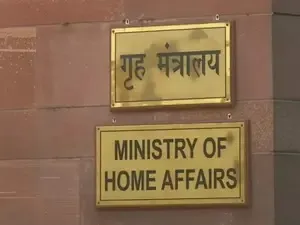
New Delhi/Imphal, Dec 13 (NationPress) The Ministry of Home Affairs (MHA), along with representatives from Kuki-Zo groups operating under the Suspension of Operations (SoO) and officials from the Manipur government, convened for the second round of a tripartite meeting in New Delhi. This gathering aimed to address a variety of pressing issues.
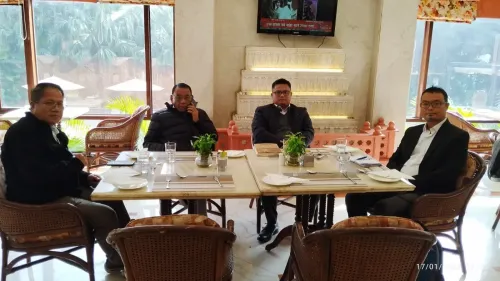
MHA's Adviser for the North-East, A.K. Mishra, alongside Manipur government officials and representatives from the Kuki National Organisation (KNO) and the United People’s Front (UPF), participated in this crucial meeting on December 12 in the national capital.
In a joint statement, the KNO and UPF indicated that the discussions concentrated on the demand for a Union Territory with a Legislature for the Kuki-Zo tribal community in Manipur.
During the initial meeting, held on November 6-7 in New Delhi, the MHA had effectively dismissed the demands from Kuki-Zo tribal organizations and militant factions regarding the establishment of Union Territories with legislative power for the Kuki-Zo community.
The KNO and UPF highlighted that the second round of negotiations primarily revolved around land-related matters and governance within the hill regions where Kuki-Zo tribes reside.
During the talks, both UPF and KNO representatives pointed out that tribal land rights in Manipur's hill districts are traditionally and customarily held by tribal village chiefs.
The statement emphasized that this fundamental principle of hill governance has been consistently undermined by the policies of the Manipur government over time.
Furthermore, it was asserted that a constitutionally consistent future for the Kuki-Zo populace necessitates a governance structure under a Union Territory with a Legislature, which would ensure the protection of their traditional land rights.
The UPF and KNO further argued that a constitutionally grounded political resolution for the Kuki-Zo hill regions is no longer merely an administrative adjustment, but an urgent necessity, as stated in their remarks.
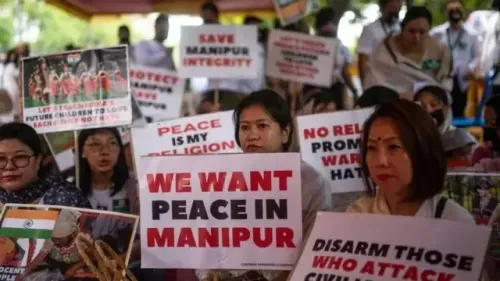
The statement also noted the complete physical separation of communities since the ethnic conflict escalated on May 3, 2023, the evident weaponization of state mechanisms against tribal citizens, and the systematic exclusion from the Imphal Valley.
According to UPF and KNO, it is apparent that the Manipur government has relinquished its constitutional duties.
They stated, “Reintegration within the current state administrative framework is no longer feasible, and pursuing a separate political solution is the sole viable route to restoring normalcy, peace, and stability.” They further remarked that the violence witnessed in 2023 was not an isolated incident, but rather the apex of decades of aggressive land policies and political oppression targeting tribal communities.
The two tribal organizations asserted that a Union Territory with a Legislature would possess the necessary authority and impartiality to enact and enforce laws capable of halting the long-standing dispossession processes.
The statement declared that the social contract between the Kuki-Zo people and the Manipur state has deteriorated beyond repair.
They noted that Article 371C has failed in practice, as the Hill Areas Committee has been consistently overlooked and rendered ineffective in curbing either the violence or the engineered policies.
The UPF and KNO insisted that the Kuki-Zo people cannot be governed by a regime that has facilitated ethnic cleansing. Establishing a Union Territory with a Legislature remains the only constitutional and effective means to ensure justice, security, stability, and lasting peace, as articulated by the tribal organizations.
The UPF and KNO, which represent a coalition of 23 underground militant groups, entered into a SoO agreement with the government on August 22, 2008. Approximately 2,266 members of these militant factions are currently residing in various designated camps across Manipur’s hill areas.
Point of View
It's imperative to recognize the complex dynamics at play in this dialogue between the MHA and Kuki-Zo representatives. The discussions are not merely administrative; they reflect deeper societal issues that require genuine engagement and understanding. It’s crucial for the government to address these concerns to foster stability and harmony in Manipur, ensuring that no community feels excluded or marginalized.
NationPress
2 Oct 2026
Frequently Asked Questions
What are the main issues discussed in the MHA-Kuki-Zo talks?
The talks primarily focused on the demand for a Union Territory with a Legislature for the Kuki-Zo tribal community, governance in hill areas, and land rights historically held by tribal village chiefs.
What was the outcome of the first round of talks?
In the first round of talks held in November, the MHA rejected the demand for a Union Territory with legislative powers for the Kuki-Zo community.
Why is the establishment of a Union Territory considered important?
Establishing a Union Territory with a Legislature is viewed as crucial for safeguarding the traditional land rights of the Kuki-Zo tribes and ensuring effective governance.
What do the KNO and UPF represent?
The KNO and UPF are organizations representing Kuki-Zo armed groups under the Suspension of Operations, advocating for the rights and governance of the Kuki-Zo tribal community.
What is Article 371C and its relevance?
Article 371C is intended to provide special provisions for the hill areas of Manipur, but has been criticized for ineffective implementation and bypassing of the Hill Areas Committee.