Is Bhupender Yadav Advocating for Enhanced Tiger Conservation?
Synopsis
In a significant push for tiger preservation, Minister Bhupender Yadav emphasizes a policy overhaul at the 50th anniversary of India's tiger conservation. This initiative aims to adapt to modern challenges and ensure effective conservation strategies going forward.
Key Takeaways
Comprehensive policy review for effective conservation.
Cheetah reintroduction marks a significant success.
Focus on human-wildlife conflict resolution.
Importance of collaboration among conservation institutions.
Need for region-specific working groups to tackle challenges.
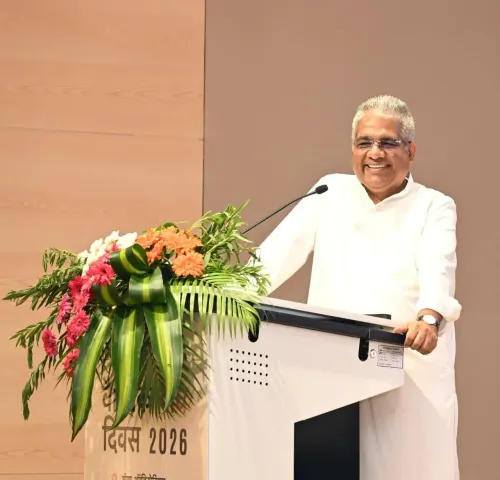
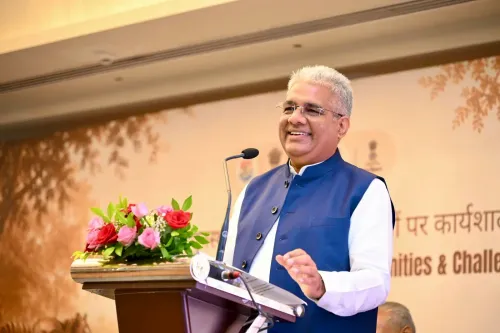
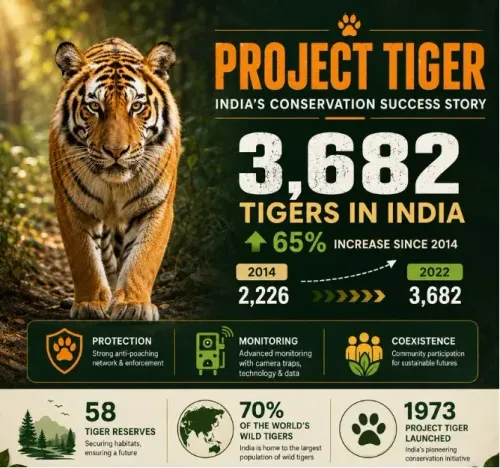
New Delhi, Feb 7 (NationPress) As India marks half a century of tiger conservation efforts, Bhupender Yadav, the Union Minister for Environment, Forest and Climate Change, emphasized the necessity for a thorough policy reassessment to tackle current challenges and enhance operational efficiency.
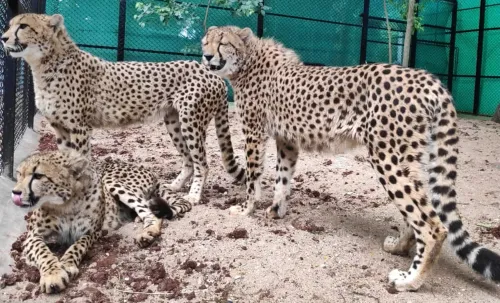
During the address, he underscored the success of the Cheetah reintroduction program, noting that India has effectively managed the international relocation of a wild species that had vanished from its lands, with the project now celebrating the third generation of India-born cheetahs.
A fresh group of cheetahs from Botswana is anticipated to arrive in India by the end of February.
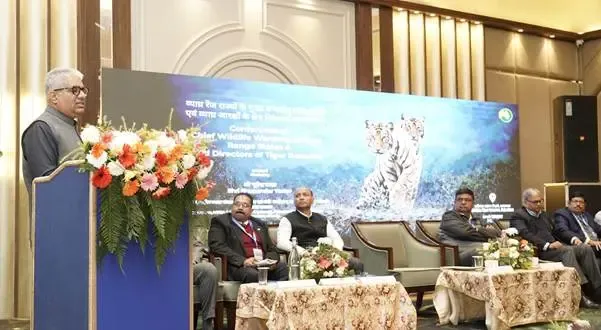
Speaking at the inaugural session of the "Conference of Chief Wildlife Wardens of Tiger Range States and Field Directors of Tiger Reserves" in Alwar, Rajasthan, Minister Yadav proposed a reassessment of all policy decisions made during the 28 meetings of the National Tiger Conservation Authority (NTCA) held to date.
He remarked that this review is essential for identifying outdated decisions, those that have been impossible to implement, and those that have been successfully executed.
This initiative, he pointed out, will allow the tiger conservation policy to adapt to contemporary challenges and ensure the effective execution of conservation strategies on the ground.
Setting the agenda for the two-day conference, Minister Yadav recommended that the policy decisions from the past five decades be consolidated into a formal policy statement, making it a primary agenda item for the next NTCA meeting.
He highlighted the need for focused discussions on issues such as tiger population assessments, rescue and rehabilitation frameworks, human-wildlife conflicts, the usage of the Tiger Reserve Fund, and the importance of reinforcing tiger conservation foundations.
The conference aims to evaluate the overall state of tiger conservation in India and address critical policy, management, and operational matters.
Additionally, Minister Yadav called for the establishment of four working groups to analyze region-specific challenges, including shifts in tiger populations, and to evaluate the implementation of centrally funded schemes across the nation's tiger reserves.
He also urged participants to explore methods to improve collaboration between the NTCA and organizations like the Wildlife Institute of India, Botanical Survey of India, Zoological Survey of India, and the Indian Council for Forestry Research and Education, to integrate research contributions from these leading institutions and enhance practical outcomes in tiger conservation.
Point of View
Underscoring India's commitment to wildlife preservation. As the nation reflects on its achievements over the past five decades, it is essential to adapt policies to address modern challenges while ensuring the sustainability of our tiger population. This proactive approach is vital for maintaining the ecological balance and preserving biodiversity.
NationPress
27 Sept 2026
Frequently Asked Questions
What is the main focus of Bhupender Yadav's recent address?
The main focus is on advocating for a comprehensive review of tiger conservation policies to address current challenges and improve efficiency in conservation efforts.
What significant project was highlighted by the Minister?
The Minister highlighted the successful Cheetah reintroduction program, which marks the third generation of India-born cheetahs.
Where was the conference held?
The conference took place in Alwar, Rajasthan, gathering Chief Wildlife Wardens and Field Directors of Tiger Reserves.
Why is a policy review necessary?
A policy review is necessary to identify outdated decisions, ensure implementation of effective measures, and adapt to contemporary challenges in tiger conservation.
What are some key issues for discussion at the conference?
Key issues include tiger population estimation, human-wildlife conflict, utilization of the Tiger Reserve Fund, and strengthening conservation foundations.