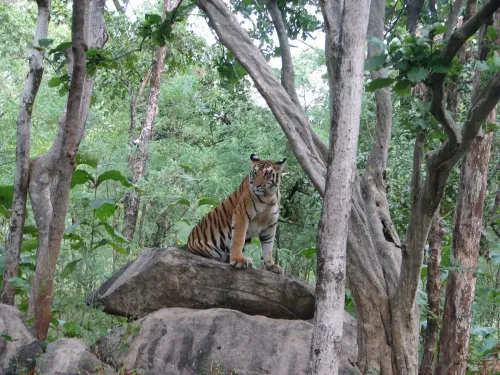
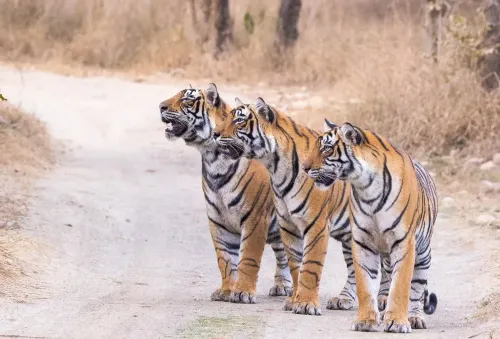
Yadav Hails India's 3,682 Tigers Across 58 Reserves
Synopsis
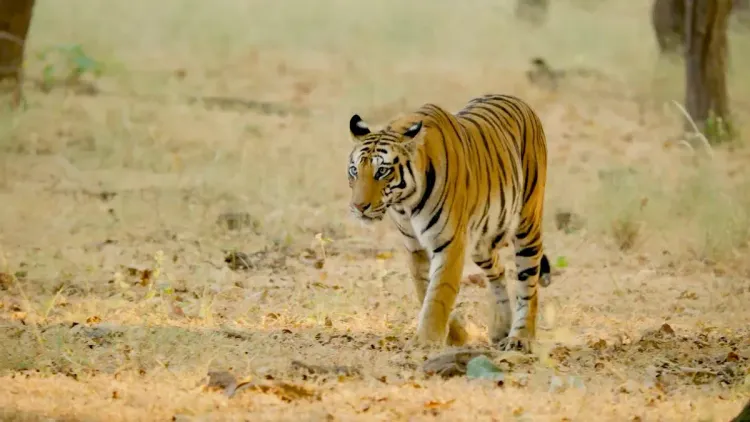
On International Tiger Day, Union Environment Minister Bhupender Yadav announced India hosts 3,682 tigers — 75 per cent of the global population — across 58 reserves, crediting five decades of Project Tiger policy and pledging continued support for forest communities.
Key Takeaways
India's tiger population stands at 3,682 , representing 75 per cent of all wild tigers on earth.
Tigers are spread across 58 protected reserves notified under Project Tiger , launched in 1973 .
The National Tiger Conservation Authority (NTCA) conducts periodic All India Tiger Estimations to monitor population trends.
Minister Yadav explicitly linked tiger numbers to overall forest ecosystem health, framing conservation as an ecological indicator.
The government reiterated commitment to supporting forest communities whose livelihoods depend on these ecosystems, referencing the Forest Rights Act, 2006 framework.
The next All India Tiger Estimation report will be the key data point to watch for updated population figures.
India is home to 75 per cent of the world's tigers — a statistic that places the country in a league of its own among the 13 tiger range nations. On International Tiger Day, 29 July, Union Environment Minister Bhupender Yadav marked the occasion by citing a national tiger population of 3,682, spread across 58 protected reserves, calling it a mirror of the health of Indian forests.
Posting with the hashtag #IndiaForTigers, Yadav wrote: 'India has shown remarkable success in tiger conservation. With 75% of the world's tigers counting to 3,682, spread across 58 reserves, India remains the global leader in tiger conservation.'Fifty Years of Project Tiger — and What It Built
The numbers did not arrive by accident. Project Tiger, launched by the central government in 1973, is the foundational policy that set India on this trajectory. It established the first network of dedicated tiger reserves and created a management architecture that has since expanded to the current 58 reserves. The National Tiger Conservation Authority (NTCA), the statutory body under the Environment Ministry, oversees these reserves and runs the periodic All India Tiger Estimation — a rigorous camera-trap and pugmark census that has become the global benchmark for large-carnivore monitoring. Each estimation cycle has, broadly, told a story of recovery: from a crisis-level low in the early 1970s that triggered the original project, to a population that now accounts for three in every four wild tigers on earth.Forests, Livelihoods, and the Communities Inside Them
Yadav's post pointedly named forest communities alongside tigers — a deliberate framing. India's conservation model has had to grapple with the reality that millions of people live in and around these reserves. The Scheduled Tribes and Other Traditional Forest Dwellers (Recognition of Forest Rights) Act, 2006 gave statutory recognition to community rights inside forest land, and the NTCA's reserve management plans are required to address local livelihoods. The minister underlined this balance: 'We remain committed to protecting our tigers along with their ecosystems, and supporting communities whose livelihoods are intertwined with our forests.' It is a line that signals the government's intent to hold both conservation outcomes and social equity in the same frame — not always an easy balance, but one that India has made central to its international positioning among tiger range countries.What the Tiger Count Says About Indian Forests
Tigers are apex predators and, by definition, indicators of ecosystem integrity. A thriving tiger population requires dense prey bases, intact forest corridors, and minimal human-wildlife conflict — conditions that cannot be faked. Yadav's framing of the census data as a reflection of 'the health of Indian forests' is ecologically grounded: where tigers flourish, the forest beneath them is, broadly, functioning. The next milestone to watch is the release of the latest All India Tiger Estimation report, which will either confirm or update the figures the minister cited. Parliamentary discussions on funding allocations for reserve management and community programmes will also signal how seriously the government intends to sustain the momentum. Seventy-five per cent of the world's wild tigers, living in one country. That is not a statistic to bury in a footnote — it is the headline of five decades of conservation policy finally paying off.Point of View
Particularly among the 13 tiger range countries. By pairing the census figure with an explicit mention of forest communities, the minister signals that the BJP government wants to own both the conservation win and the social-equity narrative, pre-empting criticism that wildlife protection comes at the cost of tribal rights. The framing also subtly elevates the Environment Ministry's profile at a moment when climate and biodiversity commitments are under international scrutiny. Whether the next NTCA estimation sustains the upward trend will determine how long this political dividend lasts.
NationPress
28 Oct 2026
Frequently Asked Questions
How many tigers are there in India in 2026?
Union Environment Minister Bhupender Yadav cited a figure of 3,682 tigers across India's 58 reserves. This figure has been shared by the government on International Tiger Day 2026, though the next official All India Tiger Estimation report will provide updated verification.
How many tiger reserves are there in India?
India currently has 58 tiger reserves notified under Project Tiger, the central government's flagship conservation scheme launched in 1973.
What is Project Tiger in India?
Project Tiger is a central government conservation scheme launched in 1973 to protect tigers and their habitats in situ. It established India's network of dedicated tiger reserves and is overseen by the National Tiger Conservation Authority.
What percentage of the world's tigers live in India?
India is home to approximately 75 per cent of the world's wild tiger population, making it the largest habitat country among the 13 tiger range nations globally.
What is the All India Tiger Estimation?
The All India Tiger Estimation is a periodic national census conducted by the National Tiger Conservation Authority using camera traps and field surveys to assess tiger population trends. It has been conducted since 2006 and is considered a global benchmark for large-carnivore monitoring.