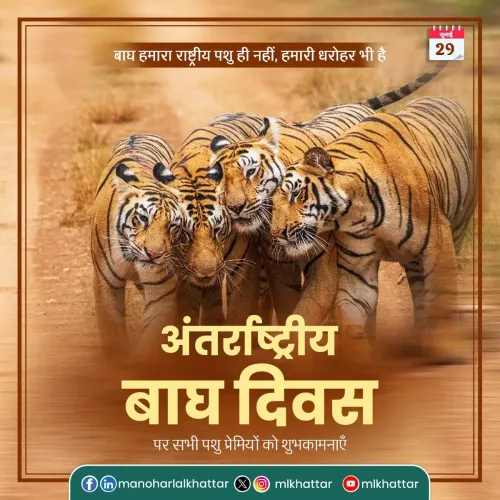
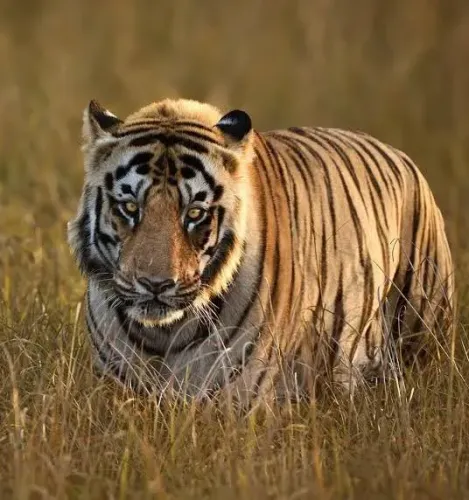
Rajasthan CMO marks International Tiger Day with conservation call
Synopsis
On International Tiger Day, 29 July, the Chief Minister's Office of Rajasthan called on citizens to commit to protecting India's national animal. The tiger, beyond symbolism, anchors the health of India's forest ecosystems — and Rajasthan's Ranthambore and Sariska reserves sit at the heart of that effort.
Key Takeaways
The Chief Minister's Office of Rajasthan posted a conservation call on International Tiger Day, 29 July .
The tiger is India's national animal and is described as a symbol of the country's natural heritage and ecological balance.
Project Tiger , launched in 1973 , is the central framework for tiger conservation across India's reserves.
Rajasthan hosts two major tiger reserves — Ranthambore and Sariska — both managed under the national Project Tiger programme.
Sariska is a landmark case: its tiger population was wiped out by poaching and later successfully restored through reintroduction.
The next national tiger estimation report will be a key measure of conservation progress.
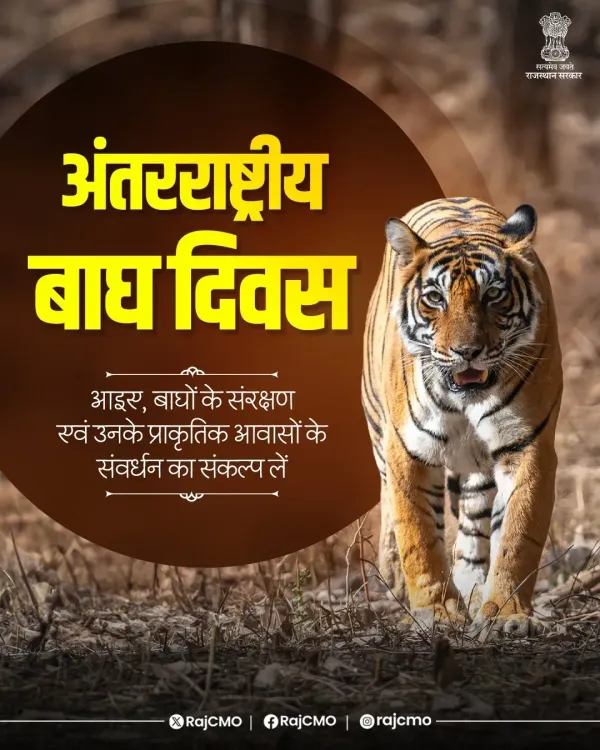
On International Tiger Day, 29 July, the Chief Minister's Office of Rajasthan issued a call to action — urging citizens to renew their commitment to protecting India's most iconic wild animal, the tiger, a creature the post describes as not merely a national symbol but the living proof of a balanced ecosystem.
The post, shared in Hindi, states: 'Baagh Bharat ka rashtriya pashu hone ke saath-saath, hamari samridh prakritik dharohar evam santulit paristhitiki tantra ka pratik hai.' ('The tiger, beyond being India's national animal, is a symbol of our rich natural heritage and a balanced ecological system.') The office called on people to pledge themselves to the conservation and promotion of this 'priceless wildlife heritage.'
Why the tiger is more than a mascot
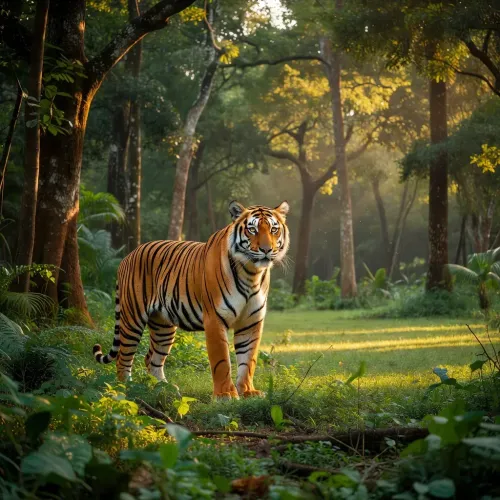
The tiger's status as India's national animal is inseparable from its ecological role. As an apex predator, it regulates prey populations and, by extension, the health of entire forest systems. Where tiger numbers fall, forest degradation tends to follow — making tiger conservation a proxy for broader environmental protection.
Project Tiger, launched by the Government of India in 1973, remains the backbone of national tiger conservation. It established a network of protected reserves, brought in dedicated management, and gave India one of the most recognised wildlife recovery programmes in the world.
Rajasthan's stake — Ranthambore and Sariska
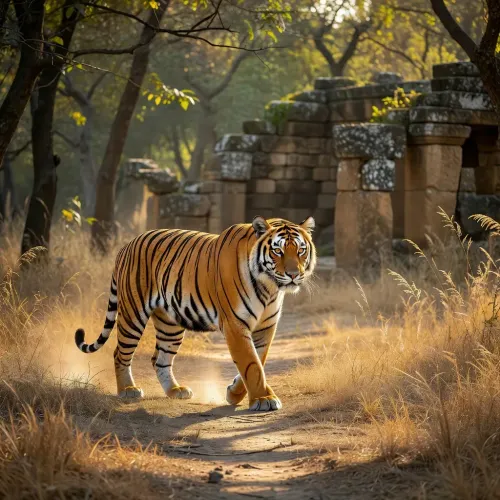
Rajasthan is home to two of India's most prominent tiger reserves: Ranthambore and Sariska. Ranthambore, in particular, is one of the best-known reserves globally, drawing wildlife researchers and tourists alike. Sariska made headlines in the early 2000s when its tiger population was wiped out by poaching — and then again when tigers were successfully reintroduced, a conservation milestone that underscored both the fragility and the resilience of these populations.
State forest departments, working under the Project Tiger framework, are the ground-level custodians of these reserves — managing habitats, monitoring populations, and coordinating anti-poaching efforts year-round.
A day that demands more than awareness
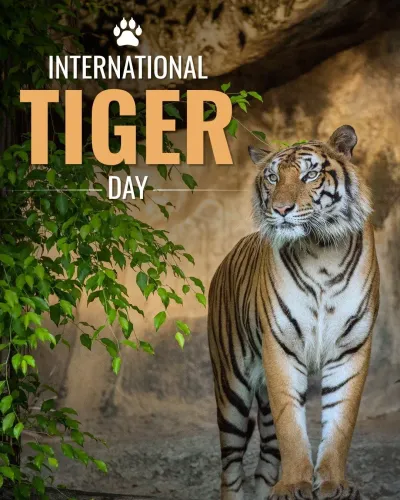
International Tiger Day is observed every year on 29 July to keep global attention on a species that, despite recovery in India, remains under pressure from habitat loss and human-wildlife conflict. For a state like Rajasthan — where tiger corridors intersect with agricultural land and human settlements — the challenge is as much about coexistence as it is about conservation.
The next national tiger estimation report will be a key indicator of whether India's reserves are holding ground. Until then, the pledge issued from Jaipur on this Tiger Day is a reminder that the work is never finished.
Point of View
The office signals alignment with the Centre's conservation framework — important optics ahead of any new reserve management announcements. Rajasthan's experience with Sariska's collapse and recovery gives the state a credible, if cautionary, voice on tiger conservation. The post also reflects a broader pattern of Indian state governments using global environmental days to assert policy intent without committing to specific new measures.
NationPress
28 Oct 2026
Frequently Asked Questions
When is International Tiger Day celebrated?
International Tiger Day is observed every year on 29 July to raise global awareness about tiger conservation and the threats facing the species.
Which tiger reserves are in Rajasthan?
Rajasthan has two major tiger reserves: Ranthambore and Sariska . Both are managed under India's Project Tiger programme.
What is Project Tiger in India?
Project Tiger is a Government of India conservation programme launched in 1973 to protect tigers and their forest habitats through a network of dedicated reserves.
Why is the tiger India's national animal?
The tiger was designated India's national animal because of its cultural significance and its role as an apex predator that indicates the health of forest ecosystems.
What happened to tigers in Sariska tiger reserve?
The tiger population in Sariska , Rajasthan, was entirely wiped out by poaching in the early 2000s. Tigers were later successfully reintroduced, making it a notable case study in wildlife recovery.