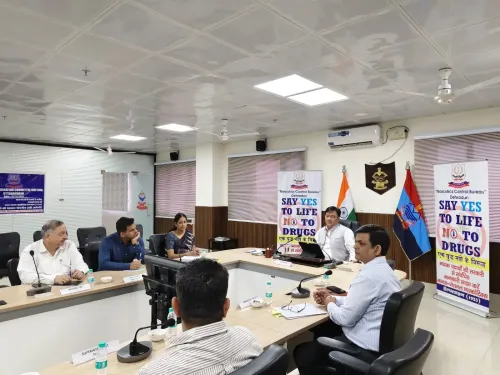
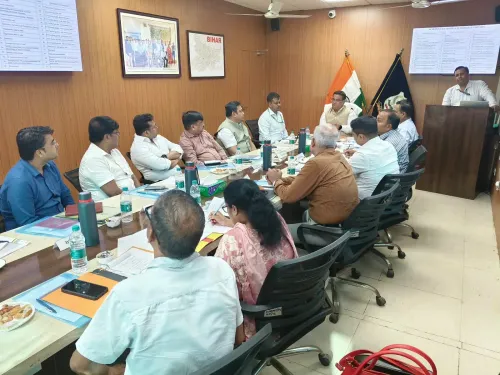
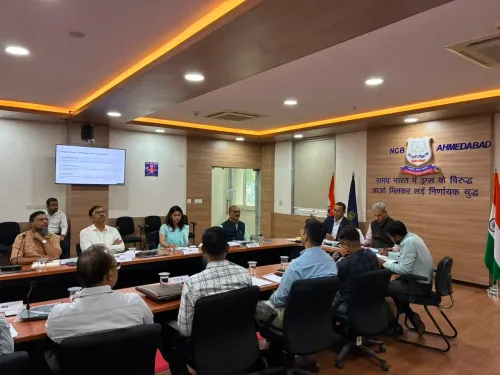
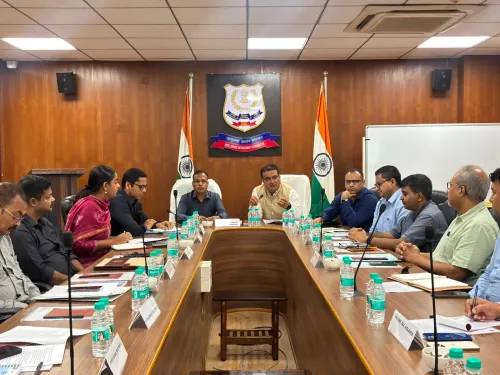
NCB JCC meet in Jaipur targets drug trafficking networks in Rajasthan
Synopsis
The NCB's quarterly JCC meet in Jaipur on 19 July pulled together over a dozen central and state agencies to confront Rajasthan's drug trafficking challenge — reviewing 50 live NDPS cases, fast-tracking detention proposals, and pushing intelligence-led joint operations. The gathering signals a sharper, coordinated enforcement push in a state that sits on a critical narcotics transit route.
Key Takeaways
The NCB held its quarterly JCC meeting for Rajasthan in Jaipur on 19 July .
The session was co-chaired by the NCB Deputy Director General (Western Region) and the ANTF Inspector General, Rajasthan .
Agencies reviewed 50 identified NDPS Act cases to ensure early court disposal.
Proposals under the PIT-NDPS Act for administrative detention of traffickers are being expedited.
Discussions covered intelligence-led joint operations, financial investigations, and de-addiction campaigns.
All agencies reaffirmed commitment to the national Drug-Free India objective.
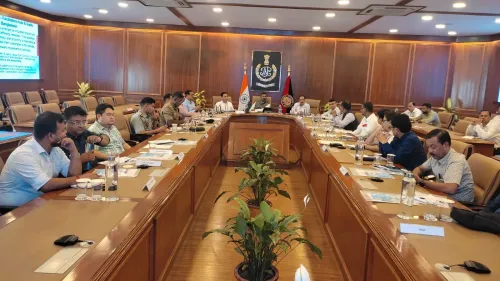
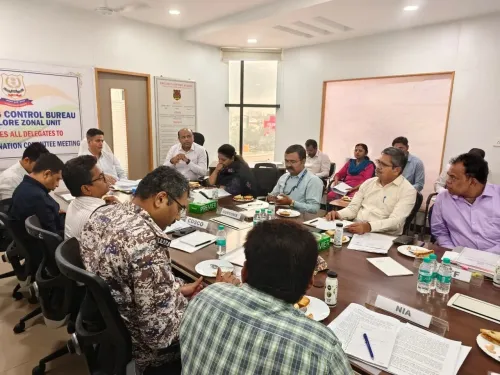
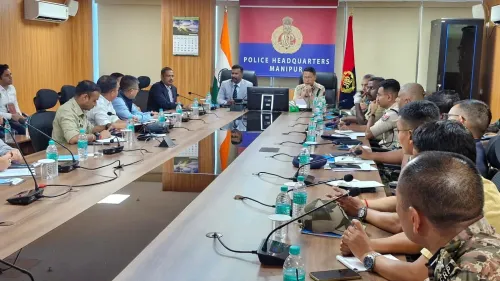
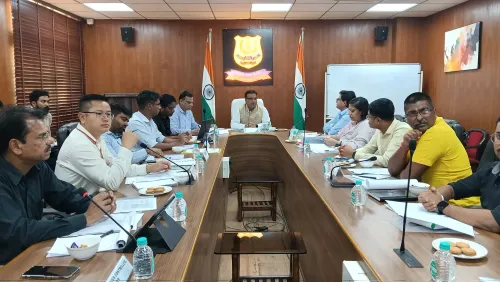
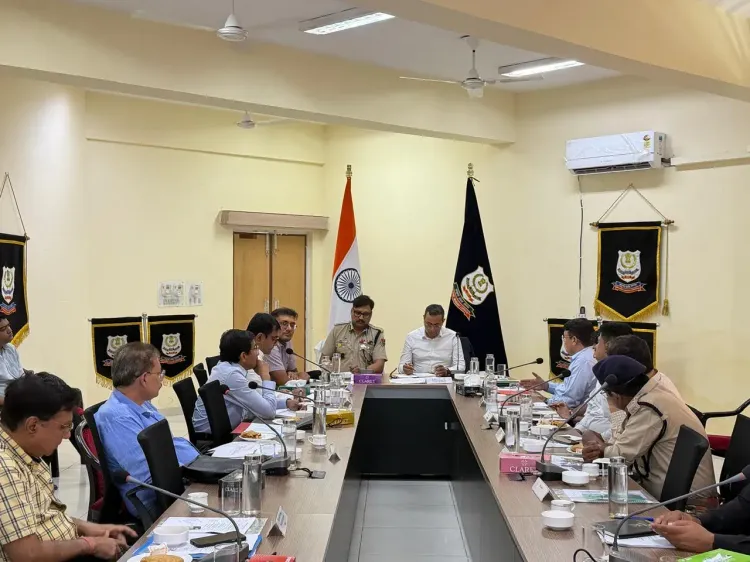
The Narcotics Control Bureau (NCB) convened its quarterly State-Level Joint Coordination Committee (JCC) meeting for Rajasthan in Jaipur on 19 July, bringing together senior officials from over a dozen central and state enforcement agencies to sharpen the collective response to drug trafficking and narcotics-related crime across the state.
Who Chaired the Meeting
The session was jointly presided over by the Deputy Director General (Western Region) of the NCB and the Inspector General of the Anti-Narcotics Task Force (ANTF), Rajasthan. Senior representatives from the National Investigation Agency (NIA), Directorate of Revenue Intelligence (DRI), Central Board of Indirect Taxes and Customs (CBIC), Intelligence Bureau (IB), Income Tax Department, Central Bureau of Narcotics (CBN), Ministry of Social Justice and Empowerment, and the Drug Controller's Office participated in the deliberations.
Key Agenda Items
Officials reviewed the implementation of the Vision Document on Narcotics Control and assessed emerging trafficking trends specific to Rajasthan. A significant portion of the discussions centred on monitoring 50 identified cases registered under the Narcotic Drugs and Psychotropic Substances (NDPS) Act, with emphasis on ensuring their early disposal in courts.
Agencies also deliberated on expediting proposals under the Prevention of Illicit Traffic in Narcotic Drugs and Psychotropic Substances (PIT-NDPS) Act, which allows for administrative detention of drug traffickers. Strengthening financial investigations and dismantling organised trafficking networks through greater inter-agency coordination were flagged as priority areas.
Intelligence Sharing and Joint Operations
The meeting placed particular stress on intelligence-led joint operations and coordinated interrogations. Timely sharing of actionable information among participating agencies was identified as a critical gap that the JCC framework is designed to bridge. Agencies also reviewed several significant narcotics seizures and high-profile cases handled in recent months, according to officials.
Notably, discussions extended beyond enforcement to include public awareness campaigns and de-addiction initiatives — reflecting a dual-track approach that combines supply-side interdiction with demand reduction. This aligns with the Centre's broader Drug-Free India objective, which has gained renewed urgency as synthetic drug flows through Rajasthan's border districts have reportedly increased.
Outcome and Next Steps
The meeting concluded with a set of actionable directions aimed at reinforcing the Vision Document on Drug Control. All participating agencies reaffirmed their commitment to sustained cooperation, with the next quarterly JCC review expected to assess progress on the 50 monitored NDPS cases and PIT-NDPS proposals. The coordinated framework, officials said, is central to dismantling the organised networks that continue to exploit Rajasthan's geography as a transit corridor.
Point of View
But India's drug courts remain severely backlogged — which means early disposal targets are aspirational unless matched by dedicated fast-track benches. Rajasthan's border geography makes it a natural transit corridor, and the emphasis on financial investigations is the right instinct: dismantling trafficking networks requires following the money, not just the contraband. The real test of this JCC cycle will be whether the PIT-NDPS proposals actually result in detentions, and whether inter-agency intelligence sharing moves from committee resolution to operational reality.
NationPress
18 Oct 2026
Frequently Asked Questions
What is the NCB's JCC meeting and why was it held in Jaipur?
The Joint Coordination Committee (JCC) is a quarterly forum convened by the Narcotics Control Bureau to align central and state enforcement agencies on anti-drug strategy. The Rajasthan edition was held in Jaipur on 19 July to review trafficking trends, monitor live NDPS cases, and strengthen inter-agency coordination across the state.
Which agencies participated in the Rajasthan JCC meeting?
Over a dozen agencies attended, including the NIA, DRI, CBIC, Intelligence Bureau, Income Tax Department, Central Bureau of Narcotics, Ministry of Social Justice and Empowerment, and the Drug Controller's Office, alongside the NCB and Rajasthan's Anti-Narcotics Task Force.
What are the 50 NDPS cases being monitored?
These are 50 identified cases registered under the Narcotic Drugs and Psychotropic Substances Act that agencies flagged for close monitoring to ensure early disposal in courts. The JCC framework is being used to track progress and remove procedural bottlenecks.
What is the PIT-NDPS Act and why is it significant?
The Prevention of Illicit Traffic in Narcotic Drugs and Psychotropic Substances Act allows authorities to detain suspected drug traffickers administratively, without waiting for a criminal conviction. Expediting proposals under this law is seen as a way to neutralise key operatives faster than the regular court process permits.
How does this meeting connect to the Drug-Free India mission?
The Drug-Free India campaign is the Centre's overarching national objective for narcotics control. The JCC mechanism is one of its operational pillars, using coordinated enforcement, financial investigations, and public awareness drives to simultaneously reduce drug supply and demand at the state level.