Rajasthan CMO directs Range IGs, SPs to fast-track NDPS, gangster cases
Synopsis
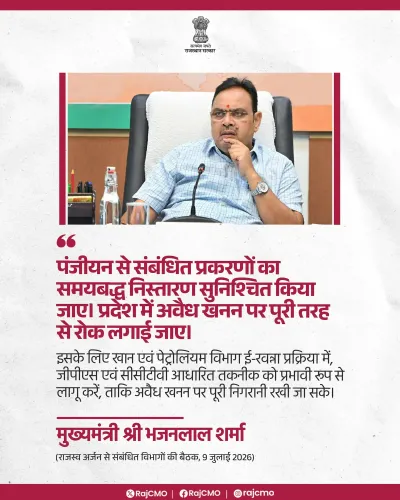
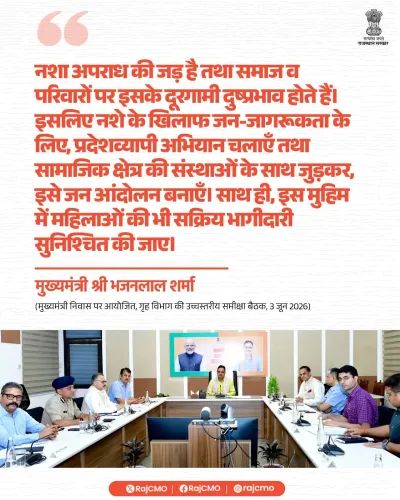
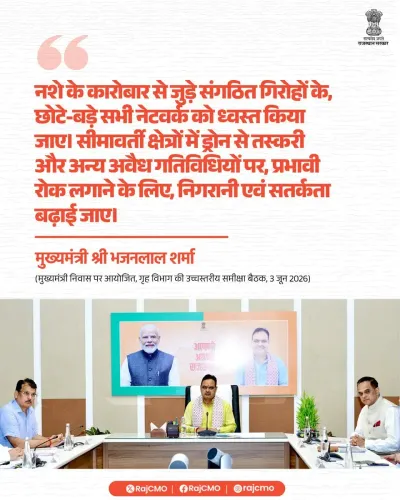
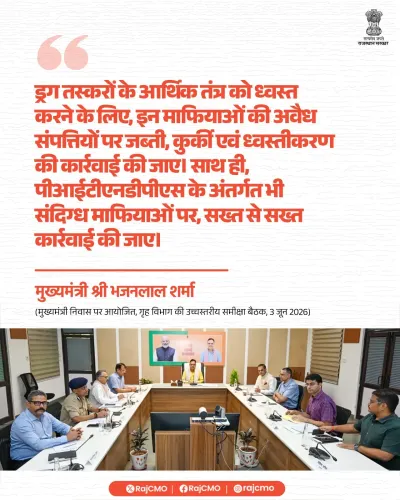
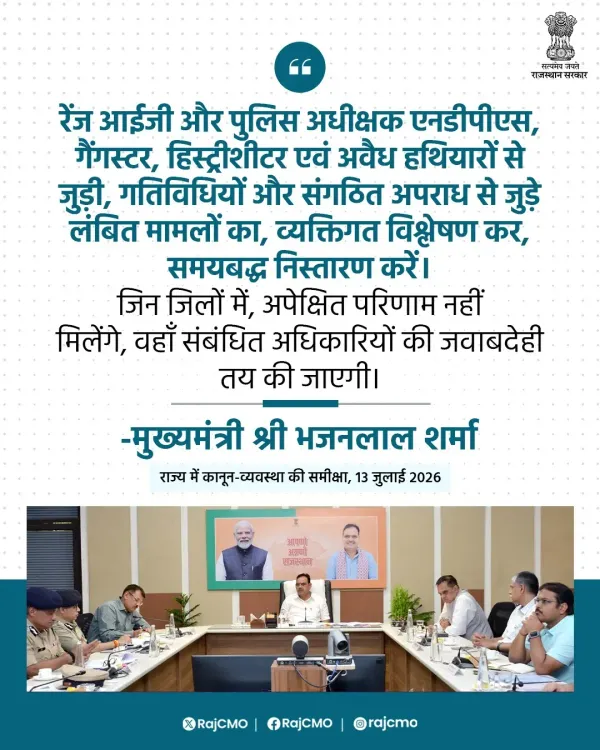
The Rajasthan Chief Minister's Office on 14 July 2026 directed Range IGPs and district SPs to personally analyse and time-bound dispose of pending cases involving narcotics, gangsters, history-sheeters, illegal arms, and organised crime, with the directive addressed to CM Bhajan Lal Sharma.
Key Takeaways
The Rajasthan CMO issued a directive on 14 July 2026 to Range IGPs and SPs across the state.
Officers are instructed to conduct personal analysis of pending cases under NDPS , gangster, history-sheeter, illegal arms, and organised crime categories.
The directive demands time-bound disposal of these long-pending cases.
The post was addressed directly to Chief Minister Bhajan Lal Sharma , signalling top-level monitoring.
Such drives are part of a broader pattern of periodic law-and-order directives seen across BJP-ruled states since 2014 .
Compliance is expected to be tracked through Rajasthan Home Department review meetings and quarterly crime statistics.
The Chief Minister's Office of Rajasthan issued a directive on Tuesday, 14 July 2026, instructing Range Inspector Generals of Police and Superintendents of Police to personally analyse and time-bound dispose of pending cases linked to narcotics, gangsters, history-sheeters, illegal weapons, and organised crime across the state.
Context
The post, addressed to Chief Minister Bhajan Lal Sharma and tagged with the hashtag #आपणो_अग्रणी_राजस्थान ('Our Leading Rajasthan'), calls on senior police officers to move beyond routine oversight and conduct individual, hands-on reviews of stalled criminal cases. The directive specifically names four categories: NDPS offences, gangster-linked activity, history-sheeters, and illegal arms. By tagging the Chief Minister directly, the CMO signals that case disposal progress is being monitored at the highest level of the state government.
The instruction uses the phrase 'व्यक्तिगत विश्लेषण' ('personal analysis'), underscoring that senior officers are expected to go beyond delegation and engage directly with the backlog in their respective ranges.
Policy Backdrop
The Narcotic Drugs and Psychotropic Substances (NDPS) Act, 1985 is India's primary federal legislation governing drug trafficking, production, and related offences. Prosecutions under the Act are handled by state police and prosecutorial machinery, making case disposal rates a direct reflection of state-level administrative efficiency.
Rajasthan Police, the state's primary law-enforcement agency, operates through a range-based command structure where Range IGPs oversee multiple districts. Time-bound directives of this nature — targeting narcotics, organised crime, and pending warrant execution — have been a recurring feature of law-and-order governance across BJP-ruled states since 2014, aimed at improving conviction rates and reducing institutional backlogs without amending the underlying legal framework.
Chief Minister Bhajan Lal Sharma, who has headed the BJP government in Rajasthan since December 2023, has framed organised crime and drug trafficking as priority concerns for the administration.
Stakeholders and Impact
The directive directly affects Range IGPs and district Superintendents of Police across Rajasthan, placing personal accountability on officers for the pace of case resolution. For communities in districts with high rates of drug-related or organised-crime activity, faster case disposal could translate into quicker trials and, where applicable, expedited asset seizures or bail oppositions.
Accused persons and undertrial prisoners in NDPS and gangster cases are also directly affected, as accelerated case review can influence charge-sheet filing timelines and court scheduling. Civil society organisations tracking prison overcrowding and undertrial populations will be watching whether the directive produces measurable movement in case statistics.
What's Next
The Rajasthan Home Department is expected to monitor compliance through periodic review meetings, with quarterly crime statistics releases by Rajasthan Police serving as the most visible public indicator of whether the directive yields results. Should the CMO follow up with formal performance benchmarks or a public dashboard for case disposal, it would mark an escalation from directive to structured accountability. The broader test lies in whether time-bound instructions translate into sustained institutional change or remain a one-cycle administrative push.
Point of View
With the CM tagged to reinforce that oversight flows from the top. Framing the instruction around NDPS, gangsters, and illegal arms simultaneously addresses three high-salience voter concerns: drugs, organised violence, and weapons proliferation. While time-bound directives of this kind are a recurring governance tool and rarely restructure institutional capacity on their own, their political utility lies in demonstrating administrative intent ahead of crime-statistics cycles. The real measure of impact will be whether Rajasthan Police's quarterly data shows a statistically meaningful reduction in pending cases in the months ahead.
NationPress
13 Oct 2026
Frequently Asked Questions
What did the Rajasthan CMO direct police officers to do on 14 July 2026?
The Rajasthan Chief Minister's Office directed Range IGPs and Superintendents of Police to personally analyse and time-bound dispose of pending cases related to NDPS offences, gangsters, history-sheeters, illegal weapons, and organised crime.
Who is Bhajan Lal Sharma and why was he tagged in the post?
Bhajan Lal Sharma is the Chief Minister of Rajasthan, serving since December 2023. He was tagged in the CMO post to signal that the directive on pending criminal cases is being monitored at the highest level of the state government.
What is the NDPS Act and why does it matter in this context?
The Narcotic Drugs and Psychotropic Substances Act, 1985, is India's central law against drug trafficking and related offences. NDPS cases are prosecuted by state police, so Rajasthan's directive to speed up their disposal directly targets the state's narcotics case backlog.
What does 'time-bound disposal' of cases mean for Rajasthan police?
Time-bound disposal means senior officers are expected to set and meet specific deadlines for resolving long-pending criminal cases, covering charge-sheet filing, court coordination, and follow-up, rather than allowing cases to stall indefinitely.
How will compliance with the Rajasthan CMO's crime directive be tracked?
Compliance is expected to be monitored through Rajasthan Home Department review meetings and the state police's quarterly crime statistics releases, which will indicate whether pending case numbers decline in the coming months.