CM Bhajanlal Sharma orders seizure of drug traffickers' assets
Synopsis
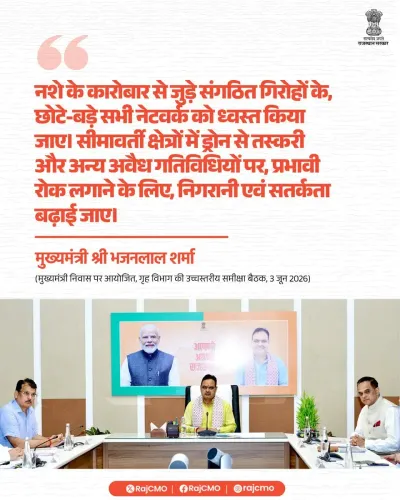
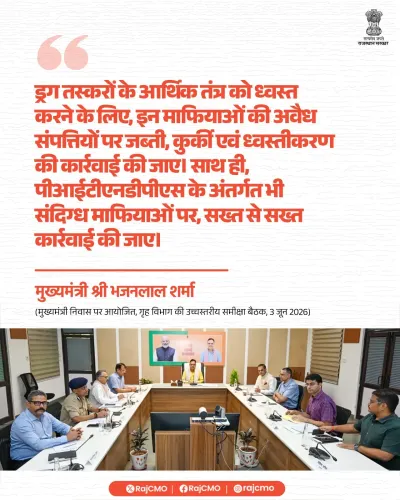
Rajasthan Chief Minister Bhajanlal Sharma chaired a high-level Home Department meeting in Jaipur on 3 June 2026, ordering seizure, attachment and demolition of drug traffickers' illegal assets, tighter surveillance of drone-borne smuggling along the Pakistan border, an anti-addiction awareness drive, and strict action against illegal vehicle modifications and black film on car windows.
Key Takeaways
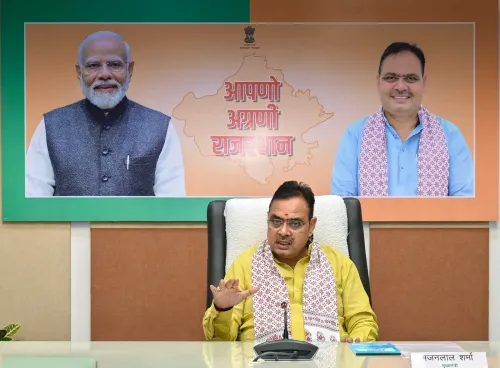
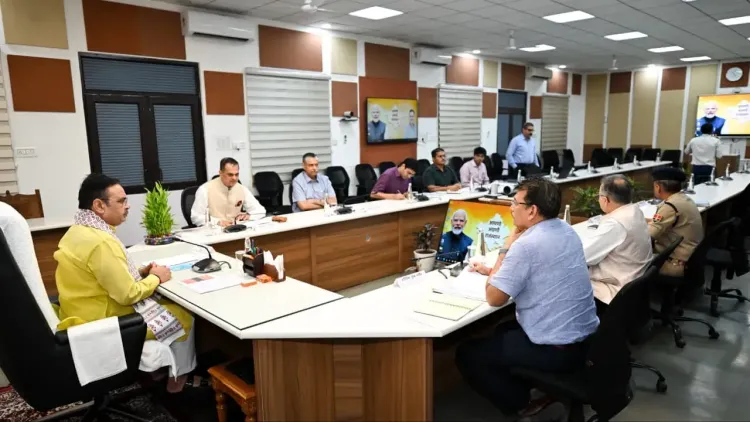
CM Bhajanlal Sharma chaired a high-level Home Department review at the CM residence on 3 June 2026.
Directed seizure, attachment and demolition of drug traffickers' illegal properties to break their financial network.
Ordered effective surveillance of drone-based smuggling and other illegal activity along border areas.
Mandated a public-awareness campaign against drug addiction across the state.
Instructed strict action against illegal vehicle modifications and black film on windows.
Action framework draws on the Narcotic Drugs and Psychotropic Substances Act, 1985.
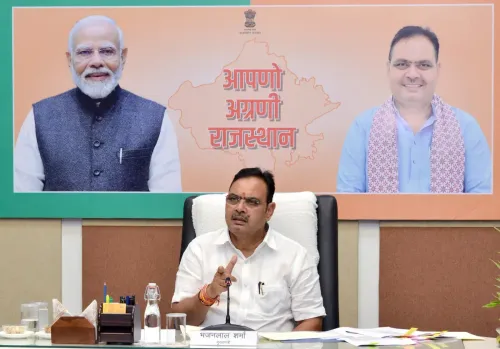
The Chief Minister's Office of Rajasthan announced on 3 June 2026 that Chief Minister Bhajanlal Sharma chaired a high-level review of the state Home Department at the Chief Minister's residence in Jaipur, directing law-enforcement agencies to dismantle the financial ecosystem of narcotics networks through seizure, attachment and demolition of their illegal properties. The meeting also focused on cross-border drone smuggling along Rajasthan's western frontier and a public-awareness push against substance abuse.
Context
According to the post, the Chief Minister instructed officials to take 'strict action against gangs involved in the narcotics trade' and to 'dismantle the economic structure of drug smugglers' through seizure, attachment and demolition of their illegal assets. The original Hindi message uses the phrase 'ड्रग तस्करों के आर्थिक तंत्र को ध्वस्त करने' (to demolish the economic apparatus of drug smugglers), signalling a shift from arrests of carriers to action against money and property.
Sharma further directed agencies to maintain 'effective surveillance' over drone-based smuggling and other illegal activity in border areas, run a mass-awareness campaign against addiction, and crack down on illegal vehicle modifications and the use of black film on car windows.
Policy backdrop
The directives draw on powers under the Narcotic Drugs and Psychotropic Substances Act, 1985, which allows the state to attach and forfeit properties traceable to drug-trafficking proceeds. The framework has been used in recent years across northern states to go beyond individual prosecutions and target the financial spine of trafficking syndicates.
Rajasthan shares a long international boundary with Pakistan running through districts such as Sri Ganganagar, Bikaner, Jaisalmer and Barmer, which have repeatedly figured in seizures of heroin and synthetic drugs. Drone-based drops across the fence have been documented as an emerging tactic, prompting state police to coordinate more closely with central forces guarding the border.
Stakeholders and impact
The push is likely to affect several constituencies. For border communities in western Rajasthan, intensified surveillance and joint patrols can mean both greater security and tighter scrutiny of local movement. For local youth, the planned 'जन-जागरूकता अभियान' (public-awareness campaign) is aimed at reducing demand alongside enforcement.
The order to demolish illegal properties of traffickers echoes asset-action drives in Punjab and Gujarat, where governments have argued that hitting balance sheets disrupts networks more durably than arresting couriers. Civil-liberties observers have, in similar campaigns elsewhere, flagged the need for due process before demolition, making the procedural record of each case a point to watch.
The instruction to crack down on illegal vehicle modifications and black film on windows links a routine traffic-enforcement issue to the broader law-and-order agenda. Tinted windows have historically been cited by police as a cover for smuggling and crimes, and the Supreme Court has previously restricted the use of such film on private vehicles.
What's next
Follow-up action will be visible in the form of NDPS attachment orders, property demolitions in border districts, and any joint operations announced with central agencies deployed along the frontier. The Home Department's quarterly enforcement data and district-level seizure figures will indicate whether the asset-focused approach translates into measurable disruption of trafficking pipelines.
The hashtag '#आपणो_अग्रणी_राजस्थान' ('Our Leading Rajasthan') used in the post situates the announcement within the state government's broader governance branding, suggesting that internal security will remain a recurring plank of its public messaging in the months ahead.
Point of View
Sharma's government is attempting a three-front strategy familiar from Punjab's anti-drug drives. The inclusion of vehicle-modification enforcement signals that the administration sees ground-level policing and trafficking control as a single continuum. The credibility of the push will rest on documented attachment orders and procedural rigour, not on the strength of the announcement.
NationPress
24 Sept 2026
Frequently Asked Questions
What did Rajasthan CM Bhajanlal Sharma announce on drug trafficking?
He directed seizure, attachment and demolition of illegal properties owned by drug traffickers to dismantle their financial network, alongside stricter action against gangs involved in the narcotics trade.
Why is drone smuggling a concern in Rajasthan?
Rajasthan shares a long international border with Pakistan, and drones have emerged as a tactic to drop narcotics and contraband across the fence into western districts, prompting calls for tighter surveillance.
What law allows seizure of drug traffickers' properties in India?
The Narcotic Drugs and Psychotropic Substances Act, 1985 provides for attachment and forfeiture of properties derived from or used in drug-trafficking offences.
Is black film on car windows illegal in India?
The Supreme Court has restricted the use of dark tinted film on private vehicle windows beyond prescribed visibility limits, and the Rajasthan government has now ordered strict enforcement against violations.
Which Rajasthan districts border Pakistan?
Sri Ganganagar, Bikaner, Jaisalmer and Barmer share the international border with Pakistan and are the primary focus of cross-border smuggling surveillance.