CM Bhajan Lal orders zero-tolerance drive on drugs, modified vehicles
Synopsis
Rajasthan Chief Minister Bhajan Lal Sharma chaired a Home Department review, ordering zero-tolerance action against drug mafias, stronger border intelligence and a special drive against illegally modified vehicles and those with black film, warning that negligence in maintaining public safety will not be tolerated.
Key Takeaways
CM Bhajan Lal Sharma chaired a Home Department review of law and order, internal security and crime control.
Officers directed to strengthen surveillance, investigation and intelligence in border areas to curb narcotics smuggling.
Zero-tolerance policy declared against drug mafias and peddlers, with the strictest legal action promised.
Special drive ordered against illegally modified vehicles and those with black film on windows.
CM warned that no negligence in ensuring public safety would be tolerated.
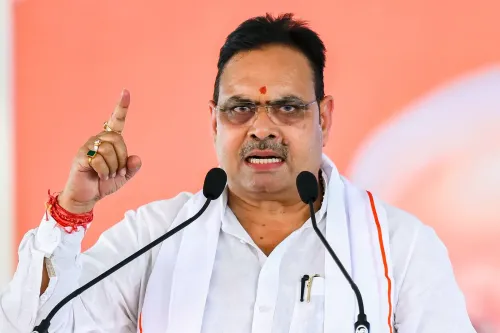
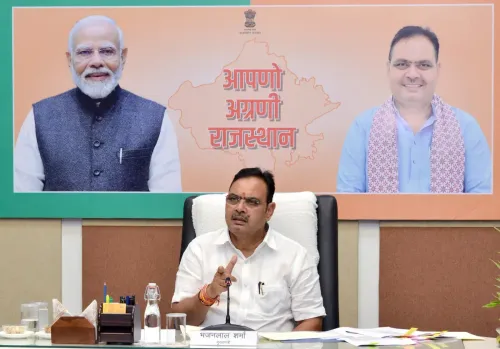
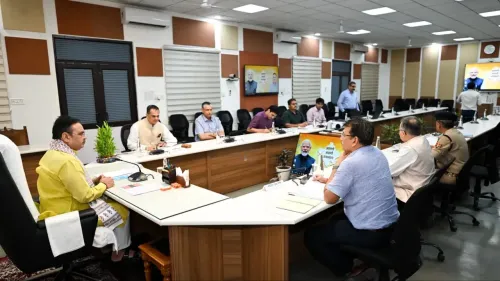
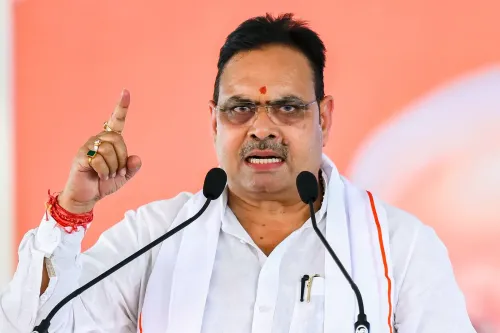
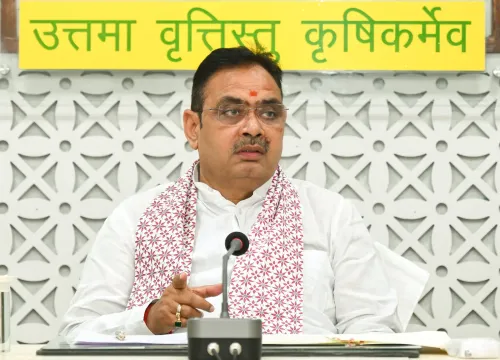
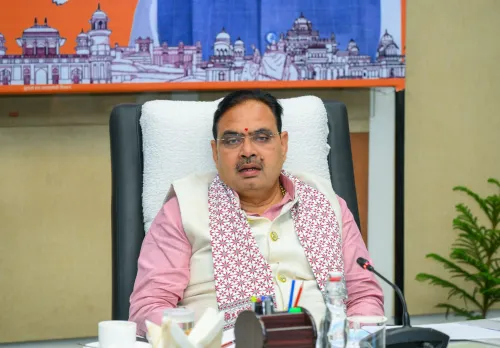
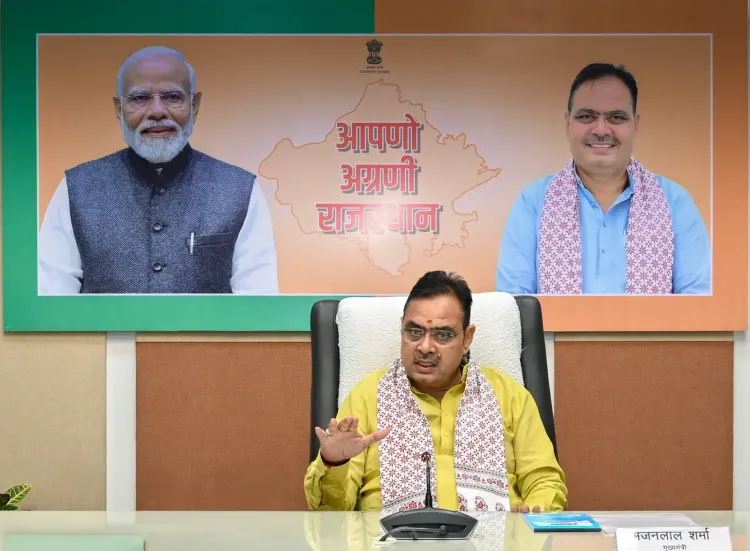
Rajasthan Chief Minister Bhajan Lal Sharma on Wednesday chaired a detailed review of the state's law-and-order, internal-security and crime-control machinery at a high-level Home Department meeting, directing officers to adopt a 'zero tolerance' posture against drug traffickers and to launch a special drive against illegally modified vehicles and those fitted with black film. The meeting covered border surveillance, intelligence coordination and routine policing priorities across Rajasthan.
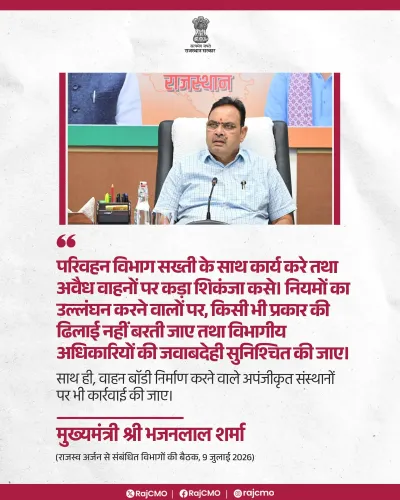
In his post on X, the Chief Minister said surveillance, investigation and the intelligence apparatus in border areas must be 'further strengthened' to curb narcotics smuggling and the illegal trade in contraband. He added that 'the strictest legal action' must be ensured against drug mafias and peddlers, and that 'public confidence in safety and criminals' fear of the law must be maintained at all costs'.
Context
Sharma, who assumed office in December 2023, has repeatedly framed law and order as a defining test of his administration. Wednesday's review continues a pattern of periodic Home Department stocktakes that the Chief Minister has used to signal direct oversight of the Rajasthan Police.
The post highlights two parallel enforcement tracks: anti-narcotics operations in the border belt and a city-and-highway crackdown on vehicles with unauthorised modifications or tinted glass. Both have been recurring concerns in the state's policing agenda.
Policy backdrop
Rajasthan shares a long international border with Pakistan and has historically been flagged as a transit corridor for narcotics linked to the Golden Crescent. Enforcement in districts such as Sriganganagar and Barmer has long depended on coordination between the state police, central agencies and border forces.
The Chief Minister's directive sits within a broader policy lineage. The Narcotic Drugs and Psychotropic Substances Act was amended in 2014 to stiffen penalties for trafficking, and the Centre's Nasha Mukt Bharat Abhiyan, launched in 2020, has pushed states to combine demand-reduction with tougher supply-side action. Sharma's emphasis on intelligence-led border policing echoes similar drives across western India.
The order on black-film and modified vehicles draws on long-standing rules under the Motor Vehicles Act, which restrict aftermarket alterations and tinted glass beyond prescribed limits. Periodic crackdowns have been mounted by successive state governments, often after concerns about their misuse in serious crimes.
Stakeholders and impact
The most immediate stakeholders are residents of border districts, who face both the social harm of narcotics inflows and the heightened presence of enforcement teams. The Chief Minister's instruction to strengthen the 'nigrani, janch evam khufiya tantra' (surveillance, investigation and intelligence apparatus) suggests an expansion of human and technical intelligence at checkpoints and known transit points.
For the Rajasthan Police, the directive translates into measurable targets on seizures, arrests and vehicle challans. Motorists in urban centres such as Jaipur, Jodhpur and Kota can expect more frequent stop-checks during the special drive, with action against tinted windows and unauthorised exhaust, lighting or bodywork modifications.
The political audience is equally clear. By foregrounding 'jeero tolerance' (zero tolerance) language and warning that 'any kind of negligence will not be tolerated', Sharma is signalling administrative accountability down the police hierarchy.
What's next
Officials are expected to roll out the special drive against modified vehicles in the coming weeks, with district superintendents likely to be asked for compliance reports. Drug-seizure data from border districts, particularly along the western frontier, will be the most visible metric of whether the renewed push translates into ground-level results.
Further Home Department reviews are likely as the government seeks to demonstrate steady progress on internal security, an arena the Chief Minister has placed at the centre of his governance pitch.
Point of View
An area where the BJP campaigned hard in 2023. Pairing border anti-narcotics action with a consumer-facing crackdown on modified vehicles is politically shrewd, addressing both a structural smuggling problem and an everyday urban irritant. The real test, however, lies in measurable outcomes, particularly seizure data from western border districts. Without those numbers, repeated 'zero tolerance' announcements risk becoming rhetorical scaffolding rather than enforcement strategy.
NationPress
19 Sept 2026
Frequently Asked Questions
What did Rajasthan CM Bhajan Lal Sharma announce on drugs?
He announced a zero-tolerance policy against drug mafias and peddlers, directing officials to strengthen surveillance, investigation and intelligence in border areas and to ensure the strictest legal action against traffickers.
What is the new rule on black film and modified vehicles in Rajasthan?
The Chief Minister has ordered a special police-administration drive against illegally modified vehicles and those fitted with black film on windows, with effective action to be ensured across the state.
Why is Rajasthan a focus for anti-narcotics action?
Rajasthan shares an international border with Pakistan and has long been flagged as a transit corridor for narcotics linked to the Golden Crescent region, making border districts a recurring focus of enforcement.
When did Bhajan Lal Sharma become Chief Minister of Rajasthan?
Bhajan Lal Sharma assumed office as Chief Minister of Rajasthan in December 2023 after the BJP's victory in the state assembly elections.
Which districts are most affected by border smuggling in Rajasthan?
Western border districts such as Sriganganagar and Barmer have historically featured prominently in discussions of cross-border smuggling and anti-narcotics operations.