Giriraj Singh hails Chenab Bridge as J&K tourism catalyst
Synopsis
Union Textiles Minister Giriraj Singh has highlighted the Chenab Rail Bridge — the world's highest railway bridge — as a rising tourism landmark in Jammu and Kashmir, saying new facilities under development will energise regional tourism and the local economy.
Key Takeaways
Giriraj Singh on 4 November 2026 called the Chenab Rail Bridge a medium for giving Jammu and Kashmir tourism a new identity.
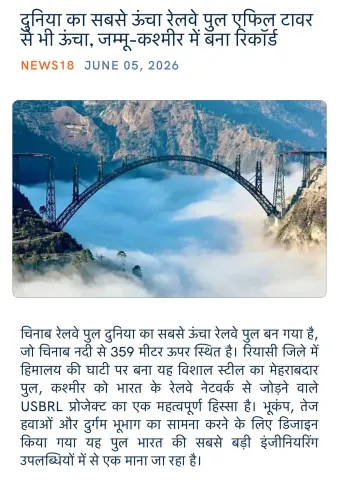
The bridge spans 359 metres above the Chenab River , making it the world's highest railway bridge.
It is the centrepiece of the Udhampur-Srinagar-Baramulla Rail Link , India's all-weather rail project for the Kashmir Valley .
The USBRL received accelerated investment after J&K 's reorganisation into a Union Territory in 2019 .
The Minister said ongoing development and new facilities will further boost tourism attraction and local economic growth in the region.
The world's highest railway bridge is doing more than carrying trains — it is rewriting the tourism story of Jammu and Kashmir. Union Textiles Minister Giriraj Singh on Wednesday, 4 November 2026, pointed to the Chenab Rail Bridge as a transformative force for regional tourism and the local economy, saying that ongoing development work and new facilities will sharpen the area's appeal for visitors.
Posting on X in Hindi, the Minister wrote: 'Chinab Rail Bridge Jammu-Kashmir mein paryatan ko nayi pehchaan dene ka madhyam ban raha hai' — 'The Chenab Rail Bridge is becoming a medium for giving tourism in Jammu and Kashmir a new identity.' He added that emerging facilities will further boost tourism attraction in the region, delivering fresh momentum to the local economy.
Engineering marvel that became a landmark
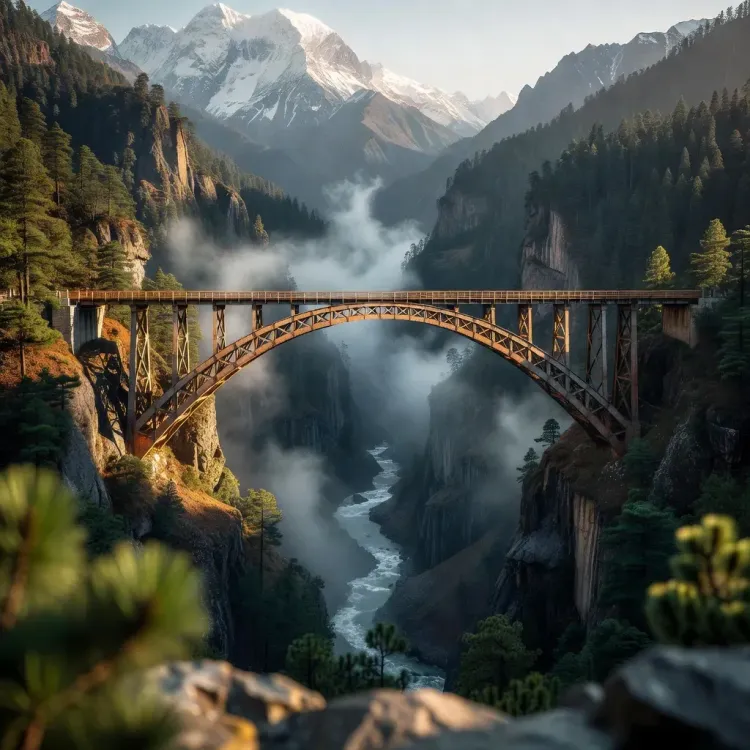
The Chenab Rail Bridge arches 359 metres above the Chenab River — taller than the Eiffel Tower — making it the world's highest railway bridge. It forms the centrepiece of the Udhampur-Srinagar-Baramulla Rail Link (USBRL), a decades-long Indian Railways project designed to deliver all-weather rail connectivity between Jammu and the Kashmir Valley. The sheer scale of the structure has drawn attention well beyond the rail sector, positioning it as a destination in its own right.
USBRL and the post-2019 connectivity push
The USBRL project received sharply accelerated focus after Jammu and Kashmir was reorganised into a Union Territory in 2019. Central investment in road and rail infrastructure in the region has since been framed as an integration imperative — reducing the Valley's historic isolation and creating conditions for economic activity to grow. The Chenab Bridge sits at the symbolic and logistical heart of that effort.
Tourism dollars behind the steel and concrete
Successive governments have argued that connectivity is the multiplier for tourism revenue in J&K — that easier access translates directly into more visitors, more nights, more spending in local markets and homestays. Singh's post plants the Chenab Bridge firmly in that logic. As development work around the site continues and new visitor facilities take shape, the bridge is increasingly positioned not just as a feat of engineering but as an anchor for a broader tourism corridor in the region.
When the USBRL reaches full operational status, the economic case the Minister is making will face its clearest test — in passenger numbers, tourism arrivals, and livelihoods along the route.
Point of View
Not merely engineering milestones. Linking the Chenab Bridge to tourism revenue broadens the political dividend of the USBRL investment beyond connectivity. With J&K's integration narrative central to the government's post-2019 positioning, every new facility around the bridge becomes a data point in that larger argument. The real test will be verifiable tourism and passenger traffic numbers once the full rail link is operational.
NationPress
4 Nov 2026
Frequently Asked Questions
What is the Chenab Rail Bridge and why is it famous?
The Chenab Rail Bridge is the world's highest railway bridge, standing 359 metres above the Chenab River in Jammu and Kashmir. It is a key structure on the Udhampur-Srinagar-Baramulla Rail Link project.
What did Giriraj Singh say about the Chenab Bridge?
On 4 November 2026, Union Textiles Minister Giriraj Singh posted on X that the Chenab Rail Bridge is becoming a medium for giving tourism in Jammu and Kashmir a new identity, and that ongoing development work will boost local tourism and the economy.
What is the Udhampur-Srinagar-Baramulla Rail Link?
The USBRL is a long-standing Indian Railways project to provide all-weather rail connectivity between Jammu and the Kashmir Valley. It received accelerated funding and focus after Jammu and Kashmir became a Union Territory in 2019.
How does the Chenab Bridge help Jammu and Kashmir's economy?
By improving rail connectivity and drawing visitors as a tourist landmark in its own right, the Chenab Bridge is expected to increase tourist arrivals, support local businesses, and stimulate economic activity across the region.
Is the Udhampur-Srinagar-Baramulla Rail Link fully operational?
As of the available information, the USBRL project has been progressing in stages; full operational status of the entire link, including the Chenab Bridge section, is awaited. Official passenger traffic and tourism data are expected once the link is fully open.