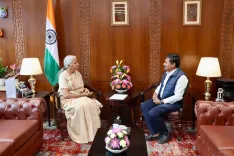
Giriraj Singh: India's Optical Fibre Exports Surge on AI Boom
Synopsis
Union Textiles Minister Giriraj Singh flagged a reported historic surge in India's optical fibre and cable exports on 4 November 2026, crediting global AI-infrastructure demand and the 2021 PLI scheme for telecom products, with the US and China named as key destination markets.
Key Takeaways
Union Textiles Minister Giriraj Singh posted on 4 November 2026 highlighting a reported surge in India's optical fibre and cable exports.
The United States and China were named as the primary markets where Indian telecom products are gaining ground.
The minister attributed the growth to rising global demand driven by the AI revolution and digital infrastructure expansion.
The 2021 PLI scheme for telecom and networking products laid the policy groundwork for this export push.
Official trade data since 2020 show steady growth in India's optical fibre export category.
Next quarterly Ministry of Commerce export figures will be the key datapoint to validate the scale of growth.
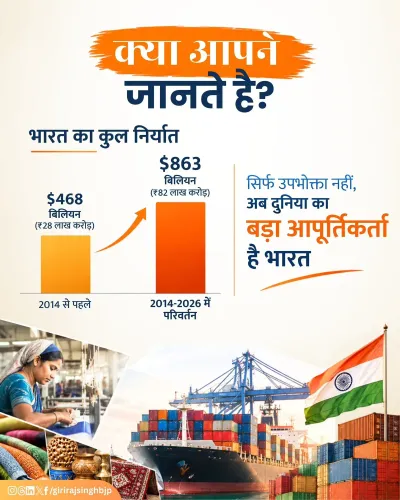
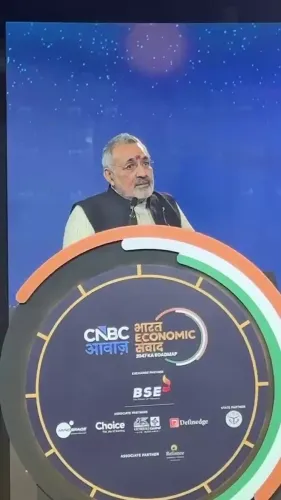
Riding the global artificial intelligence wave, India's optical fibre and cable sector is registering what Union Textiles Minister Giriraj Singh described as a 'historic surge' in exports — with the United States and China emerging as the standout destination markets. Singh flagged the milestone in a post on Wednesday, 4 November 2026, framing it as proof that India's export engine is finding new gears beyond its traditional strengths.
Posting in Hindi, Singh wrote: 'ग्लोबल AI क्रांति के दम पर भारत का निर्यात क्षेत्र नई ऊंचाइयों को छू रहा है!' — 'Powered by the global AI revolution, India's export sector is touching new heights!' He pointed to surging worldwide demand for digital infrastructure as the core driver, noting that Indian products are rapidly consolidating their presence in the world's most competitive markets.Why AI is supercharging optical fibre demand
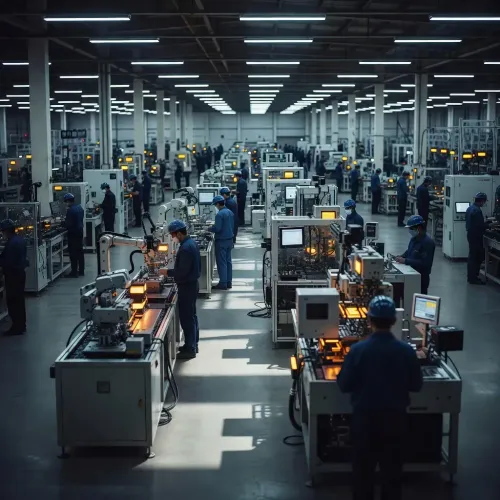
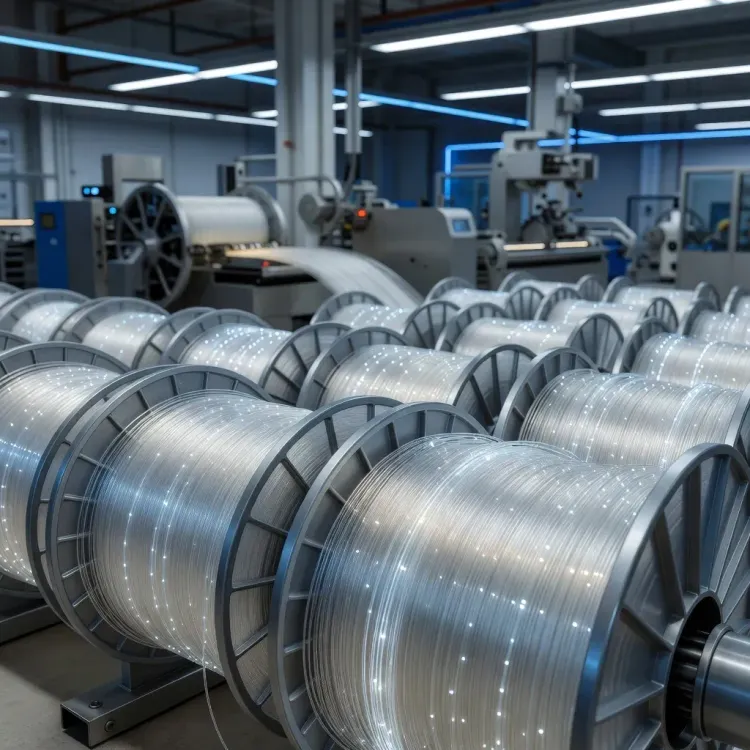
The logic is straightforward: every large language model, every data centre, every cloud-computing cluster runs on physical cable. As AI infrastructure spending accelerates globally, the appetite for high-capacity optical fibre has spiked in kind. India, which has steadily built up its telecom manufacturing base over the past five years, is positioned to capture a growing share of that demand. Official trade data since 2020 have shown consistent growth in this export category — a trend Singh now says has entered a new, sharper phase.
The policy scaffold behind this moment traces back to 2021, when the government launched a Production Linked Incentive (PLI) scheme for telecom and networking products. The PLI framework was designed precisely to do what Singh is now celebrating: shift India from a net importer of telecom components to a credible global supplier, by linking government incentives directly to incremental output and export performance.
The US and China angle — and what it signals
The specific mention of the United States and China as target markets carries more than symbolic weight. The US is in the middle of a generational push to build out domestic AI and data infrastructure — demand that domestic American manufacturers cannot fully satisfy alone. China, while a formidable producer in its own right, represents a vast internal and re-export market where Indian suppliers are carving out footholds amid ongoing global supply-chain realignment.
That realignment — the gradual diversification of tech supply chains away from single-country dependence — has been one of the defining economic currents of the mid-2020s. Indian telecom exporters, backed by PLI incentives and improving manufacturing quality, have moved to fill gaps left by that shift. Singh's post, in effect, announces that the strategy is delivering visible results.
A Textiles Minister celebrating a telecom milestone — and why it matters
It is worth noting that Singh's ministerial brief is textiles, not telecom or commerce. His decision to amplify this export news underscores the BJP government's broader pitch: that India's manufacturing renaissance is cross-sectoral, not confined to any single ministry's portfolio. The optics of a senior Cabinet minister championing an electronics and telecom export win speak to a deliberate narrative — that 'Make in India' is graduating from aspiration to measurable outcome.
The next hard test will come with the quarterly export figures from the Ministry of Commerce, which will either validate the 'historic surge' framing with granular numbers or place it in more measured context. For now, Singh's signal is clear: the global AI build-out is an Indian export opportunity, and the government intends to press it.
Point of View
Positioning India as a credible supplier to both superpowers simultaneously at a moment when most economies feel compelled to pick sides in the tech supply-chain realignment. The harder question — whether the 'historic surge' holds up to Commerce Ministry data scrutiny — will determine whether this becomes a durable political asset or a premature victory lap.
NationPress
4 Nov 2026
Frequently Asked Questions
Why are India's optical fibre exports rising in 2026?
Global demand for optical fibre has spiked because AI data centres and digital infrastructure projects worldwide require vast amounts of high-capacity cabling. India, backed by PLI manufacturing incentives launched in 2021, has built production capacity to supply this demand.
What is the PLI scheme for telecom products?
The Production Linked Incentive scheme for telecom and networking products was launched in 2021 to boost domestic manufacturing and exports by offering financial incentives tied directly to incremental production and sales performance.
Which countries are buying India's optical fibre cables?
Union Textiles Minister Giriraj Singh specifically cited the United States and China as major markets where Indian optical fibre and cable products are rapidly expanding their presence.
Why is the Textiles Minister commenting on optical fibre exports?
While optical fibre falls outside the Textiles Ministry's core remit, senior Cabinet ministers frequently amplify economy-wide trade gains as part of the government's broader 'Make in India' narrative. It reflects cross-ministerial ownership of India's manufacturing story.
Where can I find the official data on India's optical fibre export growth?
Official quarterly export statistics are published by the Ministry of Commerce and Industry. The next set of quarterly figures will be the key datapoint to verify the scale of the reported surge.