Cabinet Clears Two-Year 'Second Tour of Duty' for Agniveers

Synopsis
The Union Cabinet chaired by PM Narendra Modi has approved a two-year 'Second Tour of Duty' for Agniveers under the Agnipath scheme, while also creating a formal pathway for willing Agniveers to transition into regular soldiers after completing their four- or six-year tenure, subject to selection criteria.
Key Takeaways
The Union Cabinet approved an additional two-year 'Second Tour of Duty' for Agniveers under the Agnipath scheme on November 4, 2026 .
Agniveers who complete their four- or six-year tenure will now have a formal opportunity to enrol as regular, permanent soldiers , subject to selection criteria.
The Agnipath scheme was originally launched in June 2022 to induct soldiers on short-term four-year contracts, replacing immediate permanent enrolment.
Service-specific implementation orders from the Army, Navy, and Air Force will determine the precise selection benchmarks for the permanent-service pathway.
The reform is aimed at producing a younger, fitter, technology-equipped force while managing India's growing defence pension liability.
Minister Nitin Gadkari described the decision as 'a significant step towards strengthening India's defence preparedness.'
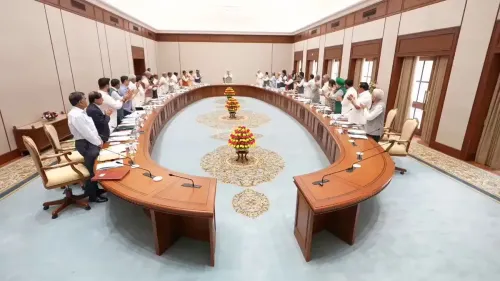
A Cabinet decision announced on Wednesday, November 4, 2026 is set to reshape the futures of thousands of young soldiers: Union Road Transport and Highways Minister Nitin Gadkari confirmed that the Union Cabinet, chaired by Prime Minister Narendra Modi, has approved an additional two-year 'Second Tour of Duty' for Agniveers under the Agnipath scheme — and, crucially, opened a pathway for willing Agniveers to convert into regular soldiers once their initial tenure is complete.
What the Cabinet Has Approved
The decision extends the service window for Agniveers beyond the original four-year contract by adding a two-year second tour. More significantly, it creates a formal provision for Agniveers who complete their four- or six-year tenure to enrol as regular, permanent soldiers — subject to prescribed selection criteria. This is a structural departure from the original scheme's design, which capped most enrolments at four years with only a fraction retained.
Gadkari framed the move as 'a significant step towards strengthening India's defence preparedness,' adding that it 'reflects a broader vision of transforming our armed forces to meet the evolving challenges and changing character of modern warfare.'
Agnipath's Four-Year Journey to This Reform
The Agnipath scheme was launched in June 2022 to recruit soldiers below officer rank on short-term four-year contracts, replacing the earlier system of permanent enrolment from the outset. The government's stated goals were a younger average age profile across the forces, reduced long-term pension liability, and faster integration of technology-literate recruits into an increasingly digital battlefield. The scheme enrolled its first cohort of Agniveers — the designated name for recruits under the scheme — across the Army, Navy, and Air Force.
The 2022 launch, however, triggered protests in several states, with young aspirants raising concerns about job security after the four-year window. The provision for a regular-soldier pathway, now cleared by Cabinet, directly addresses that core anxiety.
The Pathway to Permanent Service
The critical detail still awaited is the precise selection criteria that will govern conversion from Agniveer to regular soldier. The Cabinet decision establishes the legal and policy framework; each of the three services — Army, Navy, Air Force — will now issue service-specific implementation orders spelling out eligibility benchmarks, physical standards, and vacancy percentages. That fine print will determine how wide or narrow the permanent-service door actually is in practice.
What is already clear: the reform embeds Agnipath more firmly into the long-term architecture of military recruitment rather than treating it as a transitional experiment. A six-year Agniveer — four years plus the new two-year extension — entering regular service would arrive with more operational experience than the scheme originally produced, potentially addressing readiness concerns raised by veterans and defence analysts since 2022.
A Younger, Leaner Force — the Structural Logic
The twin objectives driving the original scheme — a younger age profile and reduced pension outgo — remain the bedrock rationale. India's defence pension bill has been one of the fastest-growing components of the defence budget for years, and a larger cohort of short-service personnel moderates that trajectory. At the same time, the new regular-service pathway signals that the government is calibrating the scheme based on ground feedback, threading the needle between fiscal prudence and the legitimate career aspirations of recruits who have already committed to military service.
The next chapter will be written in the service headquarters, where implementation orders will translate Cabinet intent into the lived reality of every Agniveer weighing their options. Watch the selection-criteria notifications — they are the scheme's real stress test.
Point of View
The government signals it heard the job-security anxieties that fuelled the 2022 protests — without reverting to the open-ended permanent recruitment model it was replacing. The reform also deepens the scheme's institutional permanence: each cohort that now signs up for six years and potentially converts to regular service becomes a structural argument against reversal by any future government. The real test, however, lies in the selection criteria yet to be notified — a narrow conversion window could reignite grievances, while a generous one reshapes the force composition more dramatically than the original design envisioned.
NationPress
4 Nov 2026
Frequently Asked Questions
What is the Agnipath scheme second tour of duty?
The Union Cabinet has approved an additional two-year service extension — called the 'Second Tour of Duty' — for Agniveers who complete their initial four-year contract under the Agnipath scheme, taking their total short-service tenure to up to six years.
Can Agniveers become permanent soldiers now?
Yes. The Cabinet decision creates a formal provision allowing willing Agniveers to enrol as regular, permanent soldiers after completing their four- or six-year tenure, subject to prescribed selection criteria to be detailed by each service.
When was the Agnipath scheme launched?
The Agnipath scheme was launched in June 2022 to recruit soldiers below officer rank on four-year short-service contracts across the Army, Navy, and Air Force.
Why did the government introduce the Agnipath scheme?
The scheme was introduced to maintain a younger average age profile in the armed forces, reduce the long-term defence pension burden, and bring in technology-literate recruits suited to modern, digitally-driven warfare.
What happens after the Agnipath second tour is completed?
After completing the extended six-year tenure, Agniveers who meet the prescribed selection criteria will be eligible to convert into regular soldiers; those who do not convert or choose not to will exit with their existing benefits package.