Gadkari Addresses MARG 2026 by NCAER and Janaagraha in Delhi
Synopsis
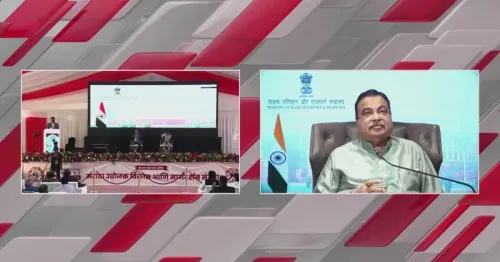
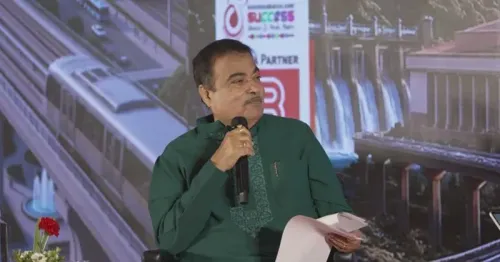
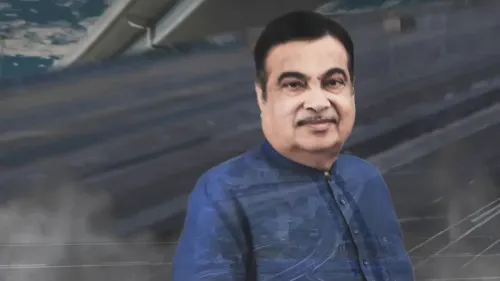
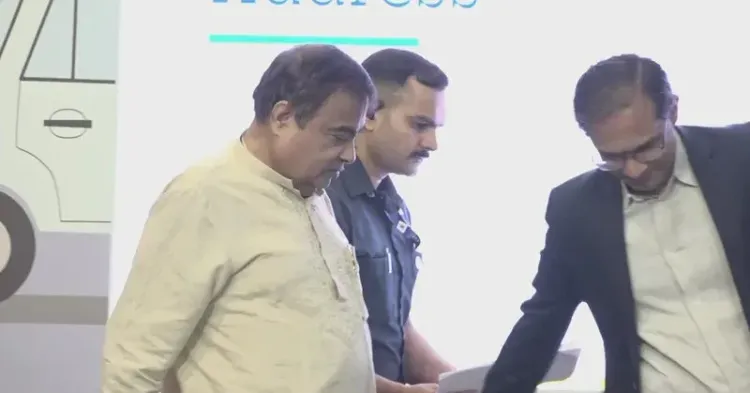
Union Road Transport Minister Nitin Gadkari addressed MARG 2026 in New Delhi on 4 November 2026, a joint conference by economic think tank NCAER and urban governance non-profit Janaagraha, spotlighting the critical link between national highway expansion and city-level infrastructure planning.
Key Takeaways
Nitin Gadkari addressed MARG 2026 in New Delhi on 4 November 2026 .
The event was jointly organised by NCAER (est.
1956 ), India's leading independent economic policy think tank, and Janaagraha , a Bengaluru-based urban governance non-profit.
MARG 2026 focuses on integrating national highway projects with city-level transport and infrastructure planning.
Key stakeholders include urban local bodies and transport planners who face the disconnect between national corridors and city road networks.
Specific outcomes and recommendations from the conference are yet to be made public.
Where national highways meet city streets, the hardest questions in Indian mobility policy live — and on Wednesday, 4 November 2026, Union Road Transport and Highways Minister Nitin Gadkari stepped into that intersection directly, addressing MARG 2026, a conference jointly organised by the National Council of Applied Economic Research (NCAER) and Jana Urban Space Janaagraha in New Delhi.
NCAER, Janaagraha, and the MARG platform
NCAER, established in 1956, is India's oldest and most prominent independent economic policy think tank, with a long record of shaping transport and infrastructure debate. Janaagraha is a Bengaluru-based non-profit that has built its reputation working on urban governance, city infrastructure, and citizen participation — the last-mile layer that national highway budgets rarely account for.
Together, the two institutions form an unusually broad coalition: macro-economic rigour paired with on-the-ground urban systems expertise. MARG 2026 appears designed precisely to bridge that gap — bringing a Cabinet-level highway ministry voice into a room focused on city-level planning realities.
Why a highway minister at an urban governance forum matters
India's infrastructure ambition has long run on two parallel tracks — the Centre building expressways and national corridors at record pace, and cities struggling to absorb that connectivity at their edges. Urban local bodies and transport planners have consistently flagged the disconnect: arterial national highways terminating abruptly into congested city roads, freight movement bottlenecked at the urban fringe, and last-mile access left to under-resourced municipal bodies.
Gadkari's presence at a forum anchored in urban governance signals a push — at least symbolically — to stitch those two scales of planning together. Road Transport and Highways ministers addressing conferences organised by economic research bodies on mobility and urban issues is an established pattern, but the NCAER-Janaagraha partnership gives MARG 2026 a sharper urban-integration focus than a typical highways conclave.
What follows the forum
The specific agenda and outcomes of MARG 2026 are yet to enter the public domain. The event's significance will ultimately be measured by whatever follow-up reports, policy recommendations, or institutional commitments the NCAER-Janaagraha partnership releases in its aftermath — and whether those recommendations find their way into ministry or municipal planning cycles.
India's urban mobility challenge is structural, not rhetorical. The question is whether a minister's address translates into the kind of cross-institutional coordination that city planners have long been asking for.
Point of View
Not just intercity corridor building. The NCAER-Janaagraha pairing is notable — it brings together macro-economic credibility and civic-governance granularity, the two layers that national infrastructure policy most often skips past. For the BJP government, visibly engaging with think-tank and civil society platforms on urban infrastructure also serves a political-optics purpose ahead of municipal election cycles in several large states. The real test, as always, is whether forum-level dialogue produces institutional follow-through.
NationPress
4 Nov 2026
Frequently Asked Questions
Who is Nitin Gadkari?
Nitin Gadkari is India's Union Minister of Road Transport and Highways and a senior BJP leader who previously served as the party's national president. He is widely credited with accelerating national highway construction in India.
What is Janaagraha and what does it do?
Janaagraha is a Bengaluru-based non-profit organisation that works on urban governance, city infrastructure, and citizen participation. It partners with governments and civic bodies to improve the quality of life in Indian cities.
Why is road transport minister addressing an urban governance conference?
India's national highways increasingly interface with city-level road networks, creating bottlenecks and planning gaps. Having the Roads Minister engage with urban governance forums signals a push to coordinate national infrastructure programmes with city-level transport planning.