CM Bhajan Lal Reviews Law and Order in Bikaner
Synopsis
Rajasthan Chief Minister Bhajan Lal Sharma on 26 May 2026 met police and administrative officers in Bikaner, ordering a zero-tolerance crackdown on organised crime. He reaffirmed his government's commitment to ensuring a fear-free and peaceful environment across the state.
Key Takeaways
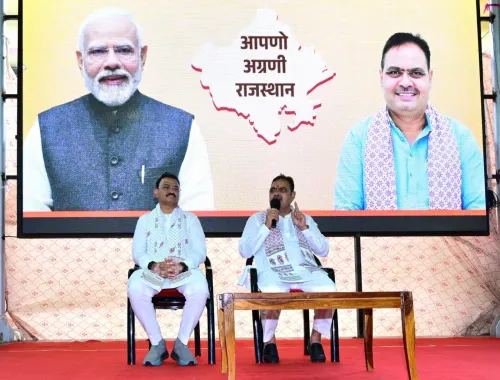
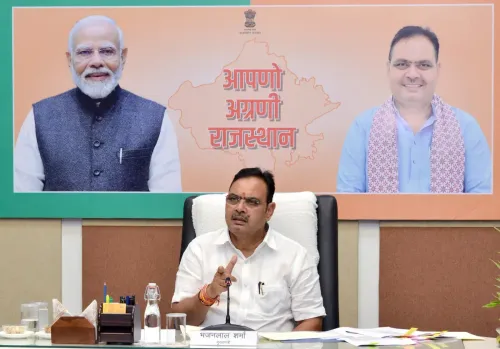
CM Bhajan Lal Sharma chaired a law-and-order review meeting on 26 May 2026 at Swami Keshwanand Rajasthan Agricultural University, Bikaner .
Officers from the police department and district administration attended the meeting.
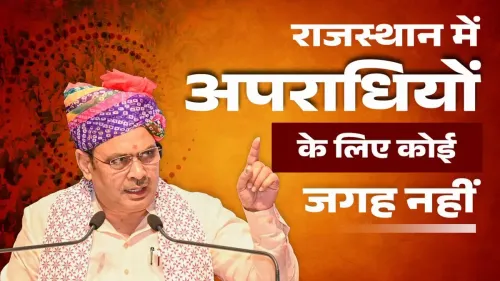
The CM directed officials to launch a strong offensive against organised crimes and operate with a zero-tolerance policy .
The government stated its commitment to ensuring a fear-free and peaceful environment in Rajasthan .
Bikaner division borders Punjab and Haryana , making it a key zone for tackling cross-border organised crime.
The BJP government , in office since December 2023 , has made visible policing oversight a central governance priority.
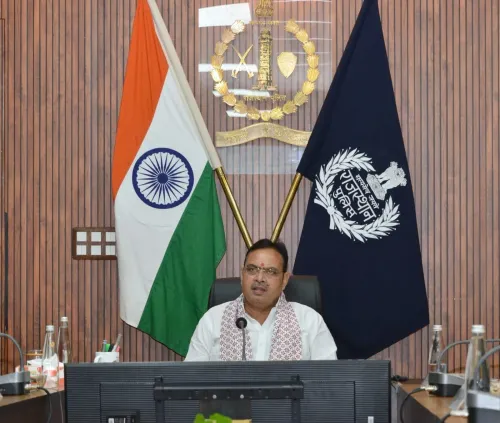
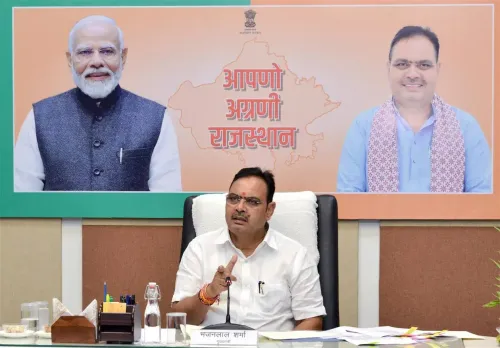
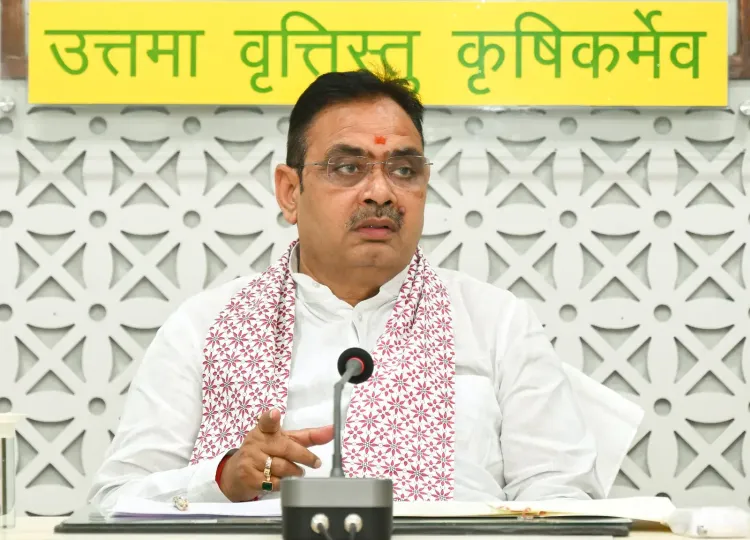
Rajasthan Chief Minister Bhajan Lal Sharma on Tuesday, 26 May 2026, chaired a meeting with police and administrative officers at Swami Keshwanand Rajasthan Agricultural University in Bikaner, directing officials to crack down on organised crime and enforce a zero-tolerance policy on criminal activity across the state.
Context
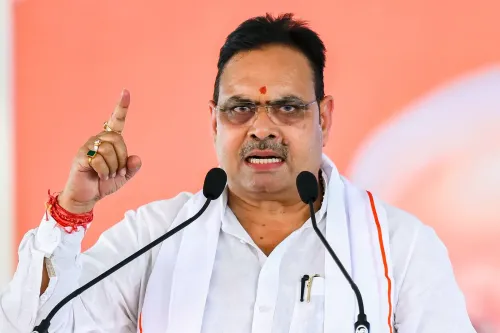
Posting on X, CM Sharma stated — 'बैठक में कानून-व्यवस्था की समीक्षा करते हुए अधिकारियों को संगठित अपराधों पर कड़ा प्रहार करने और अपराध पर जीरो टॉलरेंस नीति के साथ काम करने के निर्देश दिए' ['In the meeting, while reviewing law and order, officers were directed to strike hard against organised crimes and work with a zero-tolerance policy on crime']. He added that his government is 'fully committed to ensuring a fear-free and peaceful environment in the state.' The meeting was held at the university campus, which serves as a prominent official venue in western Rajasthan given its central location in the Bikaner division.
Policy Backdrop
The BJP government that assumed office in Rajasthan in December 2023 had publicly committed to tougher action against organised crime as a central plank of its governance agenda. CM Sharma, who has prior experience handling state-level home and administrative portfolios, has made visible law-and-order oversight a recurring feature of his administration. Divisional-level crime reviews of this kind are a standard instrument of state governance across India, with chief ministers issuing direct directives to district and range-level police officers.
Rajasthan Police is responsible for maintaining public order across 33 districts, spanning a mix of urban centres and vast rural hinterlands. Bikaner district, which borders Punjab and Haryana, presents a distinct set of policing challenges including cross-border organised crime networks, making it a strategically significant venue for such a review.
Stakeholders and Impact
The directives issued at the meeting are aimed primarily at Rajasthan Police officers and district administration officials who are expected to translate the zero-tolerance mandate into operational action on the ground. For the general public — particularly residents of the Bikaner division — the meeting signals the state government's intent to prioritise personal safety and public order. Organised crime, which can range from illegal mining and cattle smuggling to gang violence, has long been a concern in several Rajasthan districts.
Such high-level reviews also serve an accountability function, placing police and administrative officers on notice that their performance on crime metrics is under direct scrutiny from the Chief Minister's office.
What's Next
The Rajasthan Home Department is expected to schedule follow-up quarterly crime review meetings to assess compliance with the directives issued at Bikaner. District-wise crime statistics, which are periodically tabled in the state assembly, will be a key indicator of whether the zero-tolerance policy translates into measurable outcomes. The broader pattern of visible administrative oversight of policing is likely to continue as the BJP government approaches the midpoint of its term.
Point of View
A border district with historically complex policing challenges, as the venue is not incidental; it underscores the government's intent to address organised crime in strategically sensitive geographies. The zero-tolerance framing also serves a political purpose, sharpening the contrast the BJP seeks to draw with the previous administration on public safety. How consistently these directives translate into district-level enforcement action will determine whether the policy holds beyond the optics of the review meeting.
NationPress
25 Sept 2026
Frequently Asked Questions
Why did CM Bhajan Lal Sharma hold a meeting in Bikaner?
CM Bhajan Lal Sharma held the meeting at Swami Keshwanand Rajasthan Agricultural University in Bikaner on 26 May 2026 to review law and order with police and administrative officers and to issue directives on tackling organised crime.
What is the zero-tolerance crime policy in Rajasthan?
The zero-tolerance crime policy in Rajasthan refers to the BJP state government's directive to police officers to take strict and uncompromising action against all criminal activity, with a particular focus on organised crime networks.
What is Swami Keshwanand Rajasthan Agricultural University?
Swami Keshwanand Rajasthan Agricultural University is a premier agricultural university established in 1987 in Bikaner. It is frequently used as a venue for official government meetings due to its central location in western Rajasthan.
What are the law and order challenges in Bikaner, Rajasthan?
Bikaner district in Rajasthan borders Punjab and Haryana, making it vulnerable to cross-border organised crime. The area faces a mix of urban and rural policing challenges that require coordinated administrative oversight.
When did Bhajan Lal Sharma become Chief Minister of Rajasthan?
Bhajan Lal Sharma became Chief Minister of Rajasthan in December 2023 after the BJP won the state assembly elections. He is a senior BJP leader with prior experience in state ministerial roles.