Uttarakhand Cabinet meets in Banbasa near India-Nepal border for the first time
Synopsis
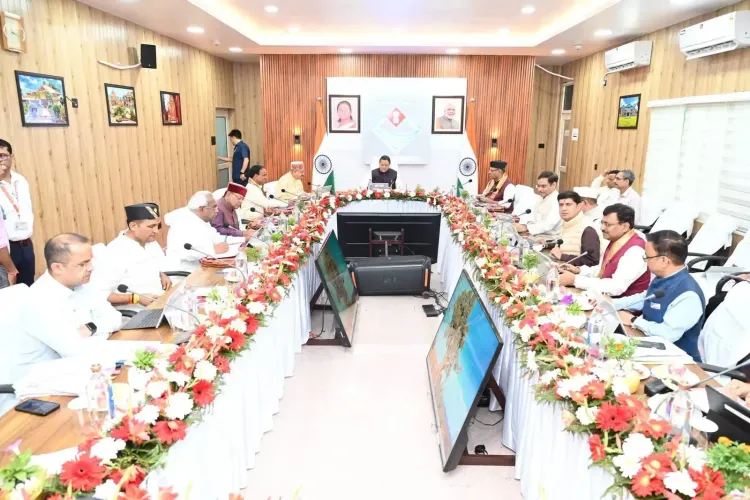
For the first time, Uttarakhand held a Cabinet meeting in Banbasa — a town on the India-Nepal border — with CM Pushkar Singh Dhami framing it as the launch of a new governance model that takes policy decisions closer to the state's most peripheral and strategically sensitive communities.
Key Takeaways
Uttarakhand CM Pushkar Singh Dhami chaired a Cabinet meeting in Banbasa, Champawat district on 4 October 2026 — the first such meeting near the India-Nepal international border .
The initiative is part of a plan to rotate Cabinet meetings across various districts of Uttarakhand, moving beyond the state capital Dehradun .
Dhami announced that border areas are 'vital links in security, culture, and development' and pledged focus on basic amenities, employment, tourism, and connectivity .
The move aligns with the Centre's Vibrant Villages Programme , which targets development of settlements along India's northern frontier.
Future outstation Cabinet meetings are expected in other districts, with decisions to be shaped by region-specific development needs .
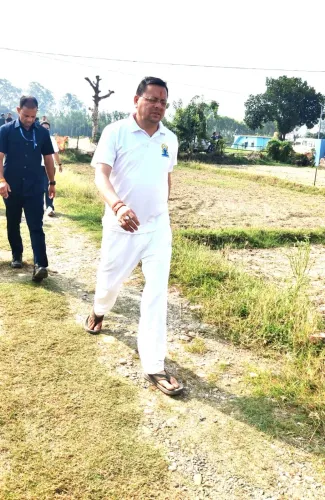
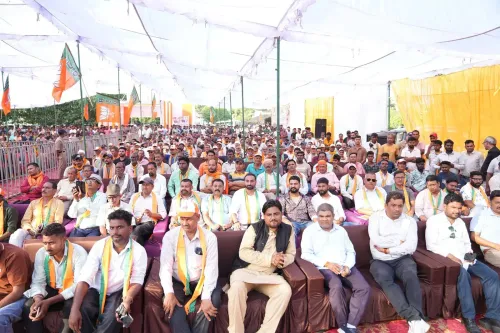
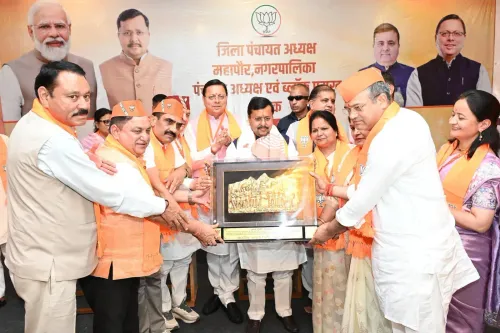
Uttarakhand Chief Minister Pushkar Singh Dhami on Sunday, 4 October 2026, chaired a Cabinet meeting in Banbasa, Champawat district — marking the first time the state government has held such a meeting in a location near the India-Nepal international border. The move is being positioned as a cornerstone of the government's push for decentralised governance and region-specific policymaking.
A Historic First for Border Governance
The choice of Banbasa — a border town in the Terai belt of Champawat district — carries both symbolic and administrative weight. By convening the Cabinet away from the state capital Dehradun, the Dhami government sought to signal that governance priorities would extend to geographically peripheral but strategically significant areas. This is reportedly part of a broader pattern of rotating Cabinet meetings to different districts across Uttarakhand.
Chief Minister Dhami underlined that border regions are not merely geographical demarcations. "Border areas are vital links in our security, culture, and development," he said, stressing the need to invest in people and infrastructure in these zones.
What the Chief Minister Said
Taking to X after the meeting, Dhami wrote: "A cabinet meeting in Banbasa, Champawat, near the India-Nepal international border, marks the beginning of a new initiative in the state. Our effort is to ensure that cabinet meetings are not confined solely to Dehradun, but are held in various districts of the state, so that local problems, possibilities, and development priorities can be understood more closely and effective decisions can be taken."
He added: "Ensuring equitable development in every sector and reaching the government to every individual is our priority."
Key Development Priorities for Border Areas
Dhami outlined several focus areas for Uttarakhand's border belt — strengthening basic amenities, generating employment opportunities, promoting tourism, and improving connectivity. He stated that residents of border areas must be integrated into the mainstream of the state's development process, rather than being treated as an afterthought in policy planning.
The Chief Minister emphasised that development should proceed at a comparable pace across all parts of Uttarakhand, from international border villages to the plains — a formulation that acknowledges long-standing disparities between the hill and Terai regions.
The Broader Context
Uttarakhand shares international borders with Nepal and Tibet (China), making its border districts strategically sensitive. Champawat district, where Banbasa is located, has historically received less developmental attention compared to districts closer to Dehradun. This comes amid a national conversation about revitalising border villages, accelerated by the Centre's Vibrant Villages Programme — a scheme aimed at developing settlements along India's northern frontiers.
Rotating Cabinet sittings to different districts is not entirely new in Indian statecraft — several states have experimented with outstation meetings to signal administrative outreach — but it remains relatively uncommon in Uttarakhand's governance history. How consistently this initiative is followed through will determine whether it becomes institutional practice or a one-off symbolic exercise.
What Comes Next
The government is expected to hold similar outstation Cabinet meetings in other districts of Uttarakhand. Officials indicated that decisions taken at these meetings will be tailored to reflect the development needs of the host region. Residents and elected representatives of border districts will be watching whether the policy commitments announced translate into measurable infrastructure and employment outcomes on the ground.
Point of View
But the governance gap in Uttarakhand's border belt runs deeper than a single outstation sitting can address. Champawat and its surrounding districts have faced decades of emigration, poor connectivity, and thin public services — problems that require sustained budget allocations, not rotational symbolism. The real metric will be whether decisions taken in Banbasa produce verifiable outcomes — school upgrades, road contracts awarded, employment schemes activated — within a defined timeline. Without that accountability layer, the 'Cabinet at the border' initiative risks being remembered as optics rather than a structural shift in how Uttarakhand's periphery is governed.
NationPress
4 Oct 2026
Frequently Asked Questions
Why did Uttarakhand hold a Cabinet meeting in Banbasa?
The Uttarakhand government held its Cabinet meeting in Banbasa, Champawat district, on 4 October 2026 to bring governance closer to border communities and gain a first-hand understanding of local development challenges. Chief Minister Pushkar Singh Dhami framed it as the launch of a new initiative to hold Cabinet meetings in different districts rather than exclusively in the state capital Dehradun.
Where is Banbasa located and why is it significant?
Banbasa is a town in Champawat district of Uttarakhand, situated near the India-Nepal international border. It is strategically significant due to its proximity to the border and its role as a trade and transit point, but has historically received limited developmental attention compared to districts closer to Dehradun.
What development priorities did CM Dhami highlight for border areas?
Dhami emphasised strengthening basic amenities, creating employment opportunities, promoting tourism, and improving connectivity in Uttarakhand's border regions. He stated that residents of border areas must be integrated into the state's broader development process and that development should proceed at a comparable pace from border villages to the plains.
How does this relate to the Centre's Vibrant Villages Programme?
The Vibrant Villages Programme is a central government scheme aimed at developing border settlements along India's northern frontiers, including in Uttarakhand. The state government's focus on border-area governance and infrastructure aligns with the objectives of this programme, which targets connectivity, livelihood, and amenity improvements in strategically sensitive villages.
Will Uttarakhand hold more Cabinet meetings outside Dehradun?
Yes, the government has indicated that the Banbasa meeting marks the beginning of an ongoing initiative to hold Cabinet sittings in various districts of Uttarakhand. Future meetings are expected to be tailored to the specific development needs of each host region, though no fixed schedule has been announced.