CM Majhi: Ganjam Evacuation, Relief Underway as Cyclone Arnab Hits
Synopsis
Odisha Chief Minister Mohan Charan Majhi announced on November 2 that safe evacuations and essential supply arrangements — drinking water and food — are being secured across Ganjam district as Cyclone Arnab impacts the coast, reflecting the state's well-established disaster-management framework.
Key Takeaways
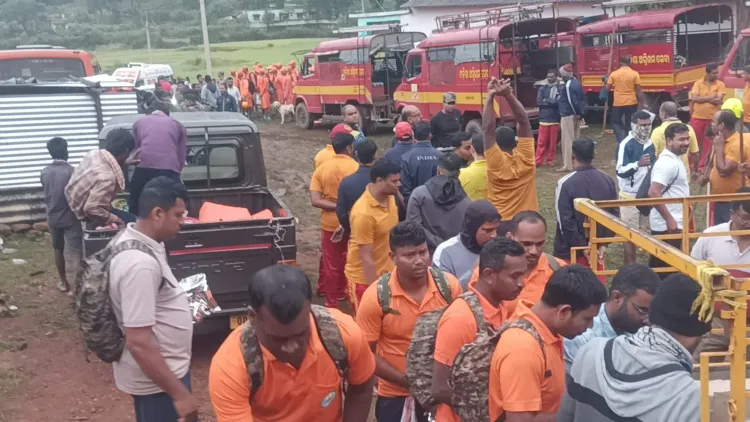
Odisha CM Mohan Charan Majhi confirmed on November 2, 2026 that safe evacuation operations are underway in Ganjam district amid Cyclone Arnab .
Drinking water and food supply arrangements are being actively ensured across the affected coastal district.
Ganjam is one of Odisha's most cyclone-vulnerable coastal districts due to its Bay of Bengal exposure.
Odisha built its modern disaster-management model after the devastating 1999 Super Cyclone , creating a national benchmark for mass evacuations.
During Cyclone Fani in 2019 , the state evacuated more than one million people ahead of landfall, keeping casualties minimal.
Damage assessments and any requests for central assistance are expected once the cyclone fully passes through the region.
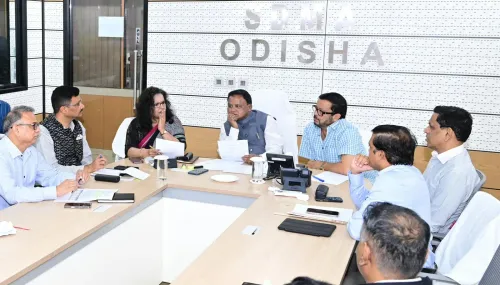
As Cyclone Arnab bears down on Odisha's coast, the state machinery is in full emergency mode — and Odisha Chief Minister Mohan Charan Majhi confirmed on Monday, November 2 that safe evacuations and essential supplies are actively being secured across Ganjam district.
Posting in both Odia and English on X, CM Majhi said: 'Amid the impact of Cyclone Arnab, safe evacuation of people and adequate arrangements for drinking water and food supplies are being ensured across Ganjam. Protecting lives and ensuring the availability of essential services remain the top priorities.' The bilingual message — directed at both local residents and a national audience — signals the administration's intent to communicate clearly and widely during a fast-moving crisis.
Ganjam on the Front Line, Again
Ganjam sits on Odisha's southern coastline along the Bay of Bengal, and its geography has made it a recurring target of storm systems making landfall from the sea. The district's combination of a dense coastal population and low-lying terrain means evacuation speed directly determines casualty outcomes. That calculus has been understood in Odisha's disaster administration for over two decades.
The institutional memory runs deep. After the catastrophic 1999 Super Cyclone that killed thousands and flattened coastal communities, Odisha rebuilt its entire disaster-response framework — cyclone shelters, early-warning communication chains, and pre-positioned relief supplies — earning recognition as a national model. By Cyclone Fani in 2019, the state evacuated more than one million people before landfall, and kept casualties to a fraction of what the storm's Category 5 intensity might otherwise have caused.
What 'Safe Evacuation' Means on the Ground
The Chief Minister's post specifically highlights three operational priorities: safe relocation of residents, drinking-water supply, and food arrangements. These are not incidental — they reflect the three points at which cyclone relief most commonly fails. Evacuation without shelter is displacement. Shelter without water or food becomes a second crisis inside the first.
Odisha's cyclone-shelter network, built out steadily since 1999, provides a structural backbone for exactly this kind of response. Pre-stocked relief centres allow district administrations to move quickly rather than scramble for logistics after landfall. CM Majhi's framing — 'the people's government's top priority' — is a direct appeal to public trust at a moment when residents in Ganjam are making decisions about whether to move, and where to go.
Watching Arnab's Track
In the hours and days ahead, attention will turn to Cyclone Arnab's precise landfall point and intensity, the extent of damage assessments once the storm passes, and whether the state formally requests additional central assistance. Odisha's proven template of early communication and mass evacuation gives the response a running start — but the arithmetic of casualties and relief will only be final once Arnab has moved through.
The last word on any cyclone response is always written by the numbers that come after — how many were moved in time, how many shelters held, how quickly water and power return. Those numbers are still being written in Ganjam today.
Point of View
Bipartisan tradition of treating cyclone evacuation as a core state function rather than a crisis improvisation. For Majhi, who took office in June 2024, a well-managed Cyclone Arnab response would consolidate the administration's credibility on disaster governance — a dimension where Odisha's institutional reputation is among the strongest in India. The emphasis on 'people's government' as the framing is also a pointed political choice, tying executive action directly to a promise of public service.
NationPress
2 Nov 2026
Frequently Asked Questions
What is Cyclone Arnab and where is it hitting in Odisha?
Cyclone Arnab is an active storm system impacting Odisha's coastline, with Ganjam district in southern Odisha among the areas currently affected as of November 2, 2026.
What relief measures has the Odisha government announced for Cyclone Arnab?
Chief Minister Mohan Charan Majhi confirmed that safe evacuations, drinking water supplies, and food arrangements are being secured across Ganjam district during the cyclone's impact.
Why is Ganjam district particularly vulnerable to cyclones?
Ganjam lies on Odisha's southern coastline along the Bay of Bengal, making it historically prone to direct cyclone impacts due to its low-lying coastal geography and dense population.
How has Odisha handled major cyclones in the past?
After the 1999 Super Cyclone, Odisha built a network of cyclone shelters and early-warning systems that became a national model. During Cyclone Fani in 2019, the state evacuated over one million people before landfall, significantly limiting casualties.
Who is Mohan Charan Majhi and what is his role in the cyclone response?
Mohan Charan Majhi is the Chief Minister of Odisha and a BJP leader who took office in June 2024. He is personally communicating the state government's relief priorities during Cyclone Arnab.