CAIT urges Delhi L-G to designate protest sites on city outskirts

Synopsis
India's largest traders' federation has asked Delhi's Lieutenant Governor to zone protests to the city's outskirts after more than a month of market disruptions — framing it as a constitutional balance between assembly rights and the right to trade. The move puts pressure on the L-G's office to act on a politically sensitive demand.
Key Takeaways
CAIT wrote to Delhi L-G Taranjit Singh Sandhu on 2 November 2026 seeking designated protest zones on the city's outskirts.
CAIT National President B.C.
Bhartia cited over one month of intermittent disruptions to markets, supply chains and livelihoods.
The body proposed five measures , including notified protest sites, protection of commercial areas and inter-agency coordination among Delhi Police , traffic police and the MCD .
CAIT said those affected include traders, street vendors, hawkers, daily wage earners, transport operators and delivery personnel.
The traders' body clarified it is not seeking to curtail democratic rights but wants protests to coexist with economic activity under a transparent institutional framework.
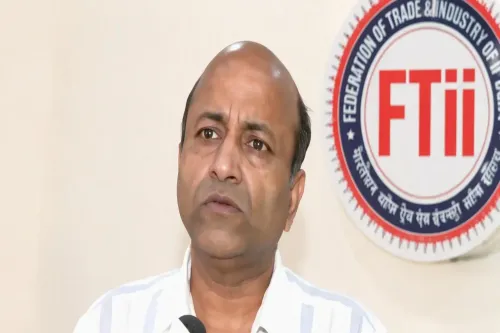
The Confederation of All India Traders (CAIT) has written to Delhi Lieutenant-Governor Taranjit Singh Sandhu, urging him to designate official protest and demonstration zones on the outskirts of the national Capital. In a letter dated 2 November 2026, the traders' body cited over a month of intermittent disruptions to markets, supply chains and daily livelihoods as the reason for the appeal.
What CAIT Has Demanded
CAIT National President B.C. Bhartia asked the Lieutenant Governor to direct concerned authorities to identify and notify suitable locations for peaceful protests, public meetings, demonstrations and political gatherings. The body proposed five specific measures: notification of designated protest sites, protection of commercial and market areas, a transparent mechanism for managing democratic protests, safeguards for daily livelihoods, and improved coordination among government agencies.
CAIT also called on Delhi Police, the traffic police, and the Municipal Corporation of Delhi (MCD) to work in tandem to ensure demonstrations are handled without disrupting public convenience or economic activity.
The Case Against Disruptions
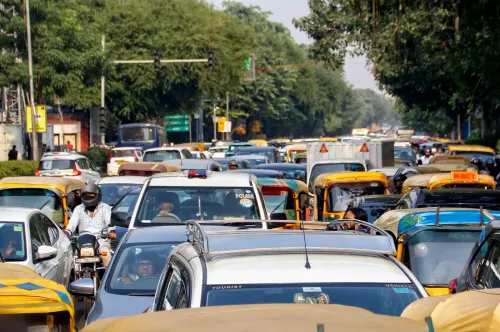
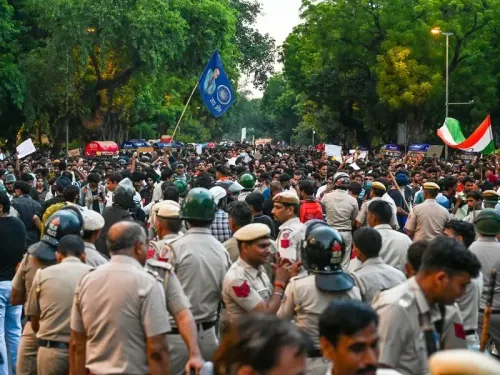
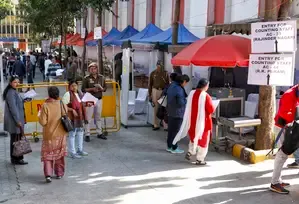
The letter argued that Delhi — one of India's largest trading, wholesale and distribution hubs — had suffered persistent damage from protest-linked road blockages and traffic diversions over the past more than one month. Those affected, CAIT said, include not just traders and shopkeepers but also street vendors, hawkers, daily wage earners, transport operators, delivery personnel and hospitality establishments.
The organisation further noted that restricted access to commercial areas had discouraged business visitors from other parts of the country, eroding transaction volumes and disrupting supply chains.
Balancing Democratic Rights and Economic Life
'While the right to peaceful protest is an integral part of our democratic framework and must be respected, it is equally important that the exercise of this right does not result in the infringement of the rights and livelihoods of other citizens,' the letter stated.
'The right to protest cannot become a right to paralyse the city, just as the right to conduct business cannot be sacrificed in the exercise of democratic freedoms,' it added. CAIT grounded its argument in the Constitution, noting that it 'guarantees the freedom of peaceful assembly, while also recognising the right to practise any profession and carry on trade or business, subject to reasonable restrictions in the public interest.'
What CAIT Is Proposing
Emphasising that it is not seeking to curtail democratic rights, CAIT said a designated protest-site mechanism would provide an institutional solution allowing democratic expression and economic activity to coexist. The traders' body urged the Lieutenant Governor to treat the proposal as a priority and initiate the process of notifying suitable protest zones on Delhi's outskirts.
CAIT also expressed willingness to meet the Lieutenant Governor in person to present the trading community's concerns in greater detail. Whether the Delhi L-G's office acts on the proposal — and how political parties respond to any proposed zoning of protest activity — will determine the next phase of this standoff.
Point of View
But it enters politically charged territory: any formal zoning of protest sites in Delhi will inevitably be read as a tool to contain opposition mobilisation, given the Capital's history as the preferred stage for national agitations. The constitutional framing — balancing Article 19(1)(b) assembly rights against the right to livelihood — is legally sound, but the political optics depend entirely on who enforces it and against whom. The real test for the L-G's office is whether any designated-site framework applies uniformly across the political spectrum or is deployed selectively. Without that assurance, a well-intentioned institutional proposal risks becoming a flashpoint rather than a fix.
NationPress
2 Nov 2026
Frequently Asked Questions
What has CAIT asked Delhi's Lieutenant Governor to do?
CAIT has urged Delhi L-G Taranjit Singh Sandhu to designate official sites for protests, demonstrations and political gatherings on the outskirts of the national Capital. The traders' body wants concerned authorities to formally notify these locations so that economic activity in Delhi's markets is no longer disrupted.
Why is CAIT raising this demand now?
CAIT says Delhi has witnessed persistent disruptions due to protests and political activities over the past more than one month, affecting thousands of markets, supply chains and the livelihoods of traders, street vendors, daily wage earners and transport operators.
Is CAIT trying to ban protests in Delhi?
No. CAIT has explicitly stated it is not seeking to curtail democratic rights. Its position is that protests should be channelled to designated sites so that the right to peaceful assembly and the right to carry on trade can coexist without one paralysingthe other.
What five measures has CAIT proposed?
CAIT proposed notification of designated protest sites, protection of commercial and market areas from disruption, establishment of a transparent mechanism for managing democratic protests, protection of daily livelihoods, and better coordination among Delhi Police, traffic police and the MCD.