CAIT launches online petition demanding protest-free zones on Delhi outskirts
Synopsis
Delhi's traders aren't asking for protests to be banned — they're asking for them to be moved. CAIT's online petition, backed by multiple trade associations, is the clearest signal yet that repeated demonstrations in Central Delhi are being felt as an economic threat by millions of small businesses, vendors, and daily-wage workers who have no buffer when footfall dries up.
Key Takeaways
The Confederation of All India Traders (CAIT) launched an online petition on 25 October 2026 demanding designated protest venues on Delhi's outskirts .
Multiple Delhi trade associations have jointly backed the petition, citing disruption to customer movement, goods delivery, and daily commerce.
Small traders, street vendors, and daily-wage earners are identified as the worst affected by protests in Central Delhi.
CAIT has called an online meeting of Delhi trade leaders on 26 October to strategise next steps.
Trade leaders clarified they are not opposed to peaceful protests but argue the right to earn a livelihood deserves equal protection.
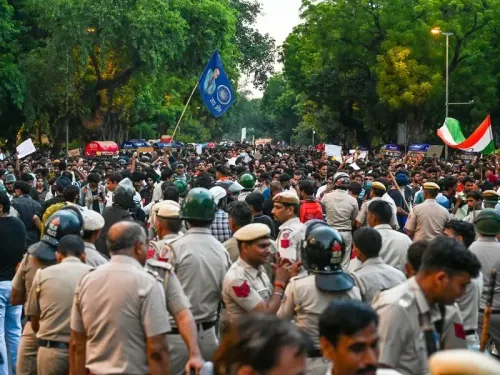
The Confederation of All India Traders (CAIT) on Sunday, 25 October 2026, launched an online petition urging the government to designate dedicated protest venues on the outskirts of Delhi, arguing that frequent demonstrations in Central Delhi are crippling commercial activity and threatening the livelihoods of millions of traders, vendors, and daily-wage workers.
What CAIT Is Demanding
Several trade associations across Delhi have jointly backed the petition, which calls for a formal policy designating specific sites away from the city's commercial core for protests, rallies, and demonstrations. The initiative aims to protect democratic rights while ensuring uninterrupted business operations in one of India's largest trading hubs.
CAIT has also convened an online meeting of Delhi's trade leaders on 26 October, in which representatives from trade associations across all parts of the city will participate. The meeting is expected to explore possible solutions and formulate a collective strategy for taking the matter forward to authorities.
Why Traders Say This Matters
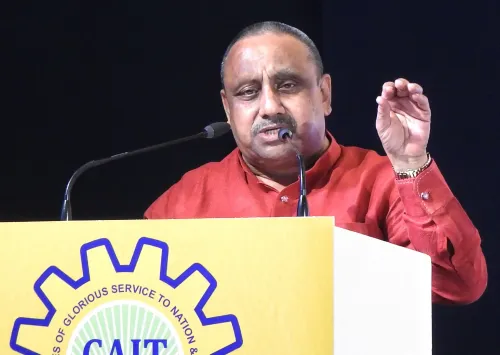
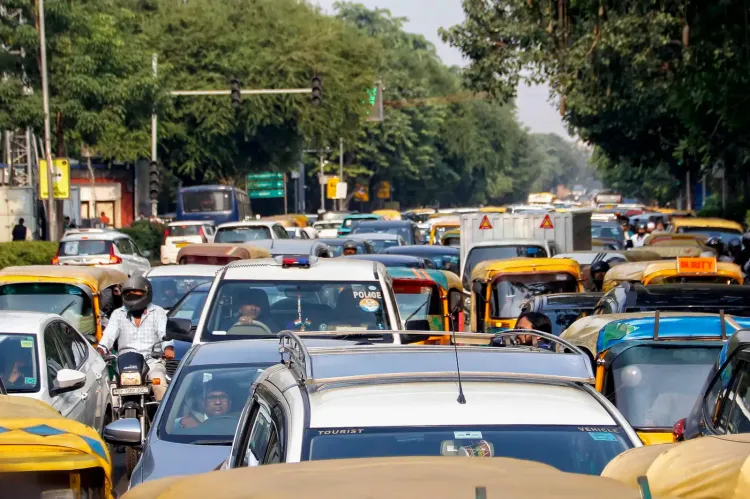
According to a CAIT statement, frequent protests disrupt customer movement, transportation, goods delivery and routine business activities. Small traders, street vendors, daily-wage earners and service providers are described as among the worst affected, as their families depend on daily earnings for survival.
Trade leaders stressed that Delhi is neither a predominantly agricultural nor an industrial production-based state. Its economy is driven almost entirely by trade, wholesale and retail markets, transportation, logistics, and services. This means disruptions in major commercial corridors do not merely affect local businesses — they can ripple across goods movement and economic activity nationwide.
Traders' Position on Right to Protest
CAIT and the participating trade associations were careful to clarify that they are not opposing peaceful protests as a constitutional right. Their argument is that the right to conduct business and earn a livelihood is equally protected and deserves parallel safeguards. As the CAIT statement put it, demonstrations should not come 'at the cost of other people's livelihoods.'
The trade body framed the initiative as a defence of Delhi's broader economic ecosystem, which it says supports millions of families directly and indirectly linked to the city's commercial network.
What Happens Next
The outcome of the 26 October online trade leaders' meeting is expected to shape the next steps, including whether the petition will be formally submitted to the Delhi government, the Centre, or both. The scale of participation across trade associations will also signal how broadly this sentiment is shared among Delhi's business community. The petition's momentum over the coming days will be a key indicator of whether the demand translates into a sustained political push.
Point of View
Arguably, their constitutional purpose. The more substantive question is why authorities have not proactively managed protest logistics to minimise commercial disruption, a failure of administration as much as policy. Delhi's traders are a significant political constituency, and this mobilisation is as much a pressure tactic ahead of future elections as it is a civic grievance.
NationPress
25 Oct 2026
Frequently Asked Questions
What is the CAIT online petition about?
The CAIT petition, launched on 25 October 2026, demands that the government designate specific sites on the outskirts of Delhi for protests and demonstrations. It argues that frequent rallies in Central Delhi are severely disrupting trade, transportation, and the livelihoods of small traders and daily-wage workers.
Who launched the petition and who is supporting it?
The Confederation of All India Traders (CAIT) launched the petition, and it is jointly backed by several trade associations from across Delhi. CAIT has also called an online meeting of Delhi trade leaders on 26 October to coordinate a collective response.
Are traders opposed to protests?
No. CAIT and the participating trade associations have stated clearly that they are not opposed to peaceful protests as a democratic right. Their position is that demonstrations should not come at the cost of other citizens' livelihoods, and that the right to conduct business deserves equal protection.
Why is protest disruption particularly damaging to Delhi's economy?
Delhi is one of India's largest trading and distribution centres, with its economy primarily driven by trade, wholesale and retail markets, logistics, and services rather than agriculture or industrial production. Disruptions in Central Delhi can affect not just local businesses but goods movement across the country.
What are the next steps after the petition launch?
An online meeting of Delhi trade leaders is scheduled for 26 October to discuss the issue and formulate a collective strategy. The meeting's outcome is expected to determine whether the petition will be formally submitted to the Delhi government, the Centre, or both.