CM Sai Approves 360 New Paddy Procurement Centres for Kharif 2026-27
Synopsis
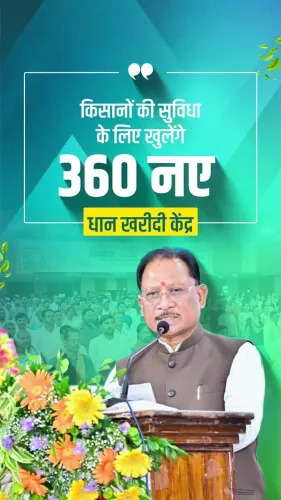
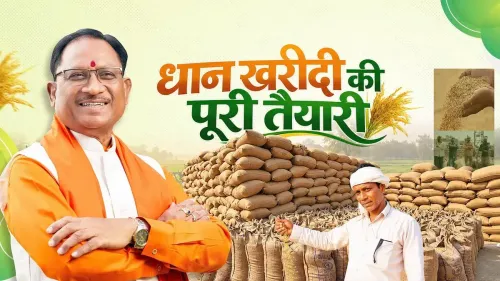
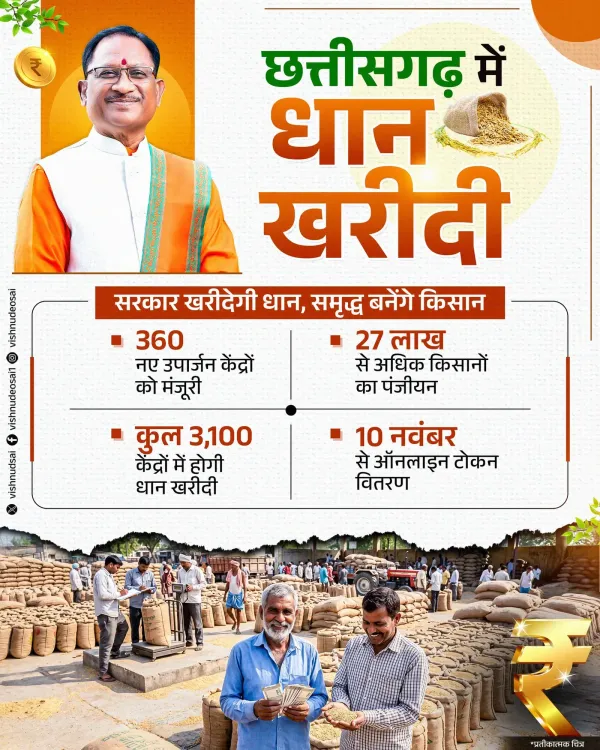
Chief Minister Vishnu Deo Sai has approved 360 new paddy procurement centres in Chhattisgarh for the Kharif marketing year 2026-27, aiming to improve MSP-based access for small and marginal farmers across the state.
Key Takeaways
360 new paddy procurement centres have been approved by the Chhattisgarh government for the Kharif marketing year 2026-27 .
Chief Minister Vishnu Deo Sai announced the decision on 2 November 2026 , framing it as core to the 'Samridh Chhattisgarh' vision.
The new centres aim to shorten distances farmers must travel to sell paddy at Minimum Support Price (MSP) , reducing transport costs and post-harvest losses.
Chhattisgarh has operated an MSP-based paddy procurement system for over two decades , with periodic expansions ahead of marketing seasons.
The operational rollout and farmer registration process for the new centres will determine the on-ground impact this season.
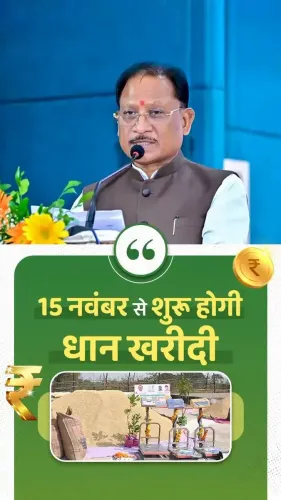
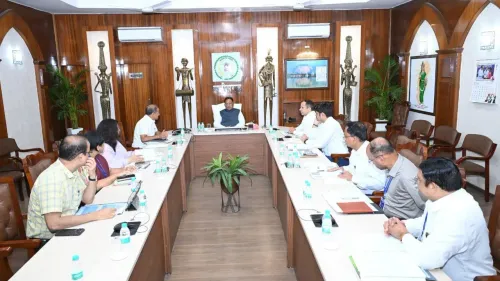
Farmers in Chhattisgarh will find it easier to sell their paddy this season — Chief Minister Vishnu Deo Sai has approved 360 new paddy procurement centres for the Kharif marketing year 2026-27, expanding the state's direct-purchase network ahead of the harvesting season.
Posting on Monday, 2 November 2026, CM Sai framed the decision as central to the state's development vision: 'Annadata ki khushali hamari prathamikta hai' — 'The prosperity of the farmer is our priority' — adding that farmers' well-being forms the cornerstone of a 'Samridh Chhattisgarh' (Prosperous Chhattisgarh).
360 New Centres and What They Mean on the Ground
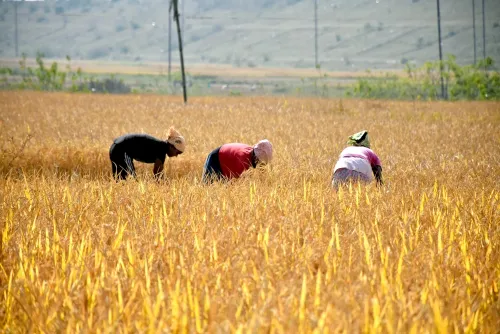
Chhattisgarh has run a Minimum Support Price (MSP)-based paddy procurement system for over two decades, but uneven distribution of collection points has long forced small and marginal farmers to travel long distances to sell their crop. The addition of 360 procurement centres directly targets that last-mile gap — shorter distances mean lower transport costs and less post-harvest loss, particularly for farmers in interior districts.
The state is one of India's significant paddy-producing belts, and its decentralised procurement feeds into central food-grain stocks. Expanding physical access is a recurring lever that state governments pull ahead of marketing seasons to signal administrative readiness and boost farmer turnout at government-rate counters rather than distress sales to private traders.
Sai Government's Agricultural Push Since December 2023
Since assuming office in December 2023, CM Sai has consistently positioned agricultural welfare — particularly paddy procurement reforms — as the BJP government's flagship rural agenda in Chhattisgarh. The approval of new centres fits a pattern of incremental system-strengthening: more procurement points, simpler registration, and clearer farmer access to MSP without dependence on intermediaries.
The government stated that the new centres will make paddy sale 'more convenient, robust, and farmer-friendly' — three benchmarks that will be tested once the centres go operational and farmer registration for the 2026-27 season begins in earnest.
Three hundred and sixty new centres is a significant administrative undertaking. Whether the rollout matches the announcement will define the real-world impact of this decision for Chhattisgarh's Kharif farmers this cycle.
Point of View
Low-risk signals of governance intent. For CM Sai, who inherited a state where the Congress had also run aggressive paddy-bonus schemes, matching and exceeding procurement infrastructure is a direct competitive play for the farmer vote. Structurally, expanding MSP-based procurement points also reduces the bargaining power of private intermediaries, which is both a policy gain and a political one. The real test will be operational: whether 360 centres can be staffed, stocked, and made accessible before the peak of the harvesting season.
NationPress
2 Nov 2026
Frequently Asked Questions
How many new paddy procurement centres has Chhattisgarh approved for 2026-27?
The Chhattisgarh government has approved 360 new paddy procurement centres for the Kharif marketing year 2026-27, as announced by Chief Minister Vishnu Deo Sai.
What is the purpose of the new paddy procurement centres in Chhattisgarh?
The new centres are designed to improve farmer access to MSP-based paddy sales, reduce travel distances for small and marginal farmers, and eliminate reliance on private intermediaries during the Kharif harvesting season.
What is the MSP paddy procurement system in Chhattisgarh?
Chhattisgarh operates state-run procurement centres that purchase paddy directly from farmers at the government-fixed Minimum Support Price (MSP), a system that has been in place for over two decades to protect farmers from distress selling.
When did Vishnu Deo Sai become Chief Minister of Chhattisgarh?
Vishnu Deo Sai became Chief Minister of Chhattisgarh in December 2023 after the BJP's victory in the state assembly elections, making agricultural welfare one of his government's stated priorities.
What does 'Samridh Chhattisgarh' mean?
'Samridh Chhattisgarh' translates to 'Prosperous Chhattisgarh' — it is the CM Sai government's development vision slogan, which the Chief Minister has linked directly to farmer welfare and rural economic growth.