Festive sales at risk: Trade bodies seek Modi, CJI intervention over INDIA bloc protests
Synopsis
A Bengaluru cloth merchants' chief has approached the Supreme Court and written to the Chief Justice of India seeking 'legal protection' against political street protests — while trade bodies across Karnataka, UP and Delhi warn that INDIA bloc agitations are paralysing festive-season commerce. Orders are on hold, Delhi traders are refusing fresh consignments, and the business community is now simultaneously petitioning Rahul Gandhi, PM Modi, and the judiciary.
Key Takeaways
Prakash Pirgal , President of the Bangalore Wholesale Cloth Merchants Association , has petitioned the Supreme Court and written to CJI Surya Kant seeking legal protection against disruptive protests.
Trade bodies from Karnataka , Uttar Pradesh , and Delhi have appealed to Rahul Gandhi , PM Modi , and the CJI to help limit commercial disruption.
Delhi-based traders have reportedly asked Bengaluru suppliers to halt fabric consignments, citing protest-linked shutdowns in the capital.
The disruptions are threatening sales ahead of Dussehra and Diwali , India's most commercially significant festive period.
Traders are demanding that protests be confined to designated venues such as Freedom Park in Bengaluru, away from commercial hubs.
Trade associations from Karnataka, Uttar Pradesh, and Delhi have made urgent appeals to Leader of Opposition Rahul Gandhi, Prime Minister Narendra Modi, and Chief Justice of India Surya Kant on 15 October 2026, seeking intervention as Congress-led INDIA bloc protests disrupt businesses across the country ahead of the festive season. The ripple effects of road blockades in the national capital are reportedly being felt by traders as far away as Bengaluru, with orders being put on hold and uncertainty mounting over Dussehra and Diwali sales.
Bengaluru Cloth Merchants Approach Supreme Court
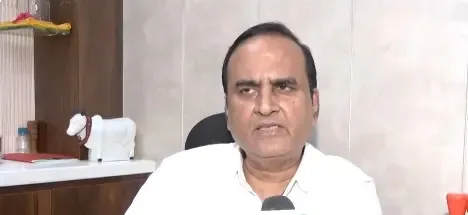
Prakash Pirgal, President of the Bangalore Wholesale Cloth Merchants Association, has gone a step further than most trade bodies — he has filed a petition before the Supreme Court and written directly to the Chief Justice of India, seeking what he called 'legal protection' against disruptive street protests. Pirgal said the situation in Delhi has effectively halted textile dispatches from Bengaluru, with Delhi-based traders advising him not to send further consignments.
'The ongoing protests in Delhi have affected our business in Bengaluru as well. Traders in Delhi are telling us — Please do not send any more fabric for now. The reason they give is that protests are taking place in Delhi and the situation resembles a citywide shutdown,' Pirgal said.
Festive Season Uncertainty Grips the Trade Community
With Dussehra and Diwali — two of India's biggest retail periods — approaching, traders across multiple states are describing the situation as a period of 'gloomy times'. Pirgal noted that orders have been put on hold, and he warned that if his business has been impacted, 'thousands of other traders are also likely to face similar difficulties'.
This comes amid a broader pattern of political agitations spilling over into commercial disruption, a concern that has repeatedly surfaced across different administrations. Small traders, who lack the financial buffer of large businesses, are particularly vulnerable to even short-term road blockades and disruptions in logistics.
What the Bengaluru Trade Body Told the CJI
In his letter to the Chief Justice of India, Pirgal argued that whenever roads are blocked in any city due to protests, businesses face severe losses and small traders are often forced to shut down entirely. He did not call for banning protests outright, instead urging that they be moved to designated venues away from commercial zones.
'Bengaluru has Freedom Park, which is designated for protests. When protests of such nature take place in central Bengaluru and roads are blocked, everyone suffers. Our request is that such protests should be held outside the city centre. People can organise demonstrations at designated venues,' he said.
Trade Bodies Call on Rahul Gandhi to Reconsider Street Agitations
Most trade associations that have written to Rahul Gandhi stopped short of opposing dissent in principle, instead urging him to raise grievances at 'appropriate forums' rather than through road blockades. They argued that political expression should not come at the cost of livelihoods for small business owners and street vendors who depend on unimpeded access to markets.
Notably, appeals have also been directed at Prime Minister Narendra Modi, suggesting that trade bodies are seeking action from both the government and the judiciary, underscoring the scale of anxiety within the business community ahead of what is typically India's most commercially significant quarter.
What Happens Next
The Supreme Court petition by the Bangalore Wholesale Cloth Merchants Association is expected to be heard in the coming days. How the court responds could set a precedent on balancing the constitutional right to protest with the right to carry out lawful commerce. Meanwhile, all eyes are on whether the INDIA bloc moderates its protest strategy as the festive calendar draws near.
Point of View
The Prime Minister, and the Chief Justice — signals an unusual degree of commercial anxiety that goes beyond routine political disruption. The Bengaluru petition to the Supreme Court is particularly significant: if admitted, it could force a judicial articulation of where the right to protest ends and the right to trade begins, a tension that has rarely been tested at this scale. What mainstream coverage often misses is that festive-quarter disruptions fall hardest on micro and small traders with no digital fallback, not on large retail chains. The BJP government will also face scrutiny over why, if the situation genuinely resembles a 'citywide shutdown', its own administrative machinery has not intervened more decisively — the appeals to Modi suggest that affected traders see the Centre as a reluctant actor, not an aggrieved one.
NationPress
15 Oct 2026
Frequently Asked Questions
Why are traders upset with the INDIA bloc protests?
The Congress-led INDIA bloc's road blockades and street agitations in Delhi have disrupted supply chains and footfall, with ripple effects felt by traders as far away as Bengaluru. With Dussehra and Diwali approaching, the business community fears severe losses during India's most commercially important quarter.
What has the Bangalore Wholesale Cloth Merchants Association done?
Association President Prakash Pirgal has filed a petition before the Supreme Court and written to Chief Justice of India Surya Kant, seeking 'legal protection' against protests that block roads and disrupt commerce. He has argued that protests should be held at designated venues like Freedom Park rather than in city centres.
Who else have trade bodies appealed to?
Trade associations from Karnataka, Uttar Pradesh, and Delhi have written to Leader of Opposition Rahul Gandhi urging him to reconsider street agitations, and have also sought intervention from Prime Minister Narendra Modi. The simultaneous appeals to the judiciary and both arms of government reflect the scale of the disruption.
How have Delhi protests affected Bengaluru traders specifically?
Bengaluru-based cloth merchants who supply textiles to Delhi say their trading partners in Delhi have asked them to halt fresh consignments because the protest situation 'resembles a citywide shutdown'. Orders have been put on hold, directly cutting into pre-festive season revenues.
What is the Supreme Court expected to do next?
The petition filed by the Bangalore Wholesale Cloth Merchants Association is expected to come up for hearing in the coming days. A court ruling on the matter could set a precedent on balancing the constitutional right to protest with the right to lawful commerce in public spaces.