Sitharaman Marks 12 Years of Heritage Revival Under Modi

Synopsis
Finance Minister Nirmala Sitharaman marked twelve years of the Modi government's 'Vikas bhi, Virasat bhi' agenda on 18 June 2026, crediting PM Modi with restoring and transforming India's heritage into a driver of national pride and progress through schemes like Swadesh Darshan and PRASAD.
Key Takeaways
Finance Minister Nirmala Sitharaman posted on X on 18 June 2026 to mark 12 years of the Modi government's heritage agenda.
The hashtag #12YearsOfVikasBhiVirasatBhi frames heritage preservation and development as complementary, not competing, national priorities.
The Swadesh Darshan and PRASAD schemes, both launched in 2014-15 , form the policy backbone of this heritage-tourism push.
The Kashi Vishwanath Corridor in Varanasi , inaugurated in 2019 , remains the most cited example of this redevelopment model.
The Archaeological Survey of India has been a key implementing agency across multiple monument restoration projects since 2014.
Budget allocations for the Ministry of Culture and Tourism in 2026-27 will be a key indicator of the government's next phase of ambition.
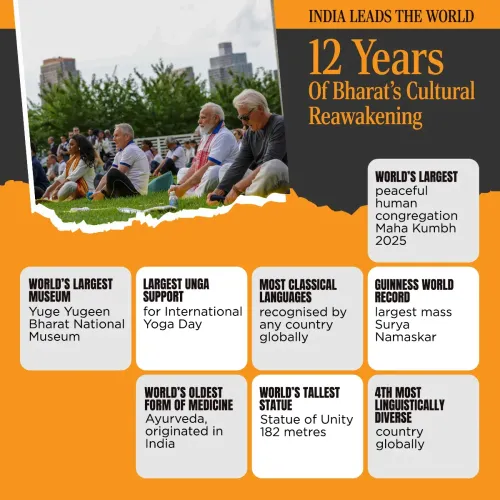
Union Finance Minister Nirmala Sitharaman on Thursday, 18 June 2026, took to X to mark twelve years of the Narendra Modi government's cultural and heritage agenda, describing India's heritage as being 'restored, celebrated and transformed into a force for pride and progress' under the Prime Minister's leadership.
Context
The post, tagged #12YearsOfVikasBhiVirasatBhi — roughly translating to '12 years of both development and heritage' — marks the completion of twelve years since the BJP-led National Democratic Alliance came to power in May 2014. The hashtag itself encapsulates a governing philosophy the party has consistently projected: that physical infrastructure and cultural identity are not competing priorities but complementary ones.
Sitharaman, as a senior member of the Union Cabinet and one of the government's most prominent faces on economic policy, used the occasion to frame heritage preservation as an element of national progress — not merely a cultural exercise.
Policy Backdrop
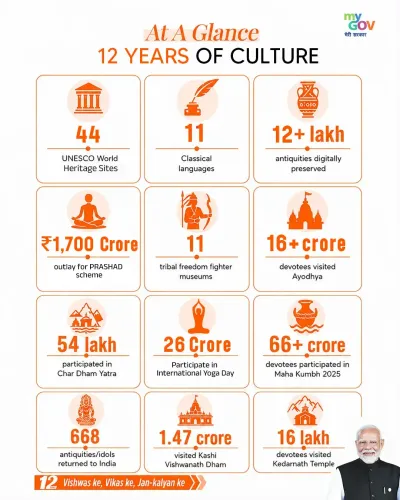
Since 2014, the central government has pursued a layered approach to heritage. The Swadesh Darshan scheme, launched in 2014-15 under the Ministry of Tourism, developed thematic tourist circuits that include heritage and pilgrimage sites, linking conservation directly to economic activity in local communities.
Simultaneously, the PRASAD scheme — Pilgrimage Rejuvenation and Spiritual Augmentation Drive — provided integrated infrastructure development at major pilgrimage destinations across the country. The Archaeological Survey of India has been active in multiple restoration projects over this period, working on temples, ghats, and protected monuments. A flagship example of this approach was the Kashi Vishwanath Corridor in Varanasi, inaugurated in 2019, which redeveloped the precinct around one of India's most significant religious sites and became a template for subsequent projects.
The broader pattern across twelve years has been to combine physical restoration with new tourism infrastructure, positioning cultural pride as an active driver of development rather than a passive inheritance.
Stakeholders and Impact
The beneficiaries of this policy direction span a wide range: the tourism industry has seen increased footfall at heritage circuits; pilgrimage site communities have received upgraded amenities and connectivity; and heritage conservation groups have engaged — sometimes in tension, sometimes in collaboration — with the scale and pace of redevelopment.
For the BJP as a political organisation, the 'Vikas bhi, Virasat bhi' framing has served as a counter to the traditional criticism that development and cultural identity pull in opposite directions. Senior ministers marking the twelve-year milestone publicly reinforces that this remains a core messaging pillar heading into the next electoral cycle.
What's Next
Attention will now turn to the Union Budget 2026-27 and whether allocations for the Ministry of Culture and Ministry of Tourism reflect a step-up in ambition on this front. Any new monument redevelopment or heritage corridor projects announced in the remainder of 2026 will be read as a continuation of the twelve-year arc that Sitharaman and her colleagues are now publicly celebrating.
Point of View
Not merely a cultural tribute — it anchors the BJP's twelve-year record to an identity-and-development narrative that the party has refined into a durable electoral asset. The 'Vikas bhi, Virasat bhi' framing is significant because it pre-empts the longstanding opposition argument that the government prioritises identity politics over economic delivery, instead presenting the two as inseparable. Coming from the Finance Minister rather than a culture or tourism minister, the message signals that heritage is now embedded in the broader economic development story the government wants to tell. With the 2026-27 budget cycle underway, the timing also primes public attention for potential announcements on cultural infrastructure spending.
NationPress
17 Sept 2026
Frequently Asked Questions
What is the meaning of Vikas bhi Virasat bhi?
'Vikas bhi, Virasat bhi' is a Hindi phrase meaning 'both development and heritage,' used by the BJP government to describe its policy of pursuing economic infrastructure and cultural preservation simultaneously. It has been a key slogan of the Modi government since 2014.
What is the Swadesh Darshan scheme?
Swadesh Darshan is a Ministry of Tourism scheme launched in 2014-15 to develop thematic tourist circuits across India, including heritage, pilgrimage, and cultural sites, linking conservation efforts to local economic activity.
What is the PRASAD scheme in India?
PRASAD stands for Pilgrimage Rejuvenation and Spiritual Augmentation Drive. Launched in 2014-15, it funds integrated infrastructure development — roads, amenities, and connectivity — at major pilgrimage destinations across India.
What is the Kashi Vishwanath Corridor?
The Kashi Vishwanath Corridor is a large-scale redevelopment project in Varanasi that expanded and beautified the precinct around the Kashi Vishwanath temple. It was inaugurated in December 2019 and has since become a model for similar heritage site redevelopment projects.
Why did Nirmala Sitharaman post about heritage on 18 June 2026?
Sitharaman's post marked twelve years of the Narendra Modi government, which came to power in May 2014. The post celebrated the government's record on cultural heritage restoration and framed it as a source of national pride and progress under PM Modi's leadership.