CM Sai's Office Marks 12 Years of Modi's Cultural Renaissance
Synopsis
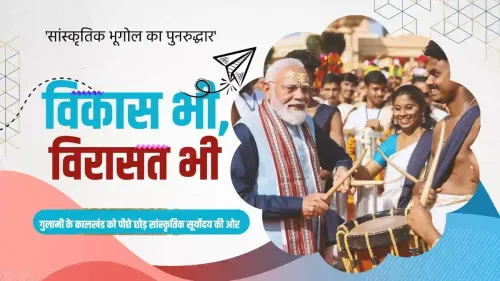
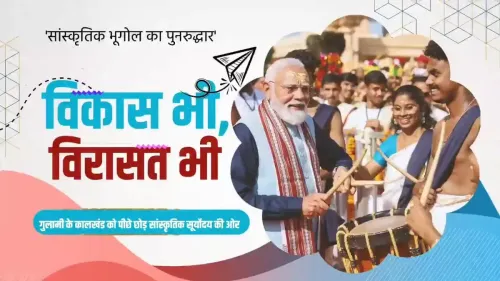
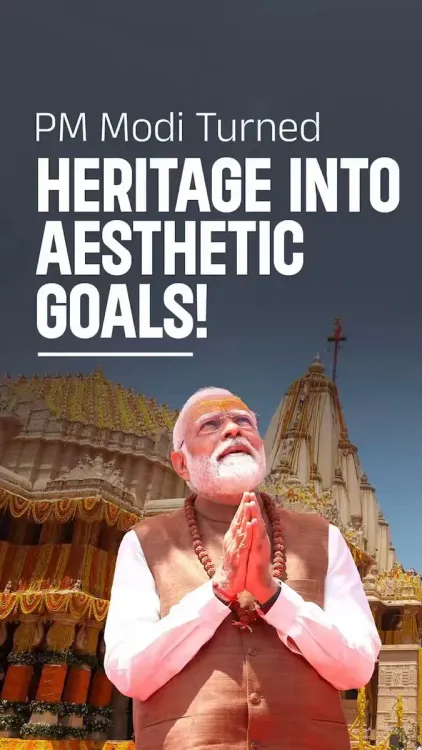
The Chief Minister's Office of Chhattisgarh marked 12 years of PM Narendra Modi's governance on 18 June 2026, framing his cultural policy as a civilizational renaissance under the slogan Vikas Bhi Virasat Bhi — development and heritage together.
Key Takeaways
The Chhattisgarh CMO posted on 18 June 2026 marking 12 years of PM Narendra Modi 's governance.
The post described Modi's tenure as a 'cultural renaissance' that has strengthened India's civilizational identity.
The hashtag #12YearsOfVikasBhiVirasatBhi reflects the BJP's long-running 'development plus heritage' governance narrative.
The PRASAD scheme (launched 2014-15 ) and the International Day of Yoga (declared 2015 ) are key policy milestones in this cultural arc.
CM Vishnu Deo Sai , in office since December 2023 , has aligned Chhattisgarh's state-level heritage initiatives with the central government's cultural framework.
Upcoming Chhattisgarh budget allocations for 2026-27 may include new heritage circuit projects under national tourism schemes.
The Chief Minister's Office of Chhattisgarh on Thursday, 18 June 2026 marked 12 years of Prime Minister Narendra Modi's governance by crediting his leadership with strengthening India's cultural identity and triggering what it called a 'cultural renaissance' rooted in civilizational heritage.
Context
The post, shared under the hashtag #12YearsOfVikasBhiVirasatBhi ('12 years of both development and heritage'), stated that PM Modi's vision has gone 'more than restoration' — framing the last decade-plus as a civilizational reawakening. The message tagged the Prime Minister's Office and Chhattisgarh Chief Minister Vishnu Deo Sai, signalling coordinated messaging between the state government and the Centre on this anniversary.
The slogan Vikas Bhi Virasat Bhi — 'development as well as heritage' — has been a recurring motif of the BJP's cultural governance narrative since 2014, presenting infrastructure spending and symbolic revival of pre-colonial identity markers as two sides of the same policy coin.
Policy Backdrop
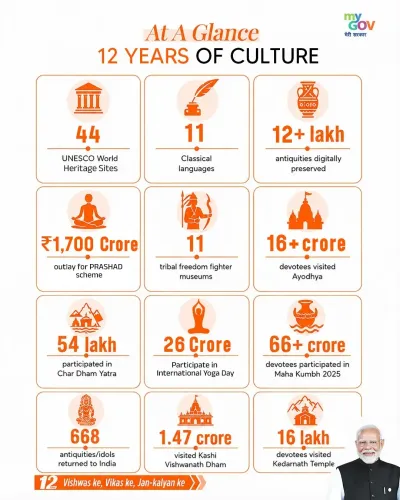
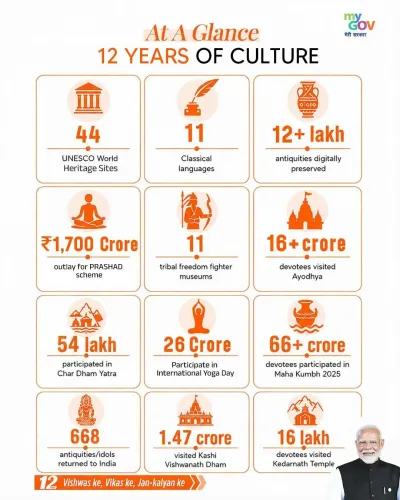
The central government's cultural push has been institutionalised through several flagship programmes. The PRASAD scheme, launched in 2014-15, channelled funds into pilgrimage and heritage destination development across states, bringing together tourism infrastructure and religious site restoration under a single umbrella.
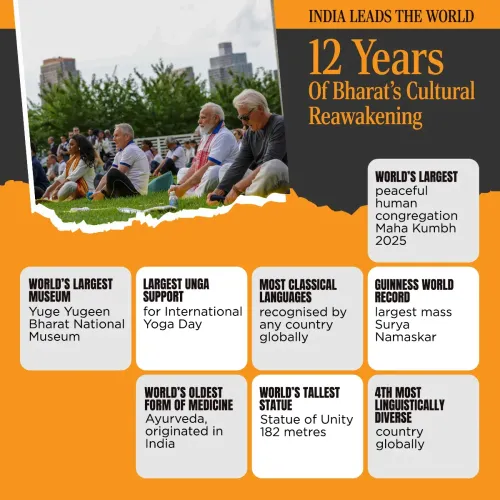
In June 2015, India's proposal led the United Nations to declare an International Day of Yoga, projecting a traditional Indian practice onto the global stage. These initiatives collectively form the policy lineage that the Chhattisgarh CMO's post invokes when speaking of a 'strengthened cultural identity.'
BJP-ruled states, including Chhattisgarh under CM Vishnu Deo Sai since December 2023, have aligned state-level heritage and tourism initiatives with this central framework, echoing the national narrative through local projects and budget allocations.
Stakeholders and Impact
Heritage tourists and state tourism departments are the most directly affected stakeholders in this policy arc. Investments in pilgrimage circuits, monument restoration, and traditional knowledge integration into tourism have reshaped how Chhattisgarh — a state with significant tribal heritage, ancient temples, and forest-based cultural traditions — positions itself on India's tourism map.
The broader pattern of city renamings, temple restorations, and integration of traditional knowledge into education has also carried symbolic weight for communities whose cultural identity had been historically underrepresented in mainstream national discourse.
What's Next
Attention now turns to Chhattisgarh's state budget allocations for 2026-27 and whether new projects under the PRASAD or Swadesh Darshan schemes will be announced for the state's heritage circuits. The CMO's public alignment with the 12-year Modi governance milestone suggests the state administration is likely to deepen this cultural-development convergence in the near term, with heritage tourism as a likely vehicle.
Point of View
A state with deep tribal and ancient temple heritage, this narrative has both electoral and tourism-economy implications worth watching.
NationPress
19 Sept 2026
Frequently Asked Questions
What is the meaning of Vikas Bhi Virasat Bhi?
'Vikas Bhi Virasat Bhi' is a Hindi slogan meaning 'development as well as heritage,' used by the BJP-led central government since 2014 to frame cultural preservation and infrastructure growth as complementary national goals.
What did the Chhattisgarh CMO post about PM Modi on 18 June 2026?
The Chhattisgarh Chief Minister's Office posted that PM Narendra Modi's 12-year tenure has strengthened India's cultural identity and called it a 'cultural renaissance' rooted in civilizational heritage, tagging the PMO and CM Vishnu Deo Sai.
What is the PRASAD scheme in India?
The PRASAD scheme, launched in 2014-15, is a central government initiative under the Ministry of Tourism to develop pilgrimage and heritage destinations across India, combining religious tourism infrastructure with monument restoration.
Who is the Chief Minister of Chhattisgarh in 2026?
Vishnu Deo Sai has been the Chief Minister of Chhattisgarh since December 2023, representing the BJP and aligning state heritage and tourism policy with the central government's cultural framework.
How has India promoted its cultural heritage internationally under Modi?
India successfully proposed the United Nations declaration of the International Day of Yoga in June 2015, and has pursued global cultural outreach through traditional knowledge, temple restoration, and heritage tourism schemes like PRASAD and Swadesh Darshan.