CM Sawant Hails 12 Years of Modi's Heritage Revival Push
Synopsis
Goa Chief Minister Pramod Sawant marked 12 years of the Modi government on 18 June 2026, praising its record on civilisational heritage revival through teertha restoration, temple conservation and spiritual tourism schemes such as PRASAD and Swadesh Darshan.
Key Takeaways
Goa CM Pramod Sawant posted on X on 18 June 2026 marking 12 years of the Modi government.
The post highlights revival of Teerthas , restoration of temples, and promotion of spiritual tourism as key achievements.
The PRASAD scheme , launched in 2014-15 , is the central government's flagship programme for pilgrimage infrastructure development.
The Swadesh Darshan scheme created thematic circuits including a dedicated Spiritual Circuit component.
The post is tagged #ViksitBharat , linking heritage preservation to India's 2047 development vision.
Budget allocations for spiritual tourism circuits in 2026-27 will indicate the pace of further scaling.
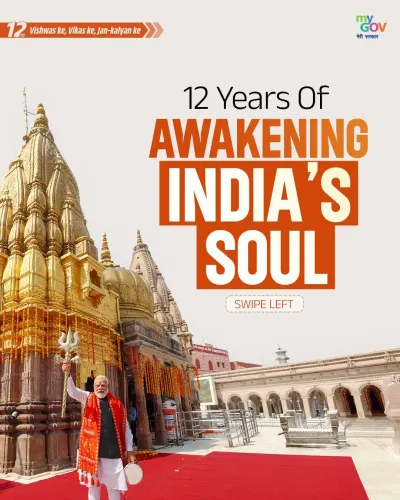
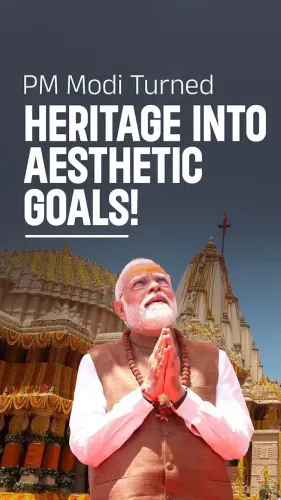
Goa Chief Minister Pramod Sawant on Thursday, 18 June 2026, took to X to mark 12 years of the Narendra Modi government, crediting the Prime Minister with driving a nationwide renaissance in civilisational heritage through temple restoration, teertha revival and spiritual tourism promotion.
Context
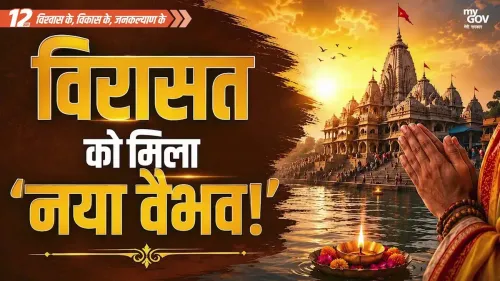
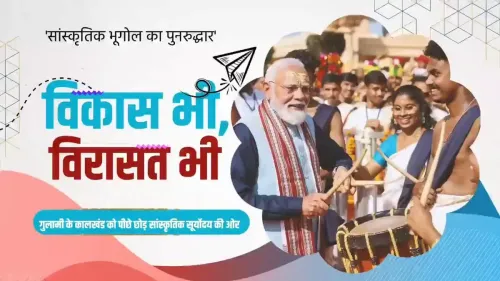
Sawant's post, tagged under the hashtag #12YearsOfVikasBhiVirasatBhi, describes Bharatiya civilisation as 'eternal, timeless and deeply rooted in our cultural consciousness.' The message aligns state-level BJP communication with a broader central government narrative that has been building since 2014, framing the past decade-plus as a period of deliberate cultural reclamation alongside infrastructure growth.
The second hashtag, #ViksitBharat, anchors the post within the government's long-term vision of a developed India by 2047, suggesting that heritage preservation is positioned not as nostalgia but as a pillar of national progress.
Policy Backdrop
The Union government launched the PRASAD scheme (Pilgrimage Rejuvenation and Spiritual Augmentation Drive) in 2014-15 under the Ministry of Tourism to fund infrastructure upgrades at major religious sites across India. In the same period, the Swadesh Darshan scheme introduced thematic tourist circuits, including a dedicated Spiritual Circuit component, channelling central resources toward ghats, temple corridors and pilgrim amenities.
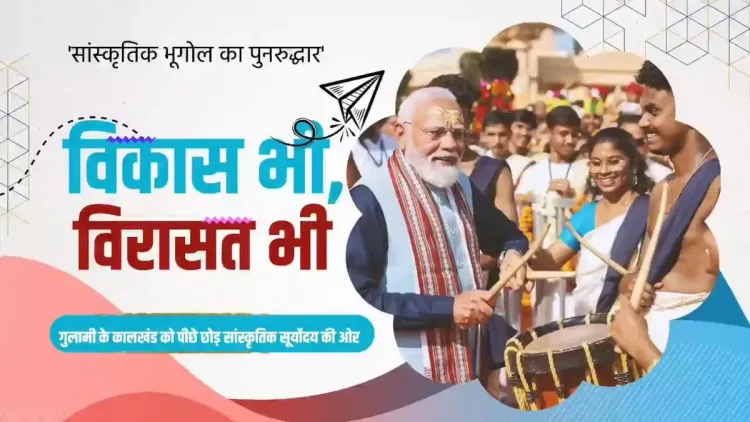
Together, these schemes formalised what the government has consistently branded as the 'Vikas bhi Virasat bhi' ('Development as well as Heritage') approach — the idea that economic development and cultural continuity are complementary rather than competing goals. Chief Ministers across BJP-governed states have periodically amplified this framing, and Sawant's post follows that established pattern.
Stakeholders and Impact
The primary beneficiaries of these policies have been pilgrims, state tourism departments, and heritage conservation bodies that receive central funding to upgrade religious and archaeological sites. For a coastal state like Goa, which already draws significant international tourism, a stronger spiritual and heritage tourism circuit could diversify visitor profiles beyond beach and leisure travel.
Local communities around teertha sites stand to gain from improved infrastructure, while the broader hospitality and transport sectors in participating states benefit from increased pilgrim footfall. Heritage conservation experts, however, have historically called for careful balancing between tourist development and the preservation of site authenticity.
What's Next
With the Viksit Bharat 2047 target serving as the government's overarching policy horizon, further state-level adoption of heritage projects is expected. Budget allocations for spiritual tourism circuits in 2026-27 will be a key indicator of how aggressively the Centre intends to scale these programmes. Sawant's post signals that Goa's BJP leadership intends to keep the state visibly aligned with this national cultural agenda in the months ahead.
Point of View
Reinforcing the 'Vikas bhi Virasat bhi' brand on a nationally significant anniversary. The dual hashtag strategy — pairing a retrospective tag with #ViksitBharat — is deliberate: it frames cultural heritage not as a backward-looking agenda but as integral to India's future-state ambitions. This pattern of coordinated messaging across chief ministers signals a maturing BJP communication architecture that uses cultural nationalism as a cohesive electoral and governance narrative. As the 2047 target draws closer, heritage policy is likely to become an increasingly prominent plank in both central and state budget conversations.
NationPress
18 Sept 2026
Frequently Asked Questions
What is the Vikas bhi Virasat bhi policy of the Modi government?
'Vikas bhi Virasat bhi' (Development as well as Heritage) is the Modi government's framework that positions cultural and religious heritage revival as complementary to economic infrastructure development, pursued through schemes like PRASAD and Swadesh Darshan since 2014.
What is the PRASAD scheme in India?
The PRASAD scheme — Pilgrimage Rejuvenation and Spiritual Augmentation Drive — was launched by the Ministry of Tourism in 2014-15 to develop and upgrade infrastructure at major pilgrimage destinations across India using central government funding.
What did Goa CM Pramod Sawant say about PM Modi's 12 years?
Goa CM Pramod Sawant said that under PM Modi's leadership the last 12 years have witnessed renewed momentum in preserving Bharat's civilisational heritage through teertha revival, temple restoration and promotion of spiritual tourism.
What is Swadesh Darshan scheme and its Spiritual Circuit?
Swadesh Darshan is a central government scheme launched in 2014-15 that funds thematic tourist circuits across India; its Spiritual Circuit component specifically supports infrastructure development at religious and heritage tourism destinations.
How does heritage tourism connect to Viksit Bharat 2047?
The government frames heritage and spiritual tourism as economic and cultural pillars of the Viksit Bharat 2047 vision, with state governments expected to align local projects with centrally sponsored schemes to meet the developed-India target.