Anurag Thakur Hails 12 Years of Modi Govt's Cultural Revival
Synopsis
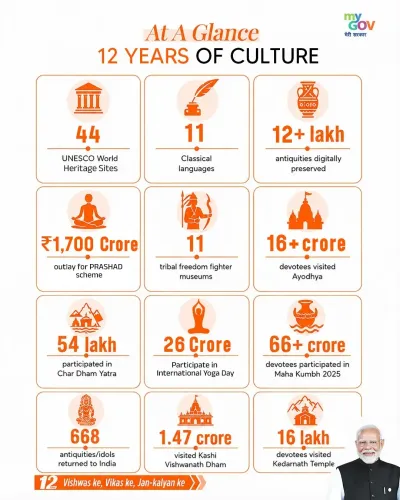
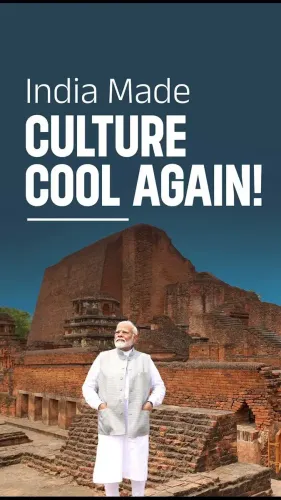
BJP MP Anurag Thakur has marked 12 years of the Modi government by highlighting its dual focus on development and cultural heritage, citing pilgrimage rejuvenation, landmark corridor projects, and the global spread of Indian traditions under schemes like PRASAD and Swadesh Darshan.
Key Takeaways
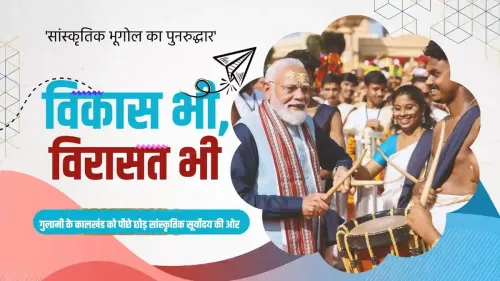
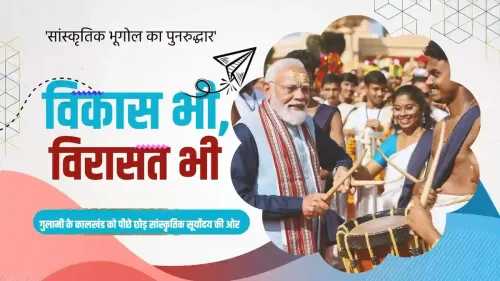
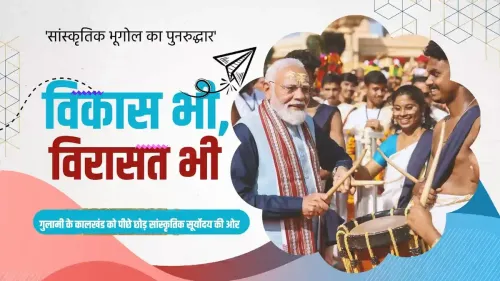
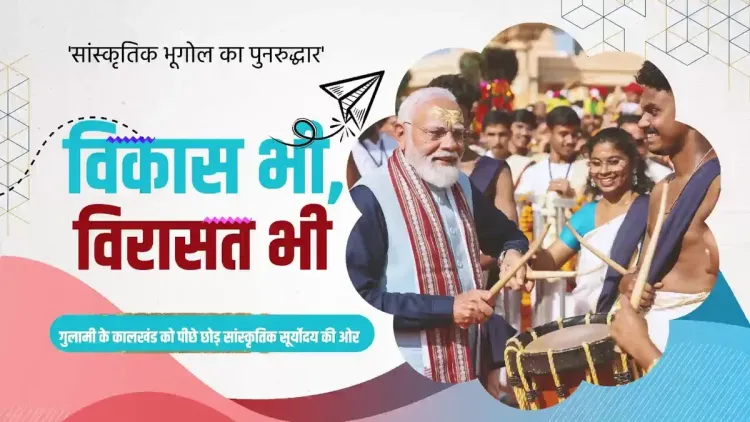
BJP MP Anurag Thakur posted on 18 June 2026 marking 12 years of the Modi government under the slogan 'Vikas Bhi, Virasat Bhi' (Development as well as Heritage).
The government launched the PRASAD scheme and Swadesh Darshan scheme in 2014-15 to upgrade pilgrimage infrastructure and create heritage tourism circuits.
The Kashi Vishwanath Corridor in Varanasi , inaugurated in 2021 , is a flagship heritage redevelopment project linking the temple complex with the riverfront ghats.
India's initiative for the International Day of Yoga , adopted by the UN in 2014 , is cited as a key example of Indian cultural traditions gaining global reach.
Future focus areas include corridor projects at Ayodhya and budget allocations for the Ministry of Tourism and Culture .
BJP MP Anurag Thakur on Thursday, 18 June 2026, took to X to mark 12 years of the Modi government, asserting that the period has been defined not only by physical development but also by a deliberate effort to preserve and promote India's cultural heritage. Thakur, the Lok Sabha MP from Hamirpur, Himachal Pradesh and former Union Minister of Information & Broadcasting, framed the milestone under the slogan 'Vikas Bhi, Virasat Bhi' — 'Development as well as Heritage'.
Context
In his post, Thakur wrote that over the past 12 years, the government has worked to 'not only achieve development but also to safeguard heritage.' He noted that during this decade, 'hamare teerth ka punaruddhaar hua, sanskritik sthalon ko naya vaibhav mila, aur hamari sanskriti va paramparaen vishwa star par vistaar payin' — 'our pilgrimage sites were rejuvenated, cultural sites gained new grandeur, and our culture and traditions found global expansion.' The post carried the hashtag #12YearsOfVikasBhiVirasatBhi, part of a coordinated BJP campaign marking the anniversary of the Narendra Modi-led government that came to power in May 2014.
Policy Backdrop
The claim of heritage revival rests on a set of centrally sponsored initiatives launched from 2014-15 onwards. The PRASAD scheme (Pilgrimage Rejuvenation and Spiritual Augmentation Drive) was introduced to upgrade infrastructure at major religious destinations, while the Swadesh Darshan scheme created thematic tourism circuits encompassing heritage and spiritual corridors. A flagship outcome of this policy track was the Kashi Vishwanath Corridor in Varanasi, inaugurated in 2021, which linked the ancient temple complex with the riverfront ghats through a large-scale urban redevelopment project.
On the global cultural front, India's push for the International Day of Yoga — adopted by the United Nations in 2014 and observed annually since 2015 — has been cited by the government as evidence of Indian traditions gaining international recognition. These initiatives collectively reflect a policy approach that positions religious tourism as an economic driver alongside cultural soft power projection.
Stakeholders and Impact
The primary beneficiaries of these schemes have been pilgrims, heritage tourists, and state tourism departments, which receive central funding for site development and connectivity upgrades. High-visibility projects have concentrated on prominent Hindu pilgrimage centres, integrating them with broader urban infrastructure and transport links. The approach has drawn both appreciation from cultural and religious communities and scrutiny from critics who argue the focus has been selective.
What's Next
Attention will now turn to the progress of additional corridor projects at sites including Ayodhya and other pilgrimage towns, as well as budget allocations for the Ministry of Tourism and Culture in the coming fiscal year. The BJP's 12-year anniversary messaging, anchored in the 'Vikas Bhi, Virasat Bhi' frame, signals that cultural heritage will remain a central political and policy theme for the party heading into future electoral cycles.
Point of View
Virasat Bhi' frame that the BJP has used since 2014 to argue that economic modernisation and cultural restoration are complementary, not competing, goals. By anchoring the 12-year anniversary message in pilgrimage rejuvenation and global cultural projection, the party signals that heritage politics will remain a mobilising theme beyond electoral cycles. The emphasis on schemes like PRASAD and landmark projects like the Kashi Vishwanath Corridor reflects a deliberate strategy of making religious infrastructure visible and attributable to central government action. How the government balances this narrative with demands for broader, inclusive cultural representation will be a defining question for its next policy phase.
NationPress
24 Sept 2026
Frequently Asked Questions
What is 'Vikas Bhi, Virasat Bhi' that Anurag Thakur is talking about?
'Vikas Bhi, Virasat Bhi' translates to 'Development as well as Heritage' and is a BJP campaign slogan used to describe the Modi government's stated dual focus on physical infrastructure development and the preservation and promotion of India's cultural and religious heritage over the past 12 years.
What is the PRASAD scheme?
The PRASAD scheme, or Pilgrimage Rejuvenation and Spiritual Augmentation Drive, was launched by the central government in 2014-15 to develop and upgrade infrastructure at major religious and pilgrimage destinations across India.
What is the Kashi Vishwanath Corridor?
The Kashi Vishwanath Corridor is a large-scale redevelopment project in Varanasi, Uttar Pradesh, inaugurated in 2021, that connects the historic Kashi Vishwanath temple with the riverfront ghats, and is considered a flagship example of the government's heritage revival push.
How has India promoted its culture globally under the Modi government?
A key example is India's successful push for the United Nations to recognise the International Day of Yoga in 2014, which has been observed globally every year since 2015, and is cited by the government as evidence of Indian traditions gaining worldwide reach.
What is the Swadesh Darshan scheme?
Swadesh Darshan is a central government scheme launched in 2014-15 that funds the development of thematic tourism circuits across India, including heritage, spiritual, and cultural circuits, aimed at boosting domestic tourism and preserving significant sites.