Rijiju Hails India's Cultural Diplomacy at 12-Year Mark
Synopsis
Union Parliamentary Affairs Minister Kiren Rijiju marks twelve years of India's 'Vikas Bhi Virasat Bhi' policy, highlighting artefact repatriation, Yoga, and Ayurveda as proof that India's civilisational roots have become a tangible global asset.
Key Takeaways
Union Minister Kiren Rijiju posted on 18 June 2026 invoking India's civilisational legacy under the #12YearsOfVikasBhiVirasatBhi hashtag.
The post cites the return of precious artefacts and Buddha relics as a concrete marker of India's cultural diplomacy.
The Ministry of AYUSH , established in 2014 , has been central to mainstreaming Yoga and Ayurveda in national and international policy.
The UN General Assembly declared 21 June as International Day of Yoga in 2014 following India's proposal, giving the country an annual global platform.
The message frames India's ancient heritage and modern development as complementary, not competing, national priorities.
Further announcements on AYUSH collaborations and artefact repatriation are anticipated around International Day of Yoga 2026 .
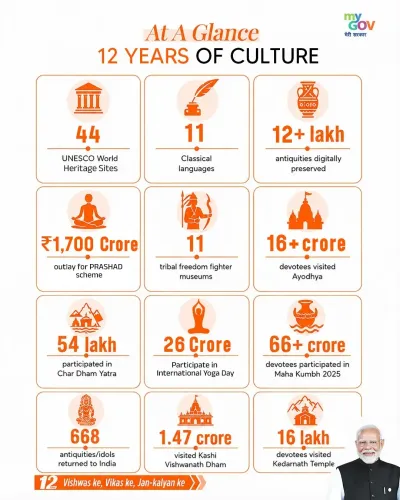
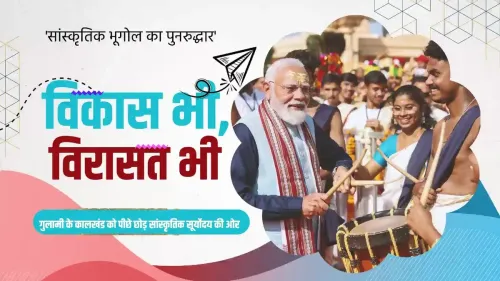
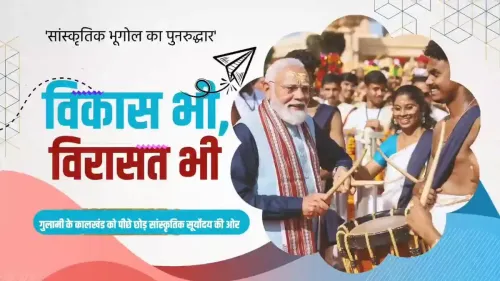
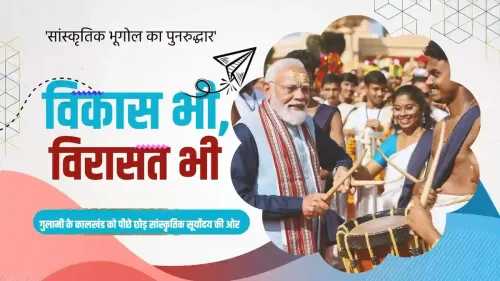
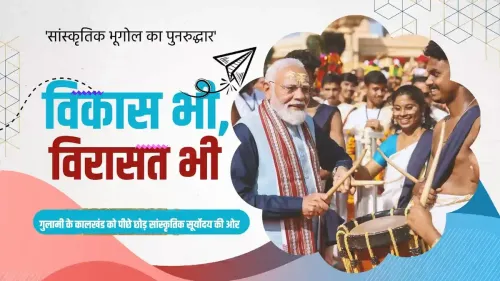
Union Parliamentary Affairs Minister Kiren Rijiju on Thursday, 18 June 2026, invoked India's civilisational legacy as a pillar of its global standing, marking twelve years of the current government's dual emphasis on development and heritage under the Vikas Bhi Virasat Bhi (Development as well as Heritage) framework.
Context
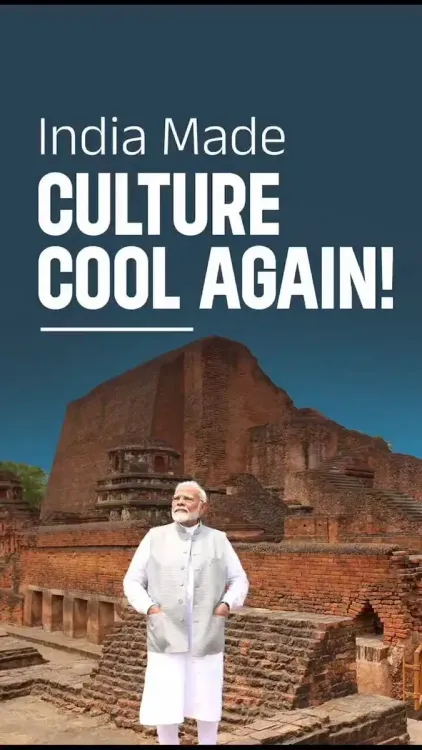
Rijiju's post states, 'India's roots are now its global strength,' pointing to the return of precious artefacts and Buddha relics, as well as the worldwide spread of Yoga and Ayurveda, as evidence of the country's civilisational influence. The remarks coincide with the approach of International Day of Yoga on 21 June, an annual milestone that has become a flagship moment for India's cultural diplomacy. The hashtag #12YearsOfVikasBhiVirasatBhi explicitly anchors the message to the administration's twelve-year record since 2014.
Policy Backdrop
The Vikas Bhi Virasat Bhi doctrine has underpinned a series of institutional moves since 2014, most notably the creation of the Ministry of AYUSH to mainstream Ayurveda, Yoga, Unani, Siddha, and Homeopathy within national health and soft-power policy. In the same year, Prime Minister Narendra Modi proposed to the UN General Assembly that 21 June be recognised as the International Day of Yoga; the resolution was adopted with co-sponsorship from a record number of member states, giving India a recurring global platform rooted in its traditional knowledge systems.
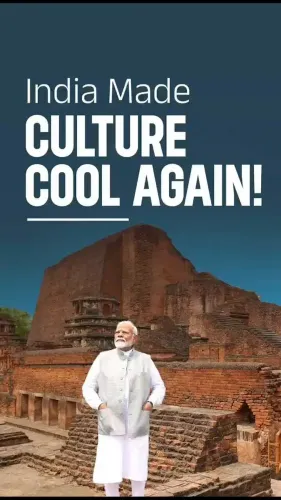
Artefact repatriation has formed a parallel strand of this cultural outreach, with diplomatic channels being used to recover heritage objects held abroad and return them to Indian soil. Together, these strands constitute what the government frames as a coherent cultural diplomacy strategy — projecting India's ancient identity alongside its economic ambitions.
Stakeholders and Impact
Heritage conservationists and AYUSH practitioners are among the primary domestic stakeholders who have benefited from elevated policy attention and funding over the past twelve years. Internationally, the mainstreaming of Yoga has created a global community of practitioners that India counts as part of its soft-power footprint, with events held in over 190 countries on each International Day of Yoga. The repatriation of Buddhist relics carries particular significance for India's diplomatic ties with Southeast Asian and East Asian nations, where such artefacts hold deep religious and cultural meaning.
For minority communities and diaspora groups, the government's emphasis on civilisational heritage serves as both a point of pride and, for some, a subject of ongoing debate about whose heritage is centred in the national narrative.
What's Next
With International Day of Yoga 2026 days away, further announcements on international AYUSH collaborations and cultural exchanges are expected. Observers will also watch for any heritage-related legislation in upcoming parliamentary sessions, as well as additional artefact repatriation announcements that could reinforce the diplomatic messaging Rijiju has amplified. The twelve-year milestone framing suggests the ruling party intends to make cultural diplomacy a centrepiece of its political communication in the months ahead.
Point of View
Using the twelve-year milestone to consolidate the BJP's brand identity around civilisational pride ahead of a fresh electoral cycle. By linking artefact repatriation, Yoga, and Ayurveda under a single hashtag, the party is signalling that cultural diplomacy is not a peripheral add-on but a core governance achievement it will campaign on. The timing — days before International Day of Yoga — is unlikely to be coincidental, as it maximises international resonance for a domestically oriented message. The framing also subtly positions heritage stewardship as inseparable from economic development, a rhetorical move that has proven durable across the administration's communications.
NationPress
19 Sept 2026
Frequently Asked Questions
What is 'Vikas Bhi Virasat Bhi' and what does it mean?
'Vikas Bhi Virasat Bhi' is a Hindi phrase meaning 'Development as well as Heritage.' It is the BJP-led government's framing since 2014 that economic progress and the preservation of India's civilisational legacy are complementary goals, not trade-offs.
When is International Day of Yoga and who proposed it?
International Day of Yoga falls on 21 June every year. Prime Minister Narendra Modi proposed the observance to the UN General Assembly in 2014, and the resolution was adopted with co-sponsorship from a large number of member states.
What is the Ministry of AYUSH and when was it set up?
The Ministry of AYUSH was established in 2014 to promote Ayurveda, Yoga, Unani, Siddha, and Homeopathy. It has since driven both domestic health policy and India's international soft-power outreach in traditional medicine and wellness.
What artefacts and relics has India repatriated in recent years?
India has pursued repatriation of heritage objects — including ancient sculptures and Buddhist relics — through diplomatic channels with multiple countries. These returns are presented by the government as evidence of growing international respect for India's civilisational legacy, though specific recent cases referenced in the June 2026 post could not be independently verified from available records.
Who is Kiren Rijiju and what is his current role?
Kiren Rijiju is a senior BJP leader from Arunachal Pradesh who currently serves as Union Minister of Parliamentary Affairs and Minister of Minority Affairs. He has held several cabinet portfolios under Prime Minister Narendra Modi.