Mecca Pact membership could drag Bangladesh into regional conflict: Analysis
Synopsis
Bangladesh's possible entry into the Mecca Joint Defence Agreement — signed by Saudi Arabia, Turkey, and Pakistan — has set off alarm bells among analysts who warn it could pull Dhaka into conflicts it cannot control, including a potential India-Pakistan war, while hollowing out the country's foundational non-alignment policy.
Key Takeaways
Speculation about Bangladesh joining the Mecca Joint Defence Agreement (MJDA) emerged around 17 August , after Saudi Crown Prince Mohammad bin Salman invited PM Tarique Rahman to Riyadh.
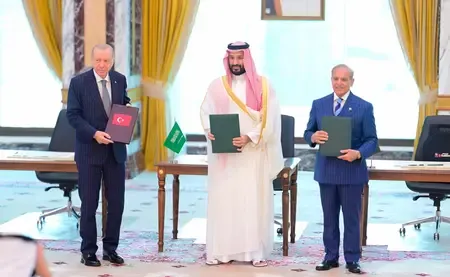
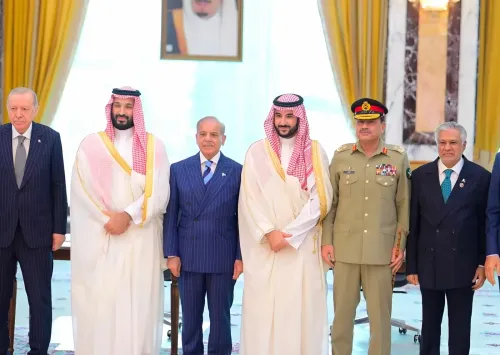
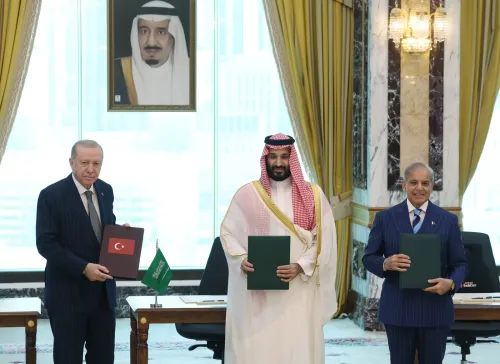
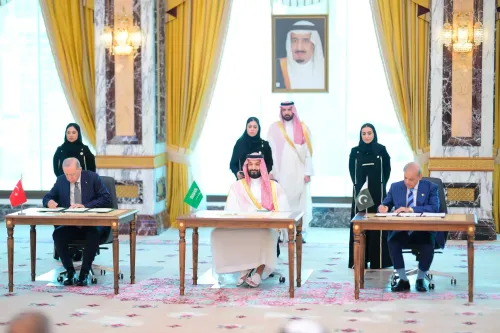
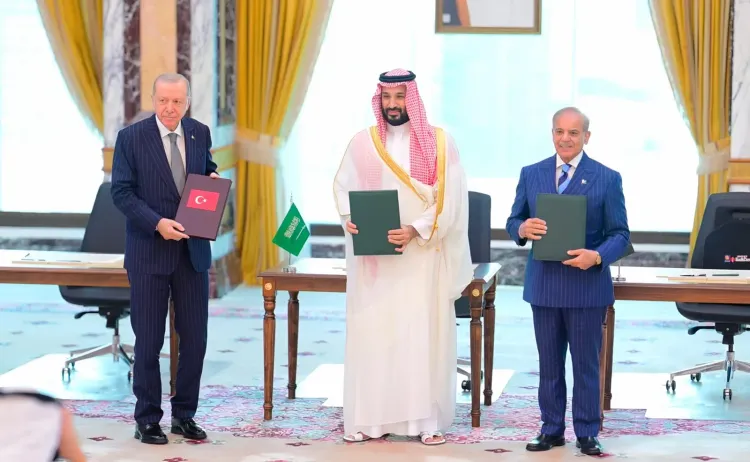
The MJDA — signed by Saudi Arabia , Turkey , and Pakistan — includes a collective-defence clause treating an attack on one member as an attack on all.
Analysts warn membership could theoretically obligate Bangladesh to join an India-Pakistan conflict in which it has no direct interest.
State Minister for Foreign Affairs Humayun Kobir said Dhaka views the prospect 'positively' but has not explained what specific benefits it sees.
ASEAN's strategic community is closely watching Bangladesh's position amid rising global tensions and alliance recalibration.
Reports argue Bangladesh's trade-dependent economy is better served by strategic autonomy than by formal military alliances that constrain diplomatic flexibility.
Bangladesh risks being drawn into wider regional conflicts if it formally joins the Mecca Joint Defence Agreement (MJDA) — a trilateral pact signed by Saudi Arabia, Turkey, and Pakistan — according to analysis published by Bangladeshi media outlets. The reports warn that such a move could fundamentally compromise Dhaka's long-standing non-alignment posture and its stated 'Bangladesh First' foreign policy.
How the MJDA Speculation Began
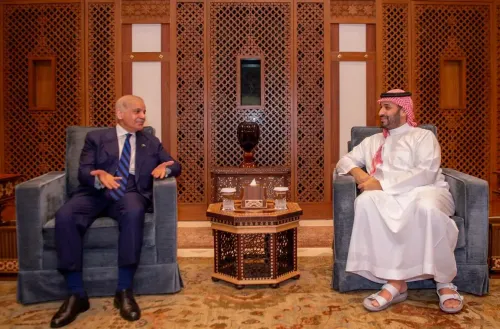
Speculation about Bangladesh's possible entry into the pact surfaced around 17 August, when Saudi Crown Prince Mohammad bin Salman extended an invitation to Prime Minister Tarique Rahman to visit the kingdom. The invitation came just 10 days after Saudi Arabia, Turkey, and Pakistan formally signed the MJDA — a development widely interpreted as a strategic pivot away from the decades-old US-centric defence architecture in the region.
The MJDA carries a collective-defence clause: an attack on one member is treated as an attack on all. Analysts note that while such commitments historically function more as deterrents than operational war plans, the clause creates a legal and political obligation that could, in theory, entangle Bangladesh in conflicts — including an India-Pakistan confrontation — in which Dhaka has no direct stake.
Government's Position and What It Has Not Said
Bangladesh's State Minister for Foreign Affairs, Humayun Kobir, acknowledged at a press conference that the government was viewing the prospect 'positively', but offered no explanation of which specific provisions it found beneficial. Critics argue that the absence of a detailed rationale is itself telling, suggesting the strategic calculus has not been fully worked through.
Notably, the question of how MJDA membership would concretely advance Dhaka's national interests appears to have received limited public deliberation. According to reports, extreme right-wing voices within Bangladesh may welcome the move as an opportunity to gain strategic leverage over India — but analysts caution that such framing conflates domestic political signalling with durable foreign policy.
Risks to Bangladesh's Strategic Autonomy
Analysis cited in BDNews24 stresses that abandoning traditional non-alignment in favour of a formal collective-security alliance would be, in its words, 'a very big deal indeed.' Bangladesh's trade-dependent economy relies on stable relations with a broad set of partners — including India, the United States, and several Gulf states — that do not all share aligned interests with the MJDA bloc.
A separate report in Daily Sun noted that ASEAN's strategic community is closely monitoring Bangladesh's stated interest, amid rising global tensions, recalibration of alliances, and heightened uncertainty in trade and security. The report argued that Bangladesh could better serve its interests by pursuing strategic autonomy through diverse economic and defence partnerships, rather than committing to a formal military alliance that could constrain its diplomatic flexibility.
The Broader Geopolitical Stakes
The MJDA itself signals a meaningful shift in West Asian security dynamics, with three significant Muslim-majority states moving toward a self-contained defence framework outside traditional Western-led structures. For a country like Bangladesh — geographically distant from the Gulf's flashpoints but economically tied to remittances and trade from the region — the cost-benefit of formal membership is far from straightforward.
Analysts emphasise that the core issue is not diplomatic symbolism but whether membership could unsettle key partners, restrict economic choices, and expose Bangladesh to security commitments it cannot meaningfully influence. As the debate intensifies, Dhaka's next move on the MJDA will be watched closely both regionally and internationally.
Point of View
A posture that has served its remittance-driven, trade-dependent economy well. Signing onto a collective-defence pact dominated by Pakistan's security interests risks precisely the kind of entanglement that 'Bangladesh First' was meant to prevent. The silence on specifics from Humayun Kobir suggests the government may be responding to domestic political pressure from right-wing constituencies rather than conducting a sober national-interest calculation. Dhaka should be asking not whether the MJDA offers symbolic solidarity, but whether it can afford the diplomatic and economic costs of being on the wrong side of a Gulf or South Asian flashpoint it had no hand in creating.
NationPress
17 Oct 2026
Frequently Asked Questions
What is the Mecca Joint Defence Agreement (MJDA)?
The Mecca Joint Defence Agreement is a trilateral collective-security pact signed by Saudi Arabia, Turkey, and Pakistan, which includes a clause stating that an attack on one member constitutes an attack on all. It is widely seen as a strategic shift away from the US-centric defence alignment that has dominated the region for decades.
Why is Bangladesh considering joining the Mecca Pact?
Speculation began around 17 August when Saudi Crown Prince Mohammad bin Salman invited Bangladeshi Prime Minister Tarique Rahman to visit Riyadh, just days after the MJDA was signed. Bangladesh's State Minister for Foreign Affairs said the government views the prospect 'positively,' though no detailed rationale has been provided.
What are the risks for Bangladesh if it joins the MJDA?
Analysts warn that membership could obligate Bangladesh to participate in conflicts — including a potential India-Pakistan war — in which it has no direct stake. It could also constrain Dhaka's diplomatic flexibility, unsettle key trade and security partners, and undermine its long-standing non-alignment foreign policy.
How is the regional community reacting to Bangladesh's interest in the pact?
ASEAN's strategic community is closely monitoring Bangladesh's stated interest, according to reports. Analysts across the region argue that Bangladesh's trade-dependent economy is better served by maintaining diverse partnerships rather than committing to a formal military alliance.
Does joining the MJDA align with Bangladesh's 'Bangladesh First' policy?
Analysts say it is debatable. The 'Bangladesh First' policy emphasises national interest above external alignments, but committing to a collective-defence clause that could draw Dhaka into conflicts it cannot influence appears to contradict that principle, according to reports in Bangladeshi media.