CM Bhajan Lal hails Modi govt's 12-yr culture-heritage push

Synopsis
Rajasthan Chief Minister Bhajan Lal Sharma marked 12 years of PM Modi's government on 18 June 2026 by highlighting the 'Vikas Bhi, Virasat Bhi' philosophy, citing Ram Mandir, Kedarnath redevelopment, Mahakumbh and UNESCO heritage recognition as evidence of India's cultural renaissance.
Key Takeaways
Rajasthan CM Bhajan Lal Sharma credited 12 years of PM Modi 's leadership with combining economic development and cultural heritage preservation.
The post highlighted the Ram Mandir construction in Ayodhya , Kedarnath Dham redevelopment , the Mahakumbh , and growing UNESCO World Heritage recognition as flagship achievements.
The BJP's 'Vikas Bhi, Virasat Bhi' philosophy frames cultural revival as inseparable from national development goals.
Central schemes PRASAD and Swadesh Darshan , both launched in 2014-15 , have channelled public investment into pilgrimage and heritage tourism infrastructure.
Ahmedabad became India's first UNESCO Historic City in 2017 , part of a broader expansion of India's global heritage portfolio since 2014.
The statement is part of a coordinated BJP social media campaign under #12YearsOfVikasBhiVirasatBhi marking the government's anniversary.
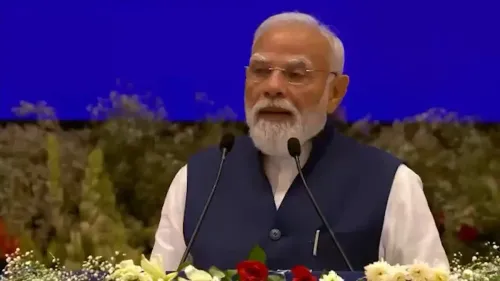
Rajasthan Chief Minister Bhajan Lal Sharma on Thursday, 18 June 2026, credited the 12-year tenure of Prime Minister Narendra Modi with establishing new benchmarks in cultural heritage preservation alongside economic development, sharing his views on the social media platform X under the hashtag #12YearsOfVikasBhiVirasatBhi.
Context
Sharma wrote in Hindi that under Modi's leadership, 'विकास भी, विरासत भी' ('Development as well as Heritage') has given India's faith, culture and history a new identity. He cited the construction of the Ram Mandir in Ayodhya, the redevelopment of Kedarnath Dham, the grand organisation of the Mahakumbh, and India's growing global recognition through UNESCO World Heritage Sites as landmark achievements of this period. The post carries an attached video and was published in the morning hours, coinciding with the BJP's broader social media campaign marking the milestone.
Policy Backdrop
The PRASAD (Pilgrimage Rejuvenation and Spiritual Augmentation Drive) scheme, launched in 2014-15 by the Ministry of Tourism, channelled central funding into the redevelopment of major pilgrimage destinations including Kedarnath and Ayodhya. A parallel initiative, the Swadesh Darshan scheme, created thematic tourist circuits centred on heritage and spiritual sites across states, positioning cultural tourism as a driver of local economies. Ahmedabad received UNESCO Historic City status in 2017, and India's overall UNESCO portfolio has expanded with renewed focus on nominations and conservation since 2014.
The Ram Mandir consecration in January 2024 was the most high-profile single event in this cultural programme, drawing global attention and millions of pilgrims to Ayodhya, Uttar Pradesh. Kedarnath Dham in Uttarakhand underwent extensive infrastructure upgrades following the devastating 2013 floods, improving accessibility and pilgrim facilities at the ancient Shiva shrine. Together, these projects illustrate the central government's strategy of integrating heritage conservation with large-scale public investment and urban planning.
Stakeholders and Impact
Pilgrims, devotees and the domestic tourism industry are the primary beneficiaries of this heritage-development convergence, with millions of visitors annually at sites such as Kedarnath, Ayodhya and Prayagraj. State governments, including Rajasthan under Sharma's leadership, have replicated the model through their own heritage and tourism programmes, leveraging central schemes for local site upgrades. The cultural diplomacy dimension — projecting Indian civilisational heritage on global platforms — has also attracted international tourists and bolstered India's soft-power standing.
Sharma's post describes the current period as one of 'cultural renaissance, national self-confidence and renewed resolve for a Developed India' (विकसित भारत के संकल्प). This framing aligns Rajasthan's own heritage-rich identity — home to forts, temples and pilgrimage routes — with the national narrative being amplified by the BJP ahead of upcoming electoral and policy cycles.
What's Next
Further rollout of PRASAD and Swadesh Darshan projects in Rajasthan and other states is anticipated, with state budget allocations for heritage sites expected to reflect the continued political priority placed on cultural tourism. Possible fresh UNESCO nominations for Indian sites remain on the agenda, as does infrastructure planning for the next Kumbh cycle. The BJP's social media campaign around the 12-year milestone signals that 'Vikas Bhi, Virasat Bhi' will remain a central plank of the party's messaging through the near-term political calendar.
Point of View
Lending regional credibility to a centrally driven message. The 'Vikas Bhi, Virasat Bhi' framing is politically significant because it attempts to neutralise the traditional development-versus-identity dichotomy, presenting cultural investment as a form of infrastructure. For Rajasthan — a state with one of India's densest concentrations of heritage sites, pilgrimage circuits and religious tourism revenue — aligning with this narrative also serves Sharma's domestic political interests. The campaign's timing, twelve years after Modi's first electoral victory, suggests the BJP is laying rhetorical groundwork for the next electoral cycle by anchoring its record in civilisational pride rather than purely economic metrics.
NationPress
19 Sept 2026
Frequently Asked Questions
What is the 'Vikas Bhi, Virasat Bhi' policy of PM Modi?
'Vikas Bhi, Virasat Bhi' — meaning 'Development as well as Heritage' — is the guiding philosophy of PM Narendra Modi's government that seeks to pursue economic and infrastructure growth while simultaneously preserving and reviving India's cultural, religious and historical heritage. It has underpinned projects such as the Ram Mandir in Ayodhya, the Kedarnath Dham redevelopment and the PRASAD pilgrimage scheme.
What did Rajasthan CM Bhajan Lal Sharma say about Modi's 12 years?
On 18 June 2026, CM Bhajan Lal Sharma posted on X that under PM Modi's 12-year leadership India has established new dimensions of development while preserving its rich cultural heritage. He specifically cited the Ram Mandir construction, Kedarnath redevelopment, the grand Mahakumbh, and India's expanding UNESCO World Heritage recognition as key achievements.
What is the PRASAD scheme and which sites does it cover?
PRASAD — Pilgrimage Rejuvenation and Spiritual Augmentation Drive — is a central government scheme launched in 2014-15 by the Ministry of Tourism to upgrade infrastructure at major religious and pilgrimage sites. It has funded redevelopment at destinations including Kedarnath in Uttarakhand and Ayodhya in Uttar Pradesh.
How many UNESCO World Heritage Sites does India have?
India's UNESCO World Heritage portfolio has expanded since 2014 with renewed focus on nominations and conservation. Ahmedabad was recognised as India's first UNESCO World Heritage Historic City in 2017. The total count has grown steadily, reflecting the government's active pursuit of global heritage recognition for Indian sites.
When was the Ram Mandir in Ayodhya inaugurated?
The Ram Mandir in Ayodhya was consecrated in January 2024, marking the culmination of a long-standing project that became one of the most high-profile cultural and religious events under PM Modi's government. The inauguration drew millions of pilgrims and significant global attention.