Rajasthan panchayat polls 2026: Phase 1 turnout at 62.90%, below ULB and past averages
Synopsis
Rajasthan's first panchayat phase drew just 62.90% turnout — below the ULB benchmark of 76.41% and the lowest first-phase figure in at least three panchayat cycles. Voter boycotts over boundary changes and an EVM malfunction compounded the picture, even as BJP projected rural confidence and Congress raised fresh fairness concerns.
Key Takeaways
Phase 1 of Rajasthan Panchayati Raj elections recorded 62.90% turnout by 6 pm on 22 October 2026 .
This is below the 76.41% seen in Phase 1 of the ULB elections and lower than panchayat averages of 63.15% (2020) and 64.40% (2021) .
Phase 1 covered 293 Zila Parishad and 1,788 Panchayat Samiti seats across 16 districts , with 6,926 candidates contesting 2,081 positions .
Bikaner led district turnout at 71.42% ; Pali recorded the lowest at 48.27% .
In Shishvi ki Dhani, Rajsamand , only 3 of 400 voters reportedly turned up to protest Gram Panchayat reorganisation.
Polling was halted for roughly one hour in Ayana due to an EVM malfunction .
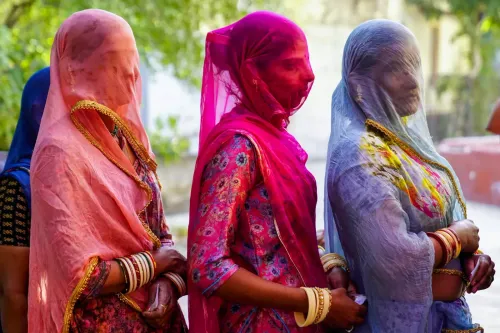
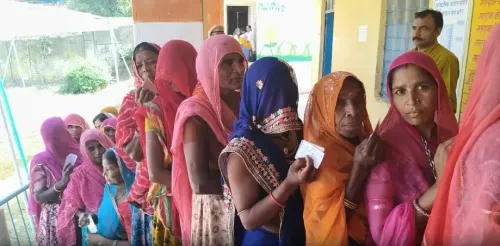
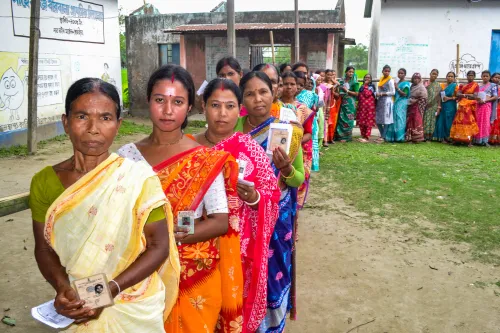
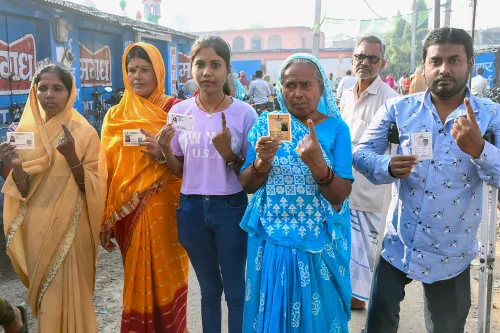
Rajasthan's first phase of Panchayati Raj elections recorded a voter turnout of 62.90% by 6 pm on 22 October 2026 — notably lower than the 76.41% logged in Phase 1 of the state's recent Urban Local Body (ULB) elections and also below previous panchayat poll averages. The gap in rural participation has drawn attention across political lines, even as the Bharatiya Janata Party (BJP) and the Indian National Congress offered sharply contrasting readings of what the numbers mean.
Scale and Spread of Phase 1
The first phase covered 293 Zila Parishad seats and 1,788 Panchayat Samiti seats spread across 16 districts. A total of 6,926 candidates competed for 2,081 positions, making it one of the largest single-phase rural electoral exercises in the state's recent history. Turnout varied widely across geographies.
Bikaner led all districts with a turnout of 71.42%, followed by Jhalawar at 68.35% and Barmer at 67.37%. At the other end, Pali recorded the lowest district-level participation at just 48.27%. At the Panchayat Samiti level, Mangta in Barmer topped at 79.55%, while Rani Station in Pali posted a mere 40.02%.
Below Historical Benchmarks
The 62.90% figure trails not only the ULB benchmark but also the state's own panchayat election history. Rajasthan recorded 63.15% average participation in 2020 and 64.40% in 2021. The current phase thus marks the lowest first-phase panchayat turnout in at least three cycles, according to available data — a pattern that analysts are likely to scrutinise as subsequent phases unfold.
Boycotts and Poll Disruptions
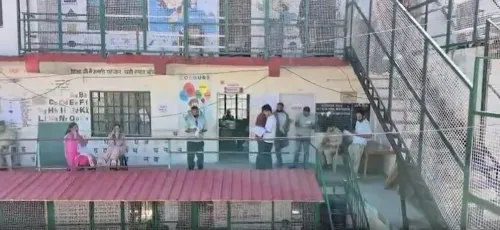
Local grievances added another layer of concern. In Shishvi ki Dhani in Rajsamand district, reportedly only three of 400 eligible voters cast their ballots in protest against a recent Gram Panchayat reorganisation — an unusually stark expression of community dissatisfaction. Polling was also suspended for approximately one hour in Ayana following an Electronic Voting Machine (EVM) malfunction. These are not isolated occurrences; boundary-related boycotts have repeatedly surfaced in Rajasthan's past panchayat cycles, underscoring unresolved administrative tensions at the grassroots level.
What BJP and Congress Said
BJP state President Madan Rathore projected confidence, saying the initial response had 'leaned in favour of the BJP.' He further claimed that 'the Bhajanlal government has undertaken historic initiatives in rural development, surpassing the achievements of the Congress party's entire five-year tenure in just 34 months.' It bears noting that turnout figures alone do not establish which party holds greater voter support.
Former Chief Minister Ashok Gehlot struck a more cautionary note, raising concerns about the conduct of the preceding ULB elections. 'In the Urban Local Body elections, the margin of votes between the Congress and the BJP was less than one per cent, yet the BJP managed to usurp the popular mandate,' he said. Gehlot called on voters to 'ensure the victory of Congress candidates by an overwhelming majority' and urged vigilance against any interference in the Panchayati Raj process.
What Comes Next
The upcoming stages will cover nominations for Sarpanch and Ward Panch positions in Gram Panchayats. With local grievances over boundary changes, competing development narratives, and a below-average opening phase, the remaining rounds will be a critical test of rural voter engagement across Rajasthan.
Point of View
Not explaining away. Boundary-change boycotts like the near-total abstention in Shishvi ki Dhani point to a specific, addressable governance failure: administrative reorganisation without adequate community buy-in. The BJP's confidence framing and Congress's fairness concerns are standard electoral posturing; the more durable question is whether low rural participation reflects disillusionment or logistics. As nominations for Sarpanch and Ward Panch positions begin, the Election Commission and the state government should treat the first-phase data as an early warning, not a footnote.
NationPress
23 Oct 2026
Frequently Asked Questions
What was the voter turnout in Phase 1 of Rajasthan panchayat elections 2026?
Phase 1 recorded a turnout of 62.90% by 6 pm on 22 October 2026. This is lower than both the 76.41% seen in Phase 1 of the recent Urban Local Body elections and panchayat averages of 63.15% in 2020 and 64.40% in 2021.
How many seats were contested in Phase 1 of the Rajasthan Panchayati Raj elections?
Phase 1 covered 293 Zila Parishad seats and 1,788 Panchayat Samiti seats across 16 districts, with 6,926 candidates contesting 2,081 positions in total.
Which districts recorded the highest and lowest turnout in Phase 1?
Bikaner recorded the highest district-level turnout at 71.42%, followed by Jhalawar at 68.35% and Barmer at 67.37%. Pali recorded the lowest at 48.27%, with Rani Station in Pali posting just 40.02% at the Panchayat Samiti level.
Why did some villages boycott the Rajasthan panchayat polls?
Several villages boycotted polling over local grievances, primarily related to changes in Gram Panchayat boundaries. In Shishvi ki Dhani, Rajsamand district, reportedly only three of 400 eligible voters cast ballots in protest against a panchayat reorganisation.
What did BJP and Congress say about the Rajasthan panchayat election results so far?
BJP state President Madan Rathore said voter enthusiasm had 'leaned in favour of the BJP' and cited the Bhajanlal government's rural development record. Former Chief Minister Ashok Gehlot raised concerns about electoral fairness, alleging the BJP had 'usurped the popular mandate' in the preceding ULB elections despite a margin of less than one per cent.