Rajasthan Panchayat elections 2025: Four-phase polling for 1.69 lakh seats
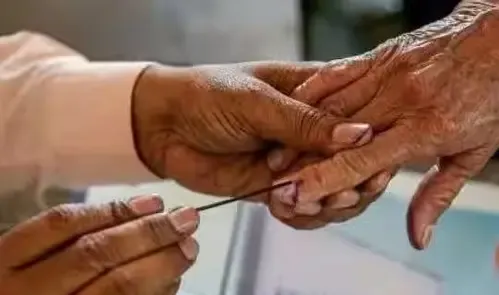
Synopsis
Rajasthan's Panchayati Raj elections — covering 1.69 lakh seats and 4.03 crore voters across four phases — are now officially on. With the Model Code of Conduct already in force and both BJP and Congress treating the contest as an organisational test, the results will offer the clearest reading yet of rural political sentiment in the state.
Key Takeaways
The Rajasthan State Election Commission announced a four-phase Panchayati Raj election schedule on 3 October .
Polling spans 23 October to 16 November ; final results expected by 28 November .
Approximately 1.69 lakh representatives will be elected, including 1,403 Zila Parishad , 8,245 Panchayat Samiti , and 14,403 Sarpanch positions.
4.03 crore voters are eligible; Jaipur has the largest electorate at 18.99 lakh .
Women hold 50% reservation; over 7,200 Sarpanch and 63,000 Ward Panch posts reserved for women.
The Model Code of Conduct is now in force across rural Rajasthan, barring new government schemes and restricting transfers.
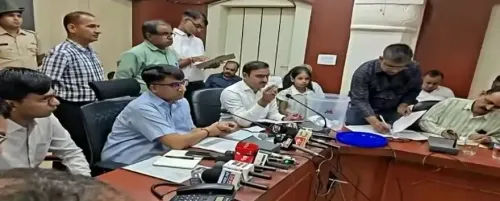
The Rajasthan State Election Commission on Saturday, 3 October announced a four-phase schedule for the state's Panchayati Raj elections, setting in motion a process that will elect approximately 1.69 lakh grassroots representatives across Rajasthan. The announcement immediately triggered the Model Code of Conduct in rural areas of the state.
Phase-wise Poll Dates
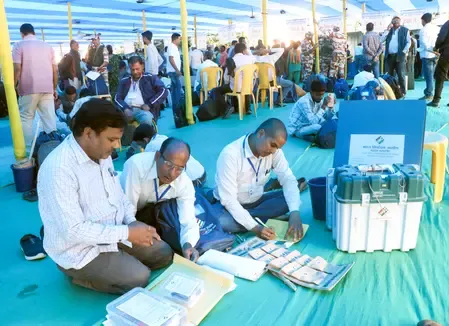
Voting for Zila Parishad and Panchayat Samiti members will be conducted on 23 October, 29 October, 4 November, and 14 November, using Electronic Voting Machines (EVMs). Polling for Sarpanch and Ward Panch posts — conducted via ballot papers — will follow on 25 October, 31 October, 6 November, and 16 November respectively.
Counting for Sarpanch and Ward Panch results will be held on the same day as polling. Counting for Zila Parishad and Panchayat Samiti seats is scheduled for 20 November. Elections for Zila Pramukh and Pradhan posts — chosen by the newly elected members — are set for 25 November, with the entire process expected to conclude by 28 November.
Scale of the Exercise
The elections will fill 1,403 Zila Parishad seats, 8,245 Panchayat Samiti seats, and 14,403 Sarpanch positions. The elected Zila Parishad members will subsequently choose 41 Zila Pramukhs, while Panchayat Samiti members will elect 457 Pradhans.
A total of 4.03 crore voters are eligible to participate. Among the 41 districts, Jaipur has the largest electorate at approximately 18.99 lakh voters, while Jaisalmer has the smallest at around 4.36 lakh voters.
Reservation Breakdown
Women have been guaranteed 50% reservation across Panchayati Raj institutions. Around 7,200 women are expected to be elected as Sarpanchs, and more than 63,000 Ward Panch posts are reserved for women. At higher tiers, 20 of the 41 Zila Pramukh posts and 221 of the 457 Pradhan posts are reserved for women.
Among Sarpanch seats, 3,058 are reserved for Scheduled Tribes (ST), 2,493 for Scheduled Castes (SC), and 1,961 for Other Backward Classes (OBC). Of the nearly 1.30 lakh Ward Panch positions, 21,962 are reserved for SC candidates, 19,117 for ST candidates, and approximately 15,000 for OBC candidates.
Model Code of Conduct in Force
With the schedule in place, the Model Code of Conduct has come into immediate effect across rural Rajasthan. Government employee transfers have been restricted, and ministers and public representatives face curbs on using state resources for political activity. The Rajasthan government is barred from announcing new schemes or programmes that could sway voters during the election period.
Notably, four districts — Kota, Sri Ganganagar, Baran, and Karauli — have existing Pramukh and Pradhan tenures running until December 2026. However, elections for Zila Parishad and Panchayat Samiti members in these districts will proceed alongside the rest of the state.
Political Stakes
The Panchayati Raj polls are widely seen as an organisational litmus test for both the ruling Bharatiya Janata Party (BJP) and the opposition Indian National Congress (Congress). Control over 457 Panchayat Samitis and 41 Zila Parishads — and by extension the Pradhans and Zila Pramukhs they elect — carries significant influence over rural development spending and local political networks. The distribution of seats across these bodies will be closely watched by both parties as an early indicator of rural sentiment ahead of future state-level contests.
Point of View
These elections are far more than a local administrative exercise — they are a proxy war for ground-level party machinery in a state that swings reliably between BJP and Congress. The BJP, currently in power in Jaipur, will be defending its rural organisational strength, while Congress will look to these results as evidence of a post-2023 assembly election revival. What mainstream coverage tends to underplay is the indirect election layer: Zila Pramukhs and Pradhans are chosen by elected members, not directly by voters, meaning backroom coalition-building will shape the final power map as much as polling day turnout does. The women's reservation figures — 50% across all tiers — are constitutionally mandated, but implementation quality and the prevalence of proxy candidacies by male relatives remain perennial accountability gaps that deserve scrutiny beyond the headline numbers.
NationPress
3 Oct 2026
Frequently Asked Questions
When are the Rajasthan Panchayat elections 2025?
Polling will be held across four phases: Zila Parishad and Panchayat Samiti elections on 23 October, 29 October, 4 November, and 14 November; Sarpanch and Ward Panch elections on 25 October, 31 October, 6 November, and 16 November. The overall process is expected to conclude by 28 November 2025.
How many seats are up for election in the Rajasthan Panchayati Raj polls?
Approximately 1.69 lakh Panchayati Raj seats are contested, covering 1,403 Zila Parishad members, 8,245 Panchayat Samiti members, and 14,403 Sarpanch positions. The elected members will subsequently choose 41 Zila Pramukhs and 457 Pradhans.
What is the women's reservation in Rajasthan Panchayat elections?
Women have been provided 50% reservation across all Panchayati Raj institutions. Around 7,200 Sarpanch posts and more than 63,000 Ward Panch posts are reserved for women, along with 20 of 41 Zila Pramukh posts and 221 of 457 Pradhan posts.
How many voters are eligible in the Rajasthan Panchayat elections?
Around 4.03 crore voters are eligible to vote. Jaipur district has the largest electorate with approximately 18.99 lakh voters, while Jaisalmer has the smallest with around 4.36 lakh voters.
What does the Model Code of Conduct mean for Rajasthan?
The Model Code of Conduct, which came into force upon the announcement of the schedule, bars the Rajasthan government from launching new schemes or programmes that could influence voters. It also restricts government employee transfers and prohibits ministers from using state resources for political purposes until the election process concludes.